




01. Edit your s 240 online
Type text, add images, blackout confidential details, add comments, highlights and more.

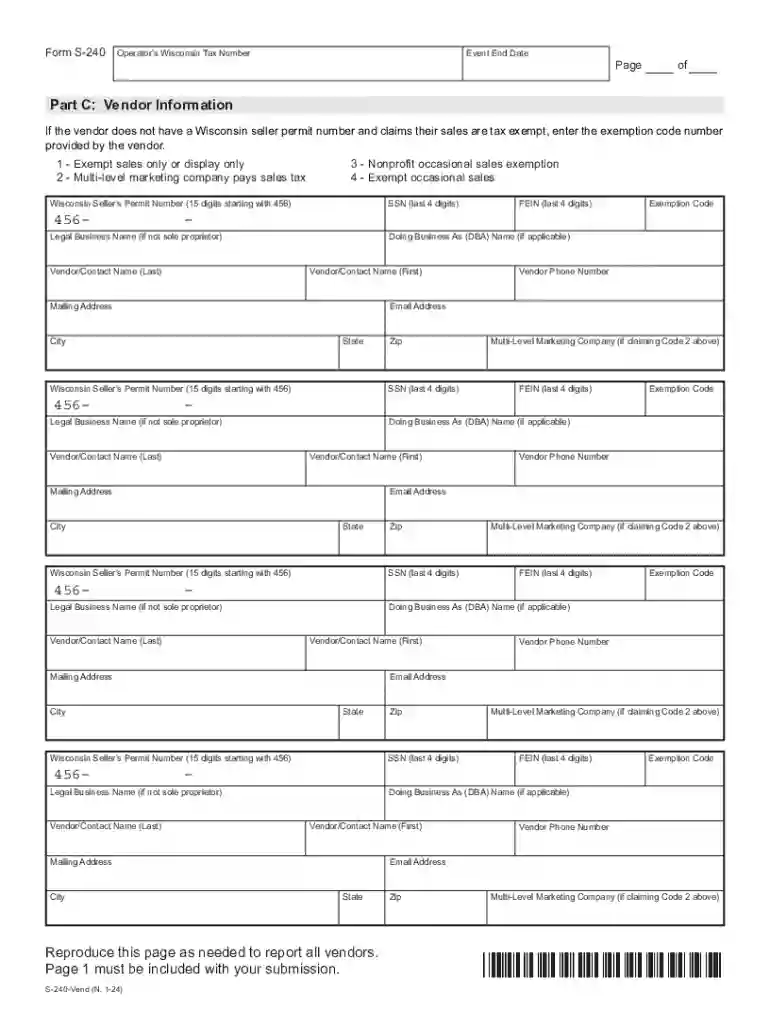
Type text, add images, blackout confidential details, add comments, highlights and more.

Draw your signature, type it, upload its image, or use your mobile device as a signature pad.

Send s240 form via email, link, or fax. You can also download it, export it or print it out.
The sales tax permit, also known in some contexts as a seller’s permit or sales tax license, is a critical document for businesses involved in selling taxable goods or services within the state of Wisconsin. It authorizes the business to collect sales tax from customers legally. This permit is pivotal for compliance with state taxation laws and facilitates the proper collection and remittance of sales tax to the Wisconsin Department of Revenue.
The sales tax permit ensures that a business adheres to legal obligations, thereby avoiding penalties. For new and existing businesses, obtaining this permit is a foundational step in establishing a legally compliant operation within Wisconsin. The application process involves providing specific business details and understanding the associated legalities to maintain compliance.
Understanding who is eligible to apply for a sales tax permit is essential for businesses planning to operate in Wisconsin. Generally, any business entity that sells or leases tangible personal property or services subject to sales tax must obtain this permit. This includes sole proprietorships, partnerships, corporations, limited liability companies (LLCs), and any other recognized business entities operating within Wisconsin.
To qualify, a business must have a physical presence, nexus, within the state. A nexus could be established by having a warehouse, office, or any place of business property in Wisconsin. Additionally, businesses conducting temporary sales activities, such as those at trade shows or markets, also need a permit if sales tax applies to their transactions. Understanding these stipulations ensures that businesses operate legally and avoid unnecessary penalties.


Registering for a sales tax permit in Wisconsin requires careful attention to details and adherence to the application process. Follow these steps to ensure a smooth application:
Gather Required Information: Compile essential information about the business, including the legal business name, federal employer identification number (EIN), business address, and owner or responsible party's contact details.
Access the Online Registration Platform: Wisconsin's Department of Revenue provides an online portal for registration. This platform streamlines the application process and offers guidance on each section of the form.
Complete the Application: Fill in all required fields accurately. This includes details about the type of business entity, the anticipated start date of taxable sales, and any existing sales tax permits held in other states.
Submit Necessary Documentation: You might need to upload relevant documents such as articles of incorporation or a partnership agreement depending on the business structure.
Review and Submit: Before final submission, review all entered details to ensure accuracy and completeness. Submit the application once satisfied with the inputs.
Confirmation and Approval: After submission, the Wisconsin Department of Revenue will process the application, which may take several weeks. Businesses typically receive a confirmation email with a copy of the permit upon approval.
To successfully apply for a sales tax permit, you must be prepared to provide several documents that verify the legitimacy and structure of your business. Here's a breakdown of the typical documentation required:
These documents help the Wisconsin Department of Revenue verify the business legitimacy and ensure that tax obligations will be met appropriately.
Several key terms are associated with the sales tax permit process that applicants should understand fully. Familiarity with these can aid in navigating the application process and subsequent compliance:
Grasping these concepts plays a pivotal role in managing a business’s tax responsibilities effectively.
Non-compliance with sales tax obligations can lead to significant penalties for businesses operating in Wisconsin. The failure to apply for a permit or remit collected taxes can result in:
Businesses are encouraged to maintain impeccable tax records and ensure that all sales tax collections and remittances are timely and accurate to avoid these adverse outcomes.
The type of business entity significantly impacts the process and requirements for obtaining a sales tax permit. Different entities, such as LLCs, Corporations, Partnerships, and Sole Proprietorships, have unique characteristics impacting taxation and legal responsibilities.
Understanding your business's entity type ensures adherence to the correct procedural requirements and supports ongoing compliance with Wisconsin's sales tax laws.
Wisconsin offers the flexibility of applying for a sales tax permit through both digital and paper-based options. Understanding the advantages and limitations of each helps businesses choose the best fit:
Ultimately, the choice between digital and paper depends on business preferences and the available resources for completing the application process.
By addressing these critical aspects of obtaining a sales tax permit in Wisconsin, businesses can ensure they meet legal obligations while facilitating smooth and efficient operations.
We've got more versions of the s 240 form. Select the right s 240 version from the list and start editing it straight away!
At DocHub, your data security is our priority. We follow HIPAA, SOC2, GDPR, and other standards, so you can work on your documents with confidence.




Apr 30, 2021 Clean Wisconsin drop their challenge to environmental permits issued for the project, Settling permit case by funding voluntary regulation group
You can register online or complete an Application for Business Tax Registration and fax or mail it to the department. When should I apply? Apply for a sellers


