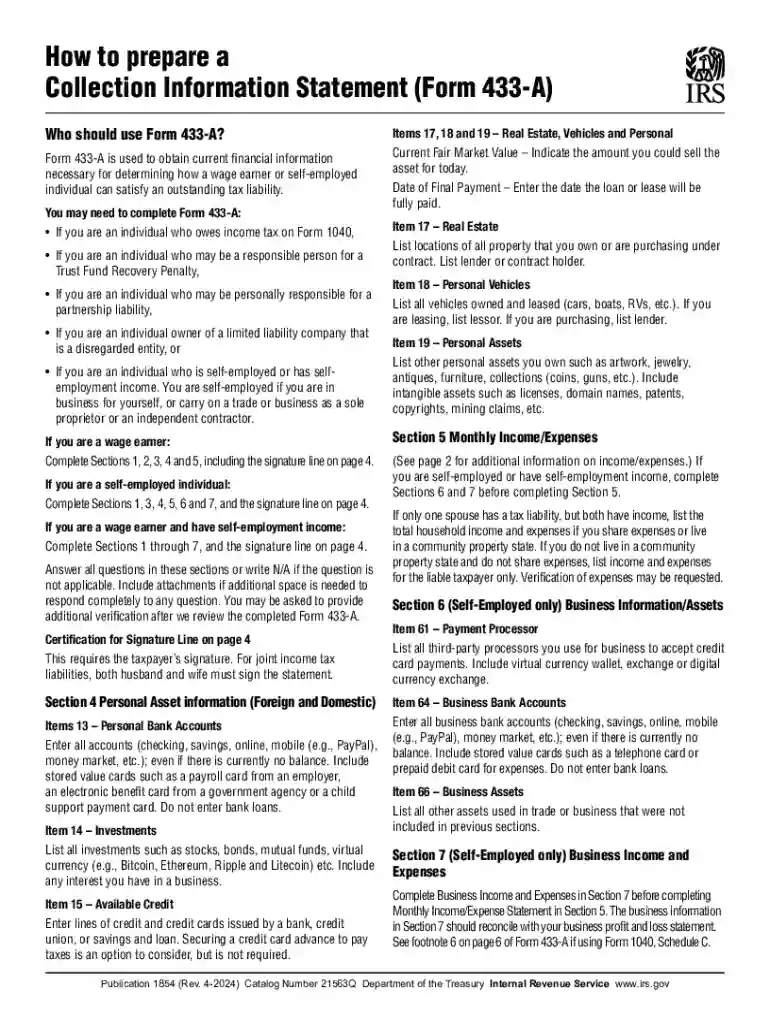
Definition and Purpose of Publication 1854 (Rev 4-2024)
Publication 1854 (Rev 4-2024) serves as a comprehensive guide for taxpayers, particularly those involved in agriculture-related businesses, providing details on the tax responsibilities tied to farming activities. It includes specific instructions on reporting income, expenses, and other details necessary for calculating tax liability for farming operations. This publication is essential for understanding various tax provisions applicable to farmers, along with guidelines for eligibility in claiming valuable credits and deductions.
Key Components
- Income Reporting: Detailed instructions on how to report various income sources from farming activities.
- Expense Deductions: Guidance on deducting costs tied to farm operations, such as equipment purchases and maintenance.
- Tax Credits: Information on available credits, such as those for fuel tax, to support sustainable farm practices.
- Regulatory Compliance: Instructions on adhering to tax laws specific to agricultural endeavors.
Steps to Complete Publication 1854 (Rev 4-2024)
Successfully completing the form involves several critical steps aimed at ensuring all relevant information is captured accurately.
- Gather Necessary Information: Before starting the form, compile all financial records, including income and expenses related to farming operations.
- Follow Detailed Instructions: Use the guide offered in the publication to understand what information is required in each section.
- Complete Required Sections: Fill out all applicable sections based on the types of income and expenses your farm has incurred.
- Review for Accuracy: Double-check all entries for accuracy to prevent errors that could result in delays or penalties.
- Submit the Form: Depending on filing preferences, submit the completed form online, by mail, or in person, adhering to IRS deadlines.
Who Typically Uses Publication 1854 (Rev 4-2024)
Farmers and agricultural businesses are the primary users of Publication 1854 (Rev 4-2024), but it may also be utilized by accountants and tax professionals advising clients in the agricultural sector.
Targeted Users
- Individual Farmers: Addresses the needs specific to smaller family-based farming operations.
- Corporate Agricultural Enterprises: Applicable to larger farming corporations involving complex financial operations.
- Tax Advisors: Essential for professionals assisting farms in maximizing tax benefits.
Important Terms Related to Publication 1854 (Rev 4-2024)
Understanding key terminology is crucial to accurately navigating the publication.
- Adjusted Gross Income (AGI): Earnings from all income sources minus allowable deductions.
- Depreciation: The reduction in value of a farm asset over time, which can be deducted from taxable income.
- Estimated Tax Payments: Quarterly tax payments relevant for those expecting to owe over a specified amount.
- Farm Income Averaging: Allows farmers to spread income over previous tax years, potentially reducing tax liability.
IRS Guidelines for Publication 1854 (Rev 4-2024)
The IRS provides specific guidelines to clarify how and when to use the publication for tax reporting purposes.
Adherence to IRS Rules
- Deadline Compliance: Ensure filings align with IRS deadlines to avoid penalties.
- Record Keeping: Maintain detailed records of financial transactions supporting claims on the form.
- Updated Regulations: Stay informed on annual adjustments to tax laws affecting agriculture.
Filing Deadlines and Important Dates
The IRS establishes critical deadlines for submitting Publication 1854, which taxpayers must observe to avoid penalties.
Standard Timelines
- Annual Filing: Ensure the completed form is submitted by the tax return deadline each year, typically April 15.
- Estimated Payments: Due quarterly to cover expected tax liabilities.
Required Documents for Publication 1854 (Rev 4-2024)
Several documents must be prepared and reviewed to complete the publication accurately.
Necessary Documentation
- Income Statements: All records of revenue generated through farming operations.
- Expense Receipts: Documentation validating deductible farm expenses such as seeds, fertilizer, and labor.
- Prior Tax Returns: Last year’s tax filings may be necessary for reference and calculations like AGI.
Penalties for Non-Compliance
Failing to comply with the guidelines outlined in Publication 1854 can result in serious repercussions.
Potential Penalties
- Late Filing Fees: Imposed for submissions past the due date without a valid extension.
- Interest on Underpayments: Charged on any due balance not paid by the deadline.
- Accuracy Penalties: Applied for significant errors or discrepancies found in the reported information.
Digital vs. Paper Version of Publication 1854
Taxpayers have the option to complete Publication 1854 either digitally or via traditional paper format, each with specific considerations.
Digital Advantages
- Ease of Submission: Faster processing through electronic filing systems.
- Automated Calculations: Reduces the risk of human error in financial computations.
Paper Form Considerations
- Mailing Requirements: Must be physically mailed and postmarked by the deadline.
- Record Keeping: Original documents need to be manually archived.