




01. Edit your form online
Type text, add images, blackout confidential details, add comments, highlights and more.

Type text, add images, blackout confidential details, add comments, highlights and more.

Draw your signature, type it, upload its image, or use your mobile device as a signature pad.

Send it via email, link, or fax. You can also download it, export it or print it out.
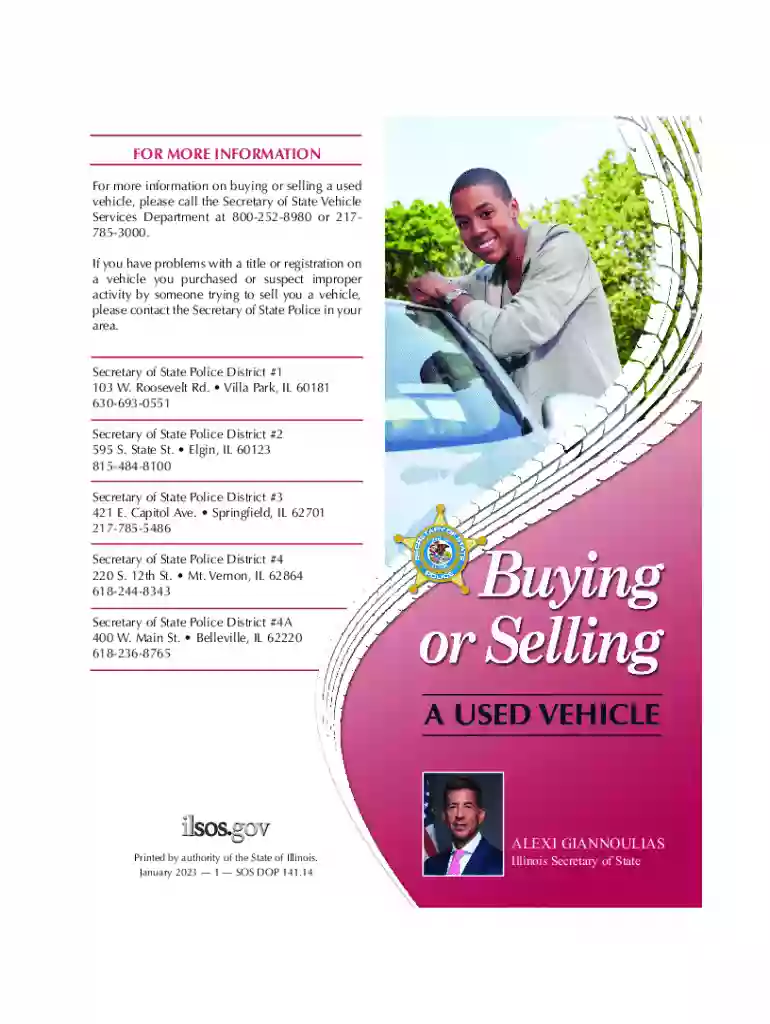
The form for buying or selling a vehicle in Illinois is a crucial document used to facilitate and legally document the transfer of vehicle ownership from a seller to a buyer. This form ensures that the vehicle's title and corresponding legal ownership are correctly transferred, safeguarding both parties against future disputes. It involves specific details about the vehicle, such as the VIN (Vehicle Identification Number), make, model, year, and odometer reading, which are essential to verify the vehicle's unique identity.
In Illinois, legally transferring vehicle ownership aligns with state laws to protect both buyers and sellers, ensuring that the transaction is legitimate and binding. Both parties must follow specific state-mandated procedures to prevent any legal issues related to vehicle ownership, which includes neglecting to report the sale or failing to update registration information. Adhering to these legal requirements avoids penalties and ensures a seamless transition of ownership.
Illinois has specific requirements regarding vehicle sales such as mandatory emissions testing for some areas before the sale can be completed. The state's Lemon Law may also apply to newly purchased vehicles if certain criteria are met. Furthermore, Illinois mandates that sales tax is paid on vehicle purchases, usually calculated as a percentage of the sale price.
Consider a scenario where an individual sells their vehicle to a neighbor. They both fill out and sign the title and bill of sale, then the buyer submits these documents to the Illinois Secretary of State’s office to obtain a new title and registration in their name. This process highlights the form's role in preventing fraud and disputes over vehicle ownership. In a different case, a dealership uses the form to facilitate a trade-in, ensuring the previous owner's title is correctly transferred and the vehicle is properly re-registered before resale.
Failure to transfer vehicle ownership in a timely manner can result in penalties such as fines and a suspension of registration. Additionally, inaccurate or fraudulent information on vehicle titles can lead to severe legal consequences, emphasizing the importance of compliance with state regulations.
The transfer process accommodates both digital and paper forms, though digital submissions offer quicker turnaround times and ease of processing. However, a paper copy might be necessary for records or verification during an in-person visit, ensuring that all preferences and scenarios are covered.
Writing with these considerations and content blocks ensures that the audience receives detailed, relevant, and comprehensive guidance when buying or selling a vehicle in Illinois, while adhering to legal requirements and avoiding common pitfalls.
We've got more versions of the Buying or Selling a Vehicle in Illinois form. Select the right Buying or Selling a Vehicle in Illinois version from the list and start editing it straight away!
At DocHub, your data security is our priority. We follow HIPAA, SOC2, GDPR, and other standards, so you can work on your documents with confidence.



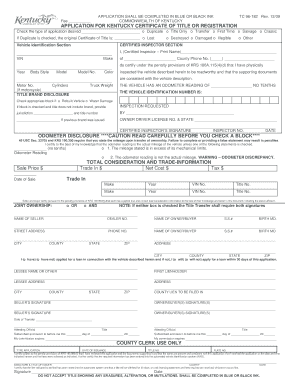


When you sell your car, you must declare the actual selling/ purchase price. Buying or Selling a Used Vehicle (217) 333-0952 Email: mstinson@illinois.edu
Title transfer fees vary DocHubly by state, ranging from $8 to over $100 in 2025. Illinois $190 Includes $165 title fee and $25 plate transfer. Washington


