
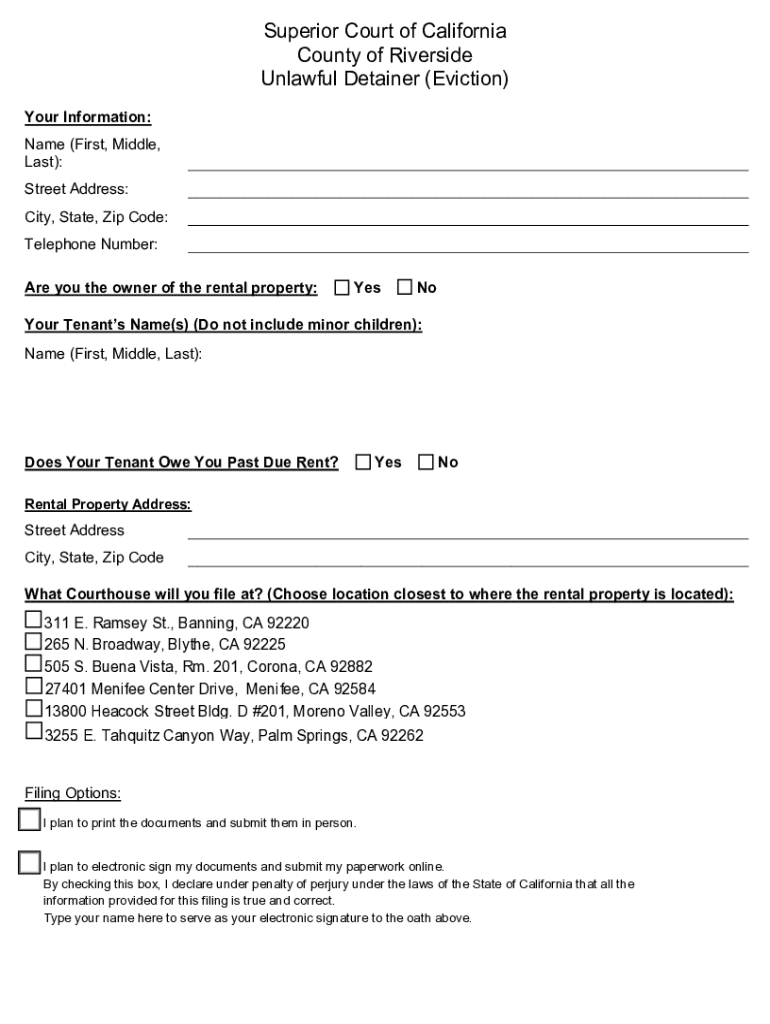







Definition and Meaning
An "Unlawful Detainer" in Riverside County refers to a legal action initiated by a landlord to regain possession of rental property from a tenant who has breached the lease agreement. Typically, this breach involves failure to pay rent or remaining in the property after the lease term has expired. This legal process is fundamental in ensuring landlords can reclaim their property lawfully while providing tenants with a structured legal framework to contest the eviction if necessary.
How to Obtain the Unlawful Detainer Form
To initiate an unlawful detainer action in Riverside County, you need to obtain specific forms from the Superior Court of California’s official website or in person at one of their courthouse locations. These forms include the Unlawful Detainer Complaint and other supporting documents required for the case. Utilizing platforms like DocHub can simplify the process by offering fillable online versions of these forms, which can be edited, signed, and submitted electronically.
Steps to Complete the Unlawful Detainer Form
-
Gather Necessary Information:
- Collect all relevant details, including the tenant's name, the property address, and lease terms.
- Document any notices served to the tenant.
-
Fill Out the Complaint:
- Include specifics about the breach, such as unpaid rent or expired lease.
- Use the form fields in DocHub to input this information accurately.
-
Attach Any Supporting Documents:
- Add copies of the lease agreement, any written notices served, and proof of service.
- Ensure all documents are clearly annotated for clarity.
-
Review and Validate:
- Check for errors or omissions.
- Use DocHub’s collaboration feature to get input from a legal advisor if needed.
Legal Use of the Unlawful Detainer Form
The use of the unlawful detainer form is strictly regulated by California law. Landlords are required to follow state-specific procedures to ensure the eviction process is fair and just. Failure to adhere to these guidelines can lead to dismissal of the case or potential legal repercussions for the landlord. Utilizing platforms like DocHub ensures the forms filed are up-to-date and compliant with the latest regulatory requirements.
Key Elements of the Unlawful Detainer Form
- Plaintiff and Defendant Information: Names and contact details of both landlord and tenant.
- Property Details: Address and description of the rental property in question.
- Lease Agreement Terms: Including the rental period and conditions breached by the tenant.
- Details of the Breach: Specific reasons for initiating the eviction, such as unpaid rent or lease violations.
Important Terms Related to Unlawful Detainer Forms
- Default Judgment: A ruling granted if the tenant fails to respond to the complaint.
- Summons: A formal notice requiring the tenant to appear in court.
- Three-Day Notice: A preliminary notice served to the tenant before filing the unlawful detainer, demanding rent payment or correction of lease violations.
- Service of Process: The delivery of legal documents to the tenant, affirming their awareness of the proceedings.
State-Specific Rules for California
In California, the unlawful detainer process is governed by specific timelines and procedural steps:
- Notice Periods: Typically, a three-day notice to correct a breach or quit is required before proceeding with formal eviction.
- Response Time: Tenants have five days to respond after service of the summons and complaint.
- Trial Requests: Either party can request a trial, typically resulting in a court hearing within 20 days.
Examples of Using the Unlawful Detainer Form
- Unpaid Rent: A landlord files an unlawful detainer against a tenant who has missed several rent payments despite receiving multiple notices.
- Lease Expiration: A tenant remains in a property after the lease term has ended, and the landlord seeks to recover possession.
- Lease Violations: Issues such as unauthorized subletting or damage to the property prompt the eviction process.
Form Submission Methods
The unlawful detainer form can be submitted through various channels:
- Online Submission: Platforms like DocHub allow for the complete digital process, enabling forms to be filled, signed, and submitted electronically.
- In-Person Filing: Visit the courthouse to file documents directly, ensuring all forms are complete.
- Mail Submission: Send the completed forms to the appropriate courthouse address, ensuring timely delivery to comply with court deadlines.




