
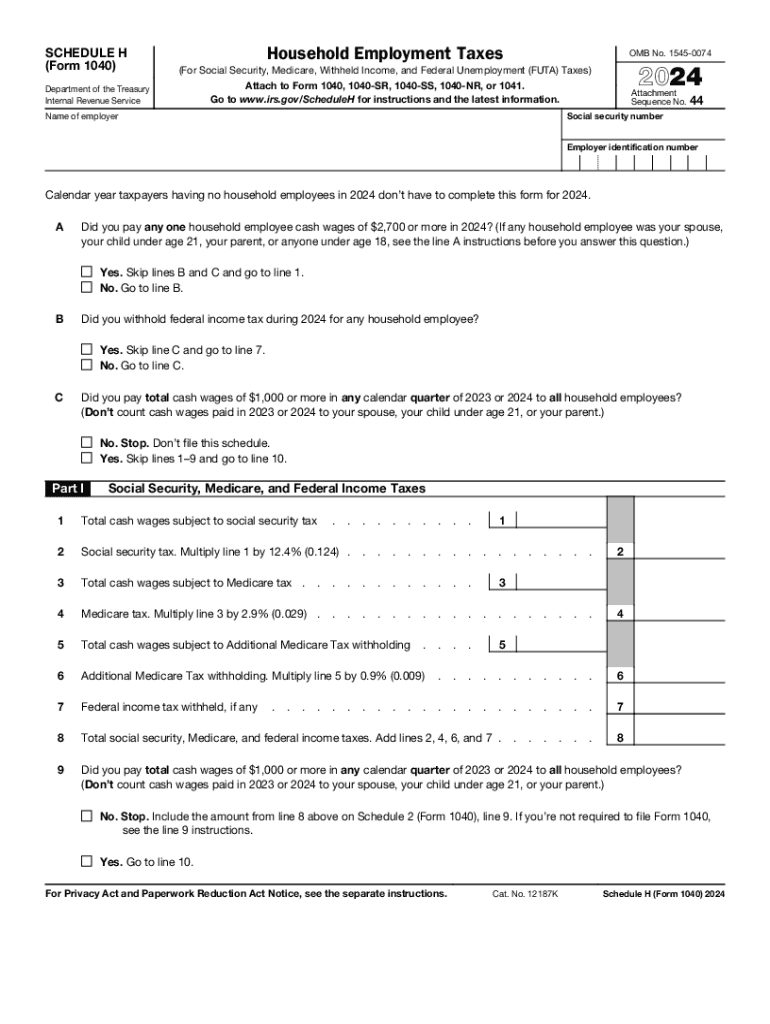







Definition and Meaning of Schedule H
Schedule H (Form 1040) pertains to household employment taxes. It is used by taxpayers who employ household workers, such as nannies, housekeepers, or gardeners, to report taxes like Social Security, Medicare, and Federal Unemployment Taxes (FUTA). Individuals who pay a household employee cash wages of $2,700 or more in a year, or who choose to withhold federal income tax, are required to file Schedule H. This form calculates the total employment taxes owed and integrates this amount into the taxpayer's overall tax responsibilities reported on Form 1040.
Steps to Complete Schedule H
Completing Schedule H involves several steps, emphasizing accuracy and adherence to IRS guidelines:
-
Gather Information: Collect all relevant details about your household employee(s), including wages paid within the year, Social Security numbers, and any federal income tax withheld.
-
Calculate Social Security and Medicare Taxes: Multiply the employee's wages by the current tax rates to compute these amounts. As of 2024, rates are 6.2% for Social Security and 1.45% for Medicare.
-
Determine FUTA Obligations: Calculate FUTA tax based on wages, considering the $7,000 wage base limit. The tax rate is typically 6%, but credits for state unemployment taxes can reduce this figure.
-
Complete Form Sections: Enter the calculated taxes in their designated sections of Schedule H. Ensure each entry is accurate to prevent discrepancies during the filing process.
-
Transfer Amounts to Form 1040: The total taxes from Schedule H must be reported on Form 1040. This step ensures the integration of household employment taxes into your overall tax filings.
Required Documents for Filing
Accurate completion of Schedule H relies on having certain documents available:
-
Wage Records: Maintain pay stubs or records of payments made to the household employee throughout the year.
-
Employer Identification Number (EIN): This is required if you pay wages to a household employee.
-
Social Security Numbers: Ensure you have the correct SSNs for each household employee to avoid errors.
-
State Unemployment Tax Information: If applicable, keep records of any state-level unemployment taxes paid to utilize credits against federal FUTA.
Important IRS Guidelines
When filing Schedule H, adhere to these crucial IRS guidelines:
-
Threshold Requirements: Schedule H is mandatory if you pay a household employee $2,700 or more in cash wages.
-
Withholding Options: While withholding federal income tax from a household employee isn't obligatory, doing so obligates Schedule H filing.
-
Record Retention: Retain all tax-related documents for household employees for at least four years, in case of IRS inquiries or audits.
-
Timeliness: File Schedule H with your annual return to avoid penalties for late submissions. Align this filing with the usual tax deadline, typically April 15.
Who Typically Uses Schedule H
Schedule H is primarily used by individual taxpayers who hire household employees and meet specific wage or tax withholding criteria. This form does not apply to business entities or those employing individuals for business-related purposes. The typical users include:
-
Homeowners with Domestic Staff: Those employing nannies, housekeepers, or senior caregivers.
-
Landlords with Seasonal Workers: Individuals hiring seasonal help for properties not designated as business operations.
Filing Deadlines and Important Dates
Schedule H follows the same filing deadlines as Form 1040, which is typically April 15. However, if you file for a tax extension, the deadline may extend to October 15. Consider these key dates:
-
Early January: Start preparing by gathering necessary information and documents.
-
April 15: Deadline for filing both Schedule H and Form 1040 without penalties.
-
October 15: Extended deadline if you file for an extension. Ensure this is submitted timely to avoid interest or penalties.
Penalties for Non-Compliance
Failure to accurately complete and submit Schedule H can result in penalties:
-
Late Filing Penalties: A late submission may incur penalties, generally 5% of the unpaid tax per month, up to 25%.
-
Inaccurate Reporting Penalties: Incorrect tax calculations or omitted information may lead to additional charges.
-
Interest on Unpaid Taxes: Unpaid employment taxes accumulate interest from the original due date of Schedule H.
Submission Methods: Digital and Paper
Schedule H can be submitted through various channels:
-
E-File: Integrated into popular tax software like TurboTax or through IRS services. This method is quick and helps eliminate human error from manual calculations.
-
Mail: Paper submissions are still accepted, but ensure the form is filled out legibly and mailed to the appropriate IRS address for processing.
-
Professional Tax Services: Leveraging the expertise of CPAs or tax professionals can facilitate accurate submissions and compliance with IRS regulations.
For those choosing digital solutions, ensure your software is compatible with Schedule H filing requirements, effectively integrating with other necessary forms and submissions.




