
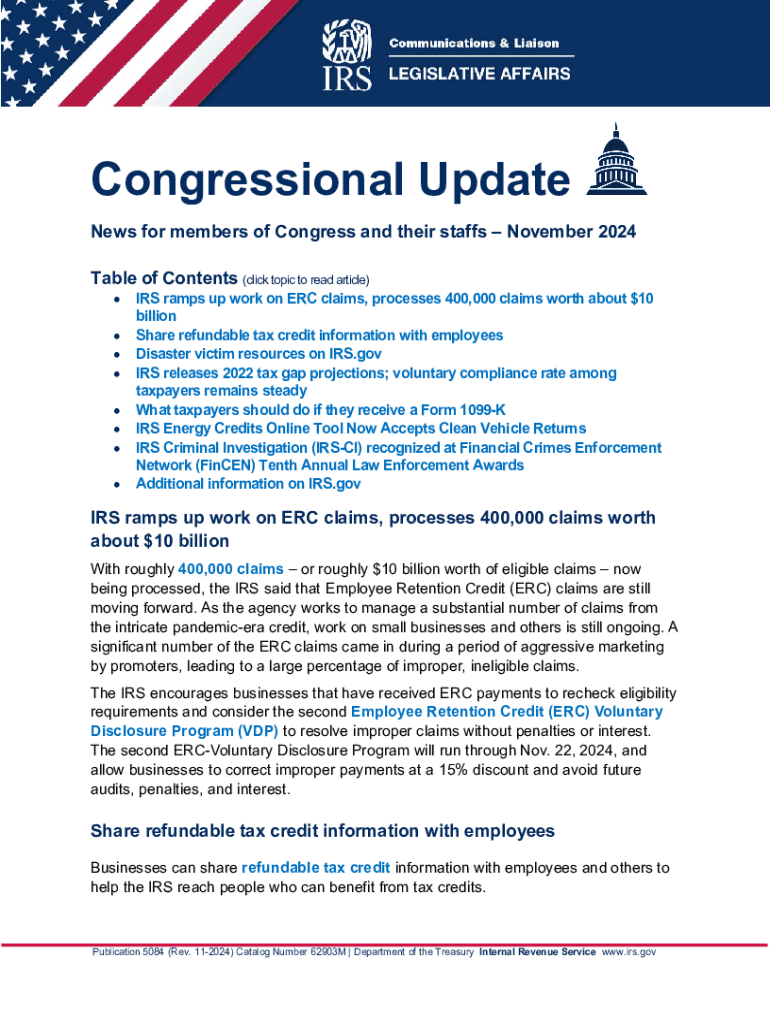







Understanding the Employee Retention Credit (ERC)
The Employee Retention Credit (ERC) is a refundable tax credit intended to assist businesses in retaining employees during challenging financial times, such as the COVID-19 pandemic. This credit is a part of the Coronavirus Aid, Relief, and Economic Security (CARES) Act, providing eligible employers with a financial incentive to maintain their workforce. The ERC allows businesses to reduce payroll taxes based on qualified wages paid to employees.
Eligibility Criteria for the ERC
To qualify for the Employee Retention Credit, businesses must meet specific conditions:
- Significant decline in gross receipts: Employers must have experienced a notable drop in quarterly gross receipts compared to the same quarter in the previous year.
- Partial or full suspension of business: Businesses whose operations were partially or fully suspended due to government orders limiting commerce, travel, or group meetings in 2020 or 2021 may qualify.
- Maximum number of employees: Different rules apply based on the number of full-time employees. Businesses with fewer than 500 employees generally have more flexibility in claiming the credit for all wages paid.


Important Terms Related to the ERC
Understanding key terms associated with the ERC is crucial for accurate claims:
- Qualified wages: These are the wages and compensation paid to employees during the eligibility period, including health plan expenses.
- Full-time employee: Defined by the IRS as an employee who worked at least 30 hours per week or 130 hours per month in 2019.
- Gross receipts: Total revenues from the sale of goods or services before any deductions.
Steps to Claim the ERC
Claiming the Employee Retention Credit involves multiple steps:
- Determine eligibility: Review the criteria, including gross receipts and the impact of government orders.
- Calculate the credit: Identify qualified wages and apply the credit percentage appropriate to the year.
- Use IRS Form 941: Report the Employee Retention Credit by filing the IRS Form 941, the employer’s quarterly federal tax return.
- Adjust previous filings: If necessary, file Form 941-X to amend previously filed returns and claim the ERC retrospectively.
Important IRS Guidelines for ERC Claims
The IRS provides specific guidance to ensure compliance with ERC claims:
- Maintain records: Employers should keep documentation that supports the eligibility criteria and calculation of the credit.
- Avoid double-dipping: Ensure no double benefits with other relief measures, such as the Paycheck Protection Program.
- Understand interaction with other credits: ERC cannot be claimed on wages used for other tax credits like the Family and Medical Leave Act credit.
Key Elements of the ERC Process
Several critical elements influence the ERC claiming process:
- Reporting mechanics: Properly completing and submitting IRS forms is crucial to receiving the full credit.
- Documentation: Accurate and comprehensive records must be kept for all relevant financial transactions and employment records.
- Timeliness: Filing deadlines must be observed to avoid penalties and ensure full entitlement.
Filing Deadlines and Important Dates
Staying abreast of specific ERC-related deadlines is vital:
- Quarterly filings: Employers must file their federal tax returns quarterly.
- Amendment deadlines: Generally, employers have up to three years to amend their returns with Form 941-X if necessary.
Using DocHub to Streamline ERC Documentation
DocHub provides advanced features to streamline the filing and documentation process for the ERC:
- Document editing and management: Import and manage your financial documents using intuitive tools.
- Collaboration features: Facilitate team collaboration with real-time updates and comments.
- Security protocols: Ensure sensitive data is protected with robust encryption and access controls.
ERC Penalties and Non-Compliance Concerns
Understanding the risks associated with improper ERC claims is essential:
- Penalties for incorrect filings: Submitting incorrect claims can lead to IRS penalties.
- Interest on unpaid taxes: Interest may accrue on any deferred taxes related to ERC claims.
- Audit risks: Retain comprehensive records to mitigate the risk of audits due to ERC claims.
Business Types and Scenarios Benefiting from the ERC
Different types of businesses stand to benefit from the ERC:
- Small and medium-sized businesses (SMBs): Especially those with fewer than 500 employees, stand to gain significant support.
- Non-profits: Certain non-profit organizations are eligible to claim the ERC.
- Severely impacted industries: Businesses in hospitality, travel, and retail sectors that faced substantial disruptions can benefit significantly.
Real-World Examples of ERC Utilization
Illustrating successful ERC utilization through real-world scenarios:
- Case studies: Documenting businesses that leveraged ERC to retain staff, highlighting quantitative outcomes.
- Comparative analysis: Examples showing before-and-after financial improvement due to ERC application.




