
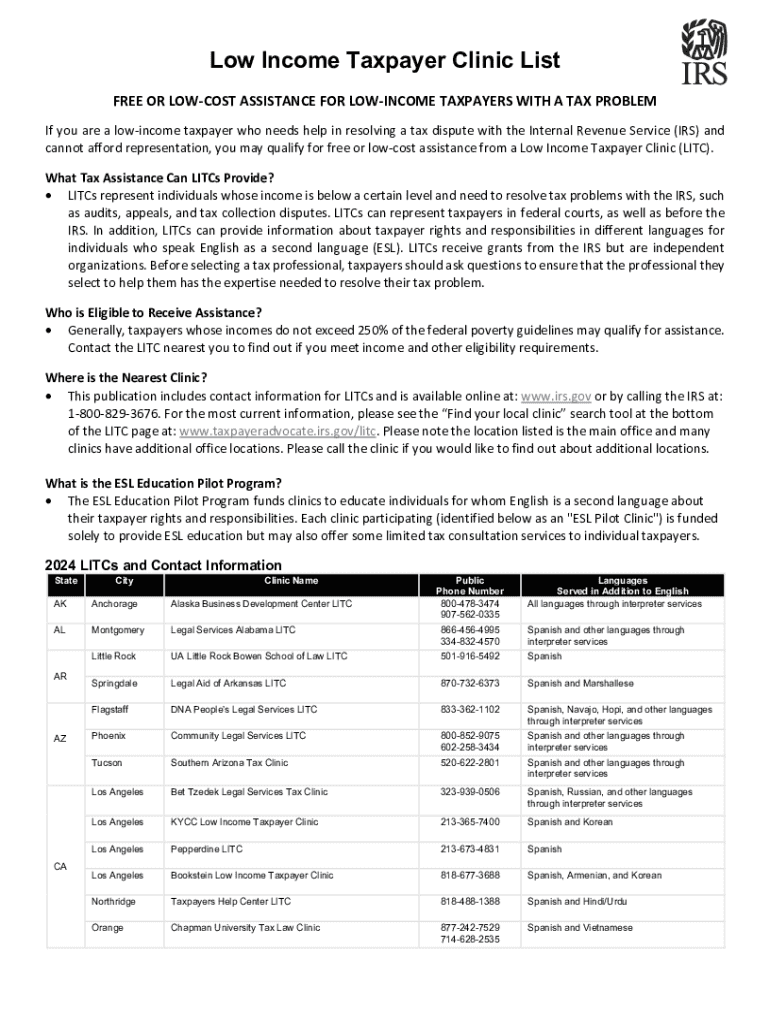







Definition and Purpose of Publication 4134 (Rev 9-2024)
Publication 4134 (Rev 9-2024) is an essential document for low-income taxpayers in the United States. It provides a comprehensive list of Low Income Taxpayer Clinics (LITCs) that offer assistance in resolving tax disputes with the Internal Revenue Service (IRS). These clinics aim to offer free or low-cost legal services to eligible taxpayers. The primary objective is to support individuals who face challenges in navigating the intricacies of tax laws due to financial constraints. This guide also includes contact details, eligibility criteria, and the services provided by LITCs, ensuring taxpayers can access the necessary resources.
How to Use the Publication 4134 (Rev 9-2024)
Using the Publication 4134 effectively involves understanding how to locate and interact with the listed LITCs. Start by identifying the clinics available in your state or area, which are categorized by location within the document. Review the eligibility criteria specific to each clinic as they may vary. Once you determine eligibility, compile any required documents, which may include previous tax returns, IRS notices, or financial statements, before reaching out. Contact the clinic using the provided information to seek assistance or set up an appointment.
Obtaining the Publication 4134 (Rev 9-2024)
The document can be accessed through various channels to ensure it is readily available to those in need. Primarily, it is distributed through the IRS website, where it can be downloaded as a PDF. Physical copies are also accessible at IRS offices and through community organizations involved with LITCs. Some public libraries may maintain a copy in their reference section as a resource for community members.
Why Use the Publication 4134 (Rev 9-2024)
This publication is pivotal for taxpayers who may struggle to afford conventional tax services. Leveraging the list within Publication 4134 empowers individuals to receive professional guidance on tax disputes without the financial burden. Using an LITC provides not only legal aid but also taxpayer education, helping individuals understand their rights and responsibilities. This education can reduce future tax-related issues by equipping taxpayers with knowledge to better manage their tax obligations.
Key Elements of the Publication 4134 (Rev 9-2024)
The document is structured to facilitate user navigation and comprehension. Key sections include a directory of clinics sorted by state, detailed descriptions of the services available, and eligibility criteria that vary by clinic. Additional features include information on the ESL education pilot program aimed at non-English speakers to educate them on taxpayer rights. An integral aspect is the contact information for each clinic, ensuring that users can easily initiate the process of obtaining assistance.
Eligibility Criteria for LITC Services
Eligibility for services listed within Publication 4134 is based on income levels and the nature of the dispute with the IRS. The criteria vary by clinic, but generally focus on individuals at or below 250% of the federal poverty level, as this threshold is a common standard used by LITCs to determine service eligibility. Applicants will need to provide proof of income and details of their tax dispute to qualify for assistance.


Legal Use of the Publication 4134 (Rev 9-2024)
The information within Publication 4134 is intended solely for individuals seeking legitimate tax assistance. While using these services, taxpayers are assured that their rights are protected under the law, as LITCs are governed by strict ethical guidelines. These clinics are not for initiating tax avoidance tactics but to aid in fair resolution of disputes and compliance with tax laws.
Examples of Using the Publication 4134 (Rev 9-2024)
Consider a taxpayer receiving a notice of debt from the IRS erroneously. Using the Publication 4134, they find a nearby LITC, verify their eligibility, and reach out for help. The clinic assists by reviewing their tax situation, verifying inaccuracies, and communicating with the IRS on their behalf. Alternatively, a non-English speaking taxpayer might use the ESL program to learn about their filing obligations, preventing future issues.
IRS Guidelines Associated with LITCs
The IRS provides comprehensive guidelines for LITCs regarding the services they should offer and ensures they operate within set ethical and legal standards. Publication 4134 details these regulations, ensuring that both the clinics and the taxpayers understand their rights and responsibilities. This framework assures a level of quality and consistency in the service provided across different states.
State-Specific Rules for Accessing LITCs
While LITCs follow federal guidelines, individual states may impose additional rules affecting eligibility and available services. Publication 4134 provides information tailored to these state-specific regulations, ensuring taxpayers can successfully navigate any local requirements. Understanding these nuances is crucial for accessing appropriate services and receiving timely assistance.
Differences Across States in LITC Availability
The accessibility of LITCs can vary widely from one state to another. Factors influencing this include regional funding, local demand for services, and state-specific tax regulations. Publication 4134 highlights these differences, helping taxpayers identify the best available options in their area. States with fewer clinics may offer additional resources to ensure service coverage for all eligible residents.
Digital vs. Paper Version of Publication 4134
Publication 4134 is available as both a digital download and a printed document, ensuring broad accessibility. The digital version is convenient for quick reference and searching by keyword, while the print version might be preferred by individuals without easy internet access. Both formats aim to maximize accessibility, allowing taxpayers to choose the version that best suits their needs.
Filing Deadlines and Important Dates to Consider
While Publication 4134 itself is informational, users must be aware of tax filing deadlines to avoid penalties. LITCs can assist in understanding deadlines specific to their tax disputes, which may include appeal submissions, payment plans, or other IRS interactions. Staying informed about these critical dates ensures compliance and can help in timely resolution of tax issues.




