




01. Edit your form online
Type text, add images, blackout confidential details, add comments, highlights and more.

Type text, add images, blackout confidential details, add comments, highlights and more.

Draw your signature, type it, upload its image, or use your mobile device as a signature pad.

Send it via email, link, or fax. You can also download it, export it or print it out.
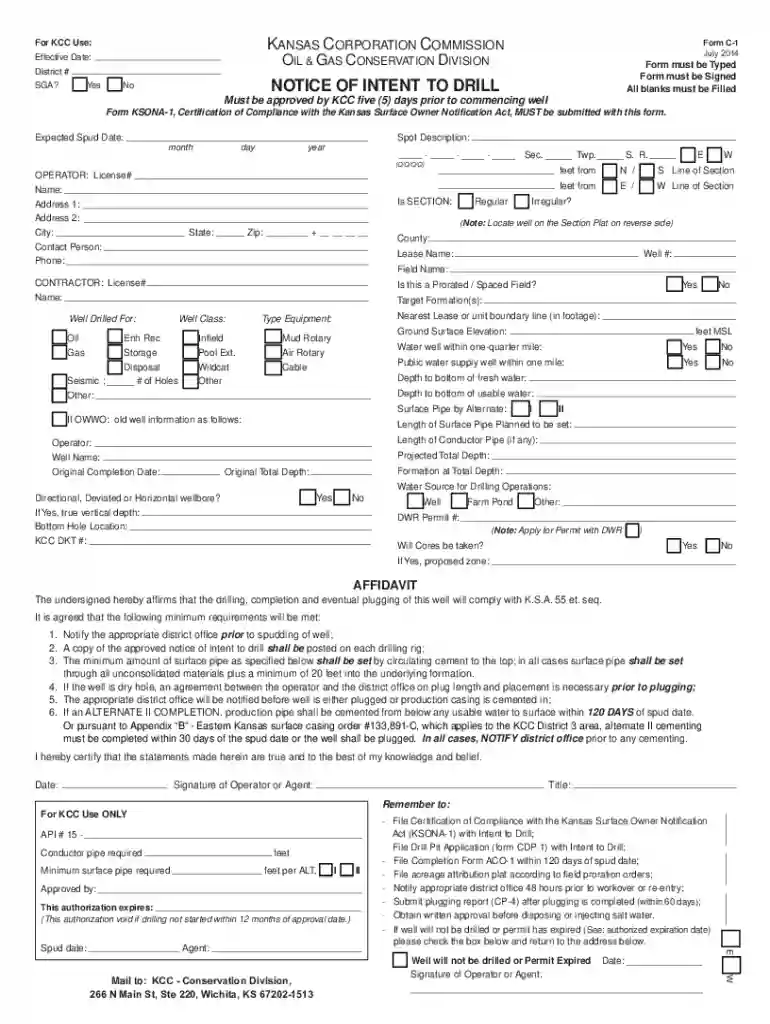
The term "Target Formation(s):" refers to a critical aspect in the oil and gas industry, particularly within geological and drilling contexts. It denotes the specific geological formations where drilling is planned to occur, often aimed at extracting hydrocarbons like oil and gas. Understanding these target formations involves detailed geological analysis and is crucial for effective exploration and extraction activities. These formations are chosen based on factors such as rock type, historical data on resource availability, and projected extraction yields.
The information about target formations is used primarily in planning drilling projects. It aids in optimizing drilling strategies by focusing efforts on formations with maximum extraction potential. This section is also essential for regulatory compliance, ensuring that all drilling plans adhere to relevant safety and environmental regulations. Furthermore, sharing these documents with stakeholders can foster transparency and alignment in project objectives.
Preparing and maintaining thorough documentation of target formations is not only a best practice but often a legal requirement. Compliance with regional and national regulations is crucial to obtain drilling permits. Accurate records ensure legal protection, serving as a reference in case of disputes over resource rights or environmental impacts. This documentation is vital for audits, verifying that extraction activities follow agreed plans and regulatory guidelines.


Different states in the U.S. may have specific regulations governing the targeting of formations for resource extraction. These can include additional requirements for environmental assessments, drilling permits, and public disclosure of drilling plans. It is essential to consult local regulations and engage with state regulatory bodies to ensure compliance with all relevant laws and guidelines.
Case studies where companies successfully identified and drilled into target formations can provide insight into best practices. For instance, an exploration company might identify a promising formation through seismic surveys and confirm their findings through test drilling. The subsequent documentation of these formations can guide other projects, offering templates for assessment methods and reporting requirements.
Failure to accurately document and report target formations can lead to significant penalties. These may include financial fines, suspension of drilling permits, or mandatory cessation of operations. Non-compliance can also result in reputational damage, affecting business relationships and future projects. It is imperative to maintain stringent record-keeping and reporting protocols to avoid such repercussions.
We've got more versions of the Target Formation(s): form. Select the right Target Formation(s): version from the list and start editing it straight away!
At DocHub, your data security is our priority. We follow HIPAA, SOC2, GDPR, and other standards, so you can work on your documents with confidence.





S: Concentration of the (exogenous) target sequence; C(1): Concentration of the complex with target-specific cleavage capability (before activation); C(2):Read more
by P Wong 2016 Cited by 2 A fraction of erythrocytes appear as target cells in stained blood smears in sickle cell disease, due to a inheritance of the hemoglobin variant Hb S,
In an invariant TPM after movements of the eye occur with respect to a fixed light source, no ~hange ?ccur,s in the spatial locus which the light activates.Read more


