




01. Edit your apartment turnover checklist online
Type text, add images, blackout confidential details, add comments, highlights and more.

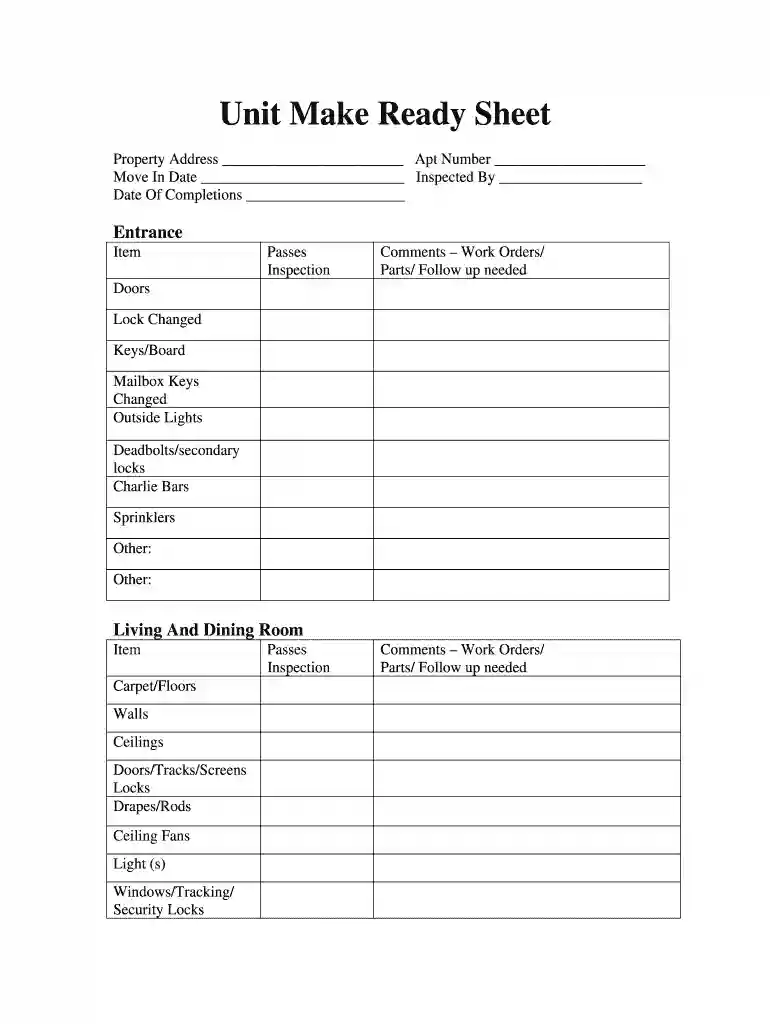
Type text, add images, blackout confidential details, add comments, highlights and more.

Draw your signature, type it, upload its image, or use your mobile device as a signature pad.

Send make ready apartment turnover checklist via email, link, or fax. You can also download it, export it or print it out.
An apartment make ready checklist is an essential tool for property managers and landlords to ensure that a rental unit is prepared for new tenants. This comprehensive guide covers every aspect that needs attention when inspecting and preparing a rental property, helping to streamline the turnover process.
Ensuring a smooth transition for new tenants involves a systematic approach, which includes various components to cover during the make-ready process. Below are some of the key components featured in a typical apartment make ready checklist:
Interior Inspections
Exterior Maintenance
Safety Features
Utilities Check
General Cleanliness
Repairs and Maintenance
The make ready checklist should be utilized systematically to ensure thorough coverage of the inspection. Here’s how to effectively use this tool:
Preparation: Gather all necessary tools and supplies before starting each inspection, including cleaning supplies, repair tools, and documentation materials.
Walkthrough: Conduct a comprehensive walkthrough of the apartment, using the checklist to check off items that pass inspection while noting necessary repairs.
Documentation: Maintain an accurate record of condition and any repairs or cleaning required. This will serve as a reference for both current work and future inspections.
Follow-Up: Once repairs are completed, schedule a final inspection to ensure everything adheres to the checklist criteria before showing the unit to prospective tenants.
After preparing the unit, it’s essential to have legally compliant agreements ready for new tenants. This includes:
A make ready checklist can vary depending on the specific needs of a property management team or individual landlord. Examples of variations include:
The modern property management environment increasingly benefits from digital tools. App platforms and software can enhance the efficiency of the make ready process by enabling:
By leveraging these resources effectively, landlords and property managers can ensure that their apartments are ready for new occupants while maintaining high standards of service and compliance.
At DocHub, your data security is our priority. We follow HIPAA, SOC2, GDPR, and other standards, so you can work on your documents with confidence.



Apartment Make Ready Checklist From Clutter to Chic My Apartment MakeReady. Checklist for a StressFree Move Imagine this youre standing in your cramped but.
Jul 31, 2022 Does the owner make repairs when asked? Yes 1R. 2. How many people live there? . 3. How much money do you pay to the owner/agent for rentRead more


