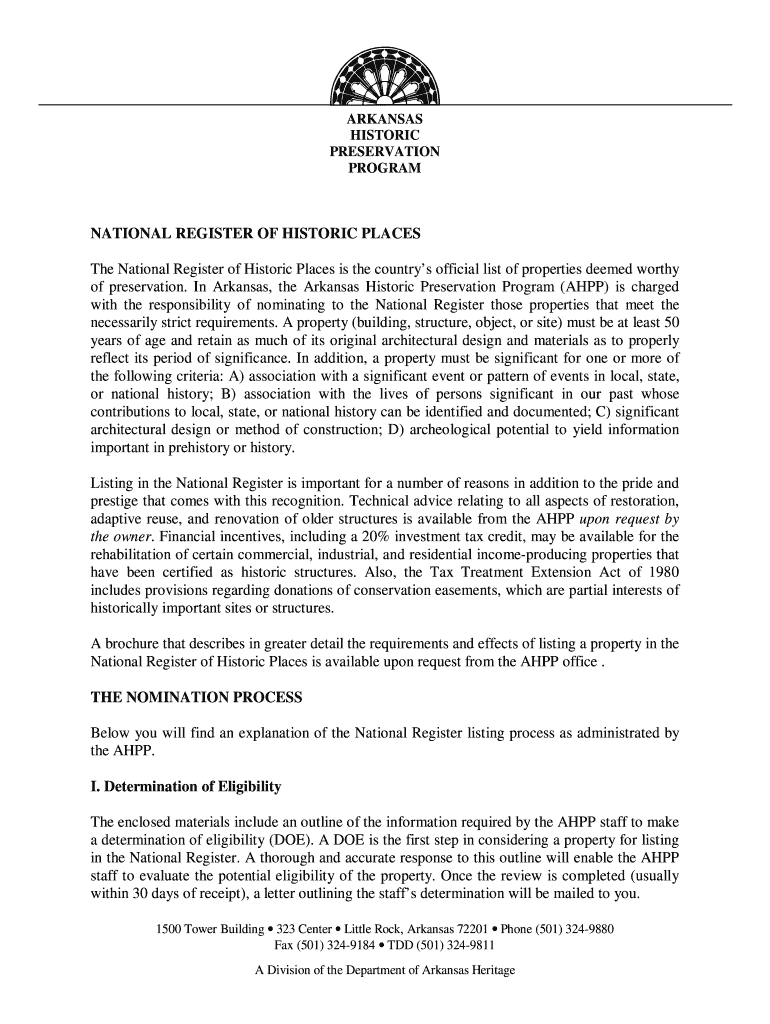







Definition and Meaning of the National Register of Historic Places
The National Register of Historic Places is the United States' official list of properties deemed worthy of preservation for their historical, architectural, or archaeological significance. Administered by the National Park Service, it is a critical tool in recognizing and celebrating the cultural heritage of the nation. Properties listed can include buildings, sites, districts, structures, and objects considered important due to their historical significance, architectural style, association with significant events or people, or for providing important information about history.
Benefits of Being Listed on the National Register
- Recognition and Prestige: Properties on the register gain significant recognition and are celebrated for their contribution to national heritage.
- Financial Incentives: Owners of listed properties may qualify for certain tax incentives, grants for historical preservation, and technical conservation assistance.
- Protection and Conservation: Listing can offer protections against federally funded or permitted projects that might otherwise alter or demolish historic properties.
How to Use the National Register of Historic Places
The National Register is a valuable resource for historians, educators, and the general public interested in American history and heritage conservation. It is used to:
- Research Historical Properties: Access detailed descriptions and histories of listed properties, valuable for academic research or personal interest.
- Tourism and Education: Explore historic sites as part of educational programs or tourism, highlighting the cultural and architectural heritage across the United States.
- Planning and Development: Urban planners and developers use the Register to identify historically significant areas and incorporate preservation into urban development projects.
Steps to Nominate a Property to the National Register
- Determine Eligibility: Before nominating a property, determine its eligibility based on age, integrity, and significance. Typically, a property must be at least 50 years old and possess historical, architectural, or archaeological significance.
- Prepare a Nomination Form: Complete the National Register Registration Form, providing detailed documentation, including a description of the property, its significance, and photographs.
- Submit to State Historic Preservation Office (SHPO): The SHPO reviews nominations to ensure they meet the criteria. Depending on the location, an additional local historic commission may also be involved.
- National Park Service Evaluation: After SHPO approval, the nomination is forwarded to the National Park Service for final evaluation and listing.
Key Elements of a Successful Nomination
Required Documentation
- Historical Significance: A narrative explaining the property's historical context and significance.
- Architectural Description: Detailed descriptions of buildings or structures, highlighting unique architectural elements.
- Photographs and Maps: High-quality images and maps documenting the property's current condition and setting.
- Supporting Documents: Additional documents such as historical records, previous studies, or personal testimonies that support the nomination.
Important Terms Related to the National Register
- Historic District: A significant concentration of sites, buildings, structures, or objects that are united historically or aesthetically by plan or physical development.
- Contributing/Non-Contributing Property: A term used to denote whether a property within a historic district contributes to the district's historic significance.
- Integrity: The ability of a property to convey its historical significance through location, design, setting, materials, workmanship, and association.
State-Specific Rules and Processes
Each state may have additional rules and processes for nominating properties, often managed by the state’s historic preservation office. States may offer additional grants or incentives, create criteria more stringent than the national requirements, or have specific deadlines for submission.
Case Studies: Successful Listings
- Example 1: A Victorian-era mansion listed due to its architectural beauty and association with a prominent local figure.
- Example 2: A historic district where numerous buildings contribute to the understanding of early 20th-century urban development, fostering community pride and tourism.
Who Typically Uses the National Register of Historic Places?
- Historians and Researchers: For academic studies or writing books/resources about historical events or periods.
- Preservationists: For identifying and advocating for the preservation of significant properties.
- Educators: As a teaching tool about local and national history in schools and community programs.
- Government Agencies: For planning and compliance with federal preservation laws.
By following these guidelines and understanding the comprehensive significance of the National Register of Historic Places, individuals and communities can effectively contribute to the preservation of America's rich historical tapestry.