







Definition & Meaning
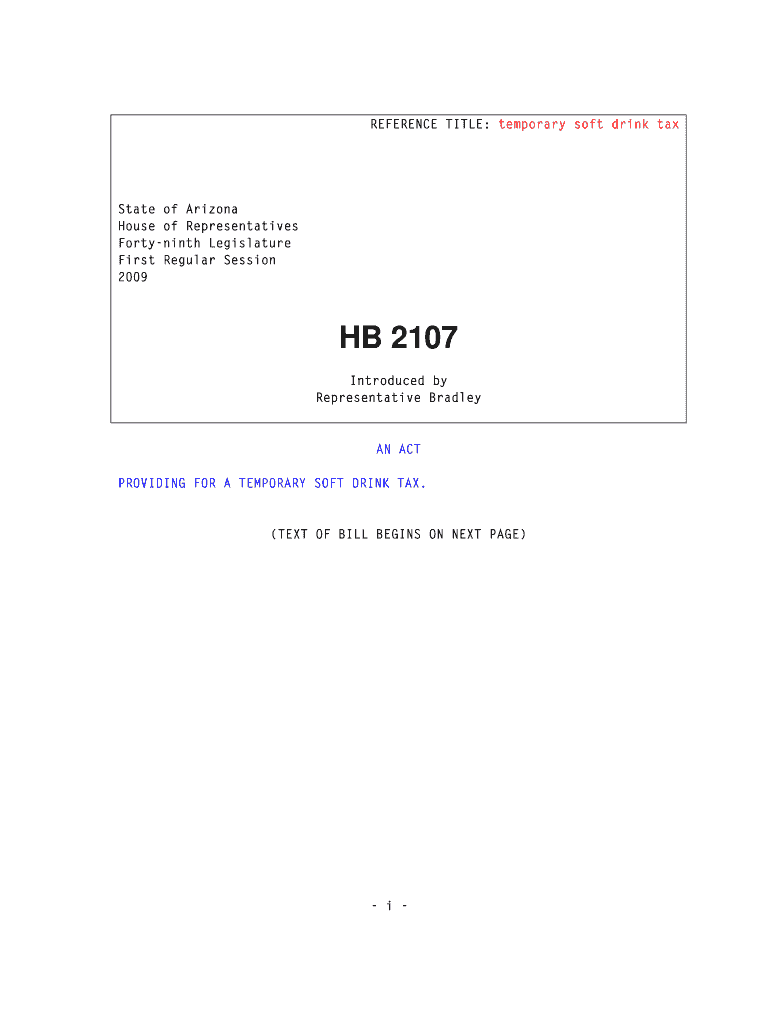
The "Soda - Arizona State Legislature" form, as discussed in the context of Arizona House Bill 2107, involves legislative actions regarding the taxation of soft drinks within the state of Arizona. This form outlines the parameters, including tax rates on various sugar-based beverages, set to generate revenue for the state's general fund. The form specifies the time period for the temporary tax, beginning July 1, 2009, and concluding on June 30, 2012. Exemptions to this tax, such as sales to government entities, exports, and drinks with high natural juice content, are also chronicled in the form.
How to Use the Soda - Arizona State Legislature Form
The purpose of this form is to inform relevant stakeholders, including businesses and government representatives, about the specifics surrounding the taxation of soft drinks. Business owners dealing in sugary beverages would use the form to calculate applicable taxes during the specified time frame. They would identify which products fall under the tax guidelines and ensure compliance with all stipulations. Additionally, those involved in legislative processes can refer to this document for understanding and discussing policy impacts related to the taxation of soft drinks.
Steps to Complete the Soda - Arizona State Legislature
-
Identify Applicable Products:
- Review the list of soft drinks subject to the temporary tax.
- Confirm exclusions under the exemptions, such as beverages with high natural juice content.
-
Calculate the Applicable Tax Rate:
- Utilize specified tax rates on taxed beverage categories.
- Ensure accurate calculation by considering all eligible transactions.
-
Document Exemptions:
- Record all exempt transactions, such as sales to government agencies and export sales, to validate non-taxed status.
-
Consolidate and Report:
- Aggregate taxable sales data and maintain comprehensive records for audit purposes.
- Ensure all values are reported accurately according to the guidelines set forth in the form.
Legally Binding Nature and Compliance
Following the guidelines in Arizona House Bill 2107, compliance with the "Soda - Arizona State Legislature" form during its period of enforcement is mandatory for all applicable transactions. Adherence to these guidelines, including accurate tax calculations and conscientious reporting of taxes and exemptions, ensures legal compliance. Legal binding comes with the legislative backing of the process, as a two-thirds vote was required for enactment.
Examples of Using the Soda - Arizona State Legislature Form
- Retailers: A grocery store keeping track of all soft drink sales and calculating respective taxes can ensure compliance through the comprehensive use of this form.
- Distributors: A beverage distributor who handles both taxable and exempt products can clearly define taxable revenue streams in compliance with the guidelines.
- Export Businesses: A company focused on the export of soft drinks may leverage documentation of exempt sales which must be reported accordingly.
Required Documents
Businesses should maintain a collection of documentation, including:
- Detailed sales logs
- Tax calculation records
- Documentation of exempt transactions
Each document serves as verification during audits or reviews of business practices in relation to the temporary tax.
Important Terms Related to Soda - Arizona State Legislature
- Temporary Tax: A limited-time tax imposed on specific goods—in this case, sugary beverages.
- Exemptions: Certain conditions under which standard tax requirements do not apply, such as sales to government institutions or the export of goods.
- Natural Juice Content: A criteria for exemption based on the portion of natural juice in a beverage, that distinguishes it from sugar-based drinks.
State-Specific Rules for the Soda - Arizona State Legislature
- The focus of tax compliance in Arizona maps specifically to the enforced timelines and defined product categories.
- Variations in similar taxation laws in other states can protect businesses that operate across state lines by encouraging tailored compliance protocols for each jurisdiction.




