
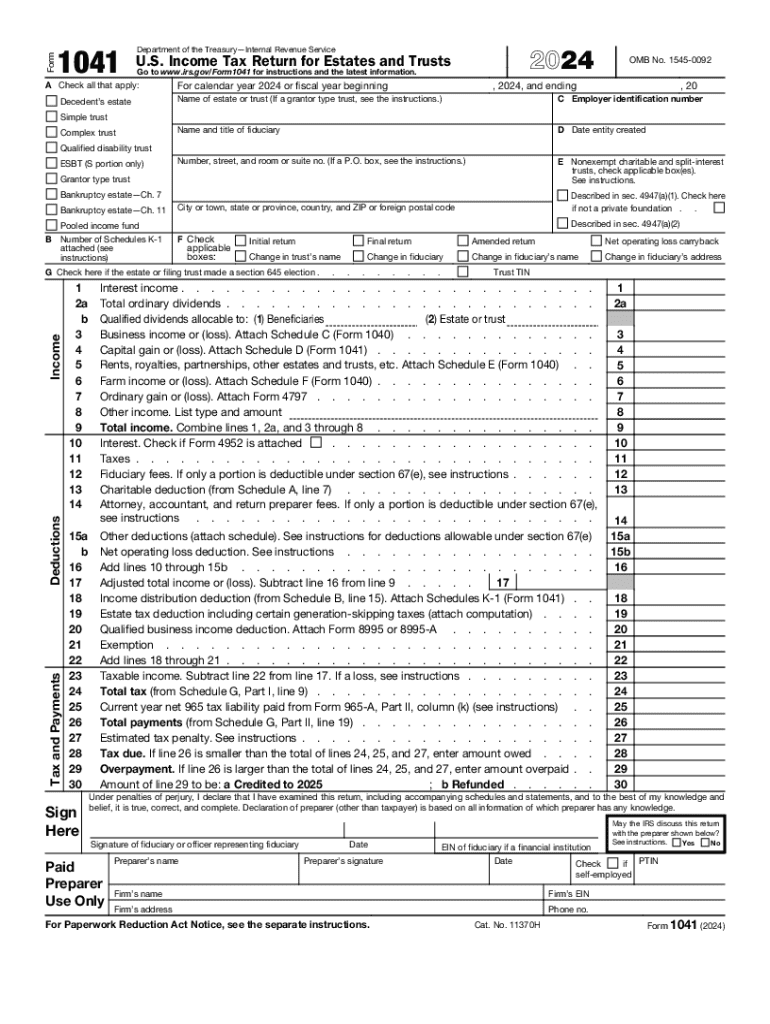







Definition and Purpose of Form 1041
Form 1041, the U.S. Income Tax Return for Estates and Trusts, is utilized by fiduciaries to report the financial activities of estates and trusts. This form is essential for reporting income, deductions, tax calculations, and accounting for distributions to beneficiaries. By understanding its purpose, users are prepared to meet compliance requirements and ensure accurate financial reporting for these entities.
How to Use the Form 1041
To effectively use the 2024 Form 1041, individuals should focus on accurately documenting all financial transactions related to the estate or trust. This involves detailing income sources, listing deductions, and calculating the taxable income. Users should ensure that every section of the form reflects their financial activities to avoid inaccuracies. The use of accounting software or professional assistance may be beneficial for complex scenarios involving multiple income streams or deductions.
Steps to Complete the Form 1041
- Identify the Estate or Trust: Start by clearly stating the name and address of the estate or trust, along with the employer identification number (EIN).
- Report Income: Include all income from sources such as interest, dividends, and capital gains on the respective schedules.
- Deduct Expenses: List deductible expenses like fiduciary fees, legal fees, and any other relevant deductions.
- Calculate Taxable Income: Subtract total deductions from total income to determine the taxable amount.
- Detail Distributions: Document income distributions to beneficiaries using Schedule K-1.
- Sign and Submit: Ensure the form is signed by the fiduciary before submission via the preferred method.
Filing Deadlines and Important Dates
Understanding the filing deadlines and crucial dates for Form 1041 ensures compliance and avoids penalties. Generally, the form must be filed by the 15th day of the fourth month following the end of the estate's or trust's tax year. Extensions may be available upon request, but awareness of deadlines is critical for timely filing.
Who Typically Uses Form 1041
Fiduciaries managing estates and trusts are the primary users of Form 1041. This includes executors, administrators, or trustees responsible for overseeing the financial undertakings of these entities. Understanding their responsibilities and how this form aids in compliance is key to accurate tax reporting.
Key Elements of the 2024 Form 1041
The form encompasses several vital sections, such as:
- Income Reporting: Detailing all sources of income.
- Deductions and Credits: Highlighting deductible expenses.
- Tax Liability Calculation: Assessing the total tax due.
- Beneficiary Distributions: Documenting payments or distributions to beneficiaries.
IRS Guidelines and Compliance
Aligning with IRS guidelines is crucial while completing Form 1041. The IRS provides specific instructions on how to fill out each section, list deductions, and report income. Fiduciaries can benefit from reviewing these guidelines to ensure their filings meet federal standards.
Penalties for Non-Compliance
Failure to file Form 1041 accurately or on time can result in significant penalties. These may include daily penalty fees for late submissions and inaccuracies. Understanding the potential financial repercussions underscores the importance of diligent form completion and timely filing.
Required Documents for Submission
Preparation of Form 1041 requires various supporting documents to validate reported figures. These documents may include:
- Financial Statements: Detailing income and expenses.
- Beneficiary Statements: Confirming distributions.
- Proof of Deductions: Such as receipts or invoices for allowable expenses.
Ensuring the availability of these documents streamlines the filing process and supports the accuracy of reported information.
By following a comprehensive, structured approach, fiduciaries can navigate the complexities of the 2024 Form 1041 U.S. Income Tax Return for Estates and Trusts, ensuring compliance and financial accuracy.


