Definition & Meaning
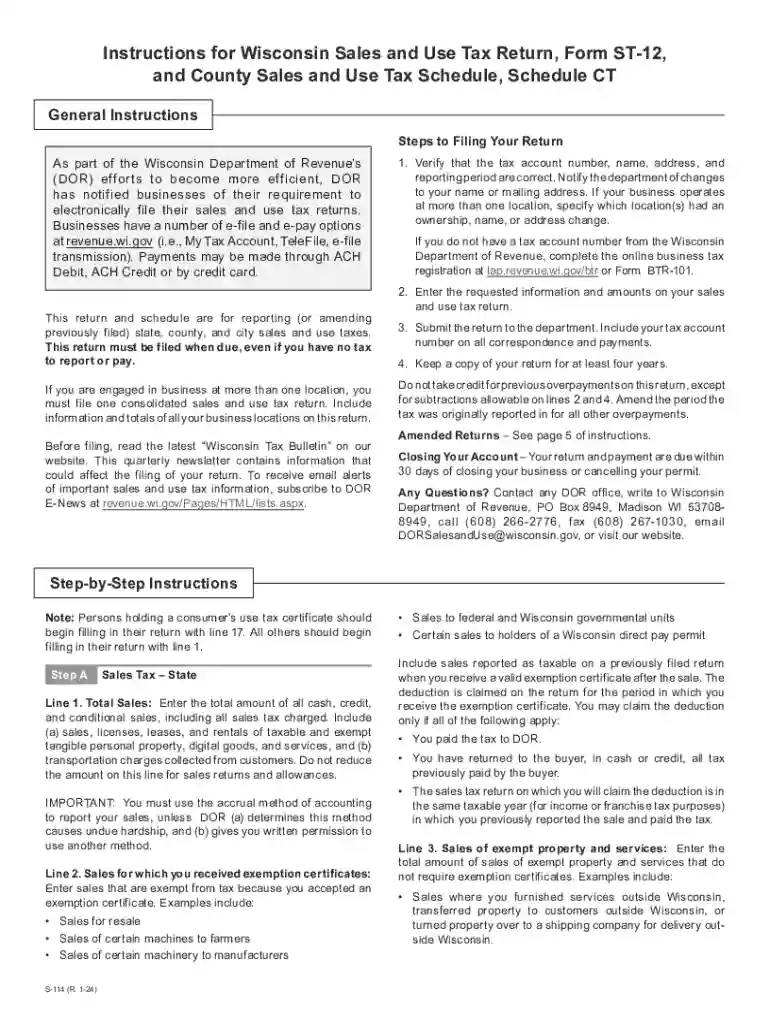
The "2024 S-114 Instructions for Wisconsin Sales and Use Tax Return, Form ST-12, and County Sales and Use" provides detailed operational guidance for businesses and individuals mandated to report sales and use taxes in Wisconsin. This document is crucial for ensuring compliance with state tax laws by detailing filing procedures, due dates, and requirements. The instructions clarify who needs to file, how to calculate taxes owed, and the specific information necessary for accurate reporting.
Important Terms
Understanding the terminology used in the instructions is essential for accurate compliance. Key terms include:
- Sales Tax: Tax imposed on gross receipts from retail sales of taxable goods and services.
- Use Tax: Tax levied on goods used in Wisconsin that were not subject to sales tax at purchase.
- Exemptions: Specific categories or transactions that are not subject to sales or use tax.
- Gross Receipts: Total amount received from sales before deductions.
How to Use the 2024 S-114 Instructions
To utilize the instructions effectively, businesses should follow a methodical approach:
- Read the Filing Requirements: Understand who is obligated to file Form ST-12 and any county-specific schedules.
- Gather Documentation: Collect all necessary financial records, including sales data and exemption certificates.
- Calculate Taxes: Use the guidance to determine total sales, apply appropriate exemptions, and calculate owed taxes.
- Complete the Forms: Follow the step-by-step process outlined in the instructions to complete Form ST-12 and any applicable schedules.
Steps to Complete the 2024 S-114 Instructions
The completion process involves:
- Review the Instructions: Before starting, thoroughly review all sections of the instructions related to your business type.
- Draft the Form: Fill out a draft of Form ST-12, ensuring all figures align with your business records.
- Complete County Schedules: For those in applicable counties, complete Schedule CT with specific county rates.
- Double-Check Figures and Information: Verify that all calculations and reported figures are accurate.
- Submit the Form: File the completed form through the specified method, whether online, mail, or in-person.
Form Submission Methods
The state provides various options for submitting the form:
- Online Submission: Most efficient and recommended method via the Wisconsin Department of Revenue's website.
- Mail: Traditional paper submission method, ensure timely mailing before the deadline.
- In-Person: Submit directly at designated Wisconsin Department of Revenue offices for personal assistance.
Filing Deadlines / Important Dates
Filing deadlines are critical for avoiding penalties:
- Monthly Filings: Due on the last day of the month following the reporting period.
- Quarterly Filings: Due on the last day of the month following the end of the calendar quarter.
- Annual Filings: Due by January 31st of the following year.
Penalties for Non-Compliance
Penalties are imposed for late or incorrect filings, including:
- Late Filing Penalties: Financial penalties and interest may accrue for submissions past the due date.
- Incorrect Filings: Additional assessments may apply if discrepancies are found in reported figures.
Key Elements of the 2024 S-114 Instructions
Several elements are indispensable for a complete understanding:
- Identifying Information: Includes details like taxpayer identification numbers and business classifications.
- Sales Information: Comprehensive reporting of total sales and exemptions claimed.
- Tax Calculation: Instructional specifics on applying the correct state and county tax rates.
State-Specific Rules
Businesses operating in Wisconsin need to adhere to:
- Wisconsin-Based Exemptions: Understand state-specific exemptions, such as those for non-profit organizations.
- Rate Adjustments: Duty to apply correct tax rates that may differ across counties within Wisconsin.
Examples of Using the 2024 S-114 Instructions
Practical application scenarios:
- Retail Business: A store calculating the tax due on sales of clothing and accessories while accounting for state exemptions.
- Service Provider: A consulting firm determining tax liability on services rendered since certain services could be tax-exempt.
- Online Seller: Businesses dealing with remote sales must assess use tax for items sold to Wisconsin residents from other states.
Who Issues the Form
The Wisconsin Department of Revenue is responsible for issuing Form ST-12 and its accompanying instructions. This agency oversees the implementation and enforcement of tax regulations across the state, ensuring businesses comply with their tax responsibilities efficiently.