01. Edit your form online
Type text, add images, blackout confidential details, add comments, highlights and more.

Type text, add images, blackout confidential details, add comments, highlights and more.

Draw your signature, type it, upload its image, or use your mobile device as a signature pad.

Send it via email, link, or fax. You can also download it, export it or print it out.
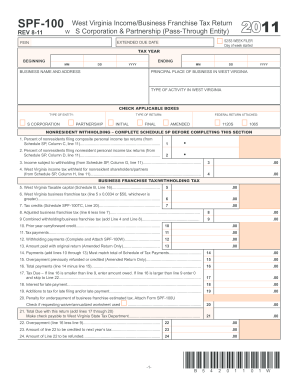
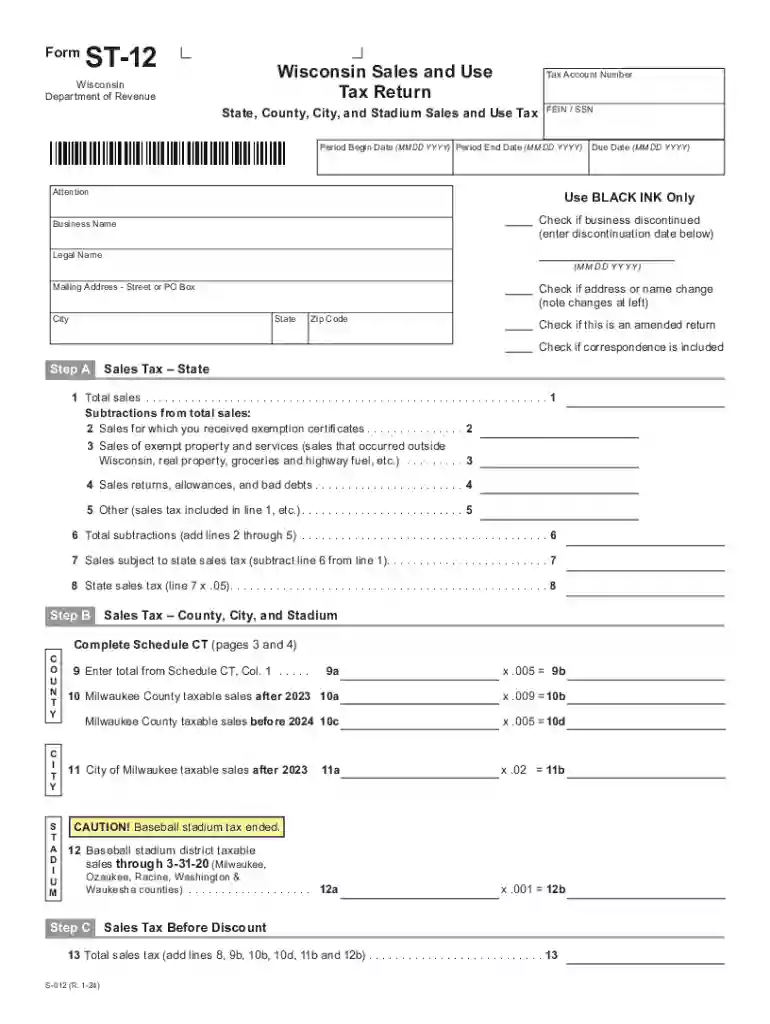
The January 2024 S-012 ST-12 Wisconsin Sales and Use Tax Return is a form used by businesses to report and remit sales and use tax collected within the state of Wisconsin. This form accounts for various tax types, including state, county, city, and stadium sales taxes. It's crucial for businesses engaging in transactions subject to sales tax to correctly complete this form to ensure compliance with Wisconsin tax laws.
To effectively use the January 2024 S-012 ST-12 form, businesses need to accurately record their taxable sales, applicable exemptions, and the resultant tax owed. This involves filling out sections for:
An accurate completion of these sections ensures compliance with state tax requirements.
By systematically following these steps, businesses can ensure accurate submission.
The Wisconsin S-012 ST-12 Tax Return typically has specific deadlines tied to the reporting period chosen by the business. Common reporting frequencies include monthly, quarterly, or annually. For January 2024 forms, ensure to follow deadlines that align with your business's reporting period to avoid late fees or penalties. It's advisable to verify dates with the Wisconsin Department of Revenue to maintain compliance.
The legal use of the S-012 ST-12 form includes accurately reporting sales and use tax obligations as required by the state. Compliance is mandatory, and any misinformation or delayed filings can result in legal repercussions such as penalties or fines. Businesses must keep thorough records supporting the figures reported on the form, as these may be subject to audits by tax authorities.
Failing to submit the January 2024 S-012 ST-12 form by the deadline, or providing incorrect information, may lead to significant penalties. These can include:
Timely and accurate submission is crucial to avoid these penalties, emphasizing the importance of diligent form preparation.
To complete the S-012 ST-12 return accurately, certain documents are necessary, such as:
Having these documents organized and accessible can streamline the completion and submission process.
The S-012 ST-12 form offers multiple submission options:
Choosing the most convenient method ensures timely compliance and avoids potential issues with filing.
We've got more versions of the January 2024 S-012 ST-12 Wisconsin Sales and Use Tax Return - State, County, City, and Stadium Sales form. Select the right January 2024 S-012 ST-12 Wisconsin Sales and Use Tax Return - State, County, City, and Stadium Sales version from the list and start editing it straight away!
At DocHub, your data security is our priority. We follow HIPAA, SOC2, GDPR, and other standards, so you can work on your documents with confidence.