Definition & Meaning
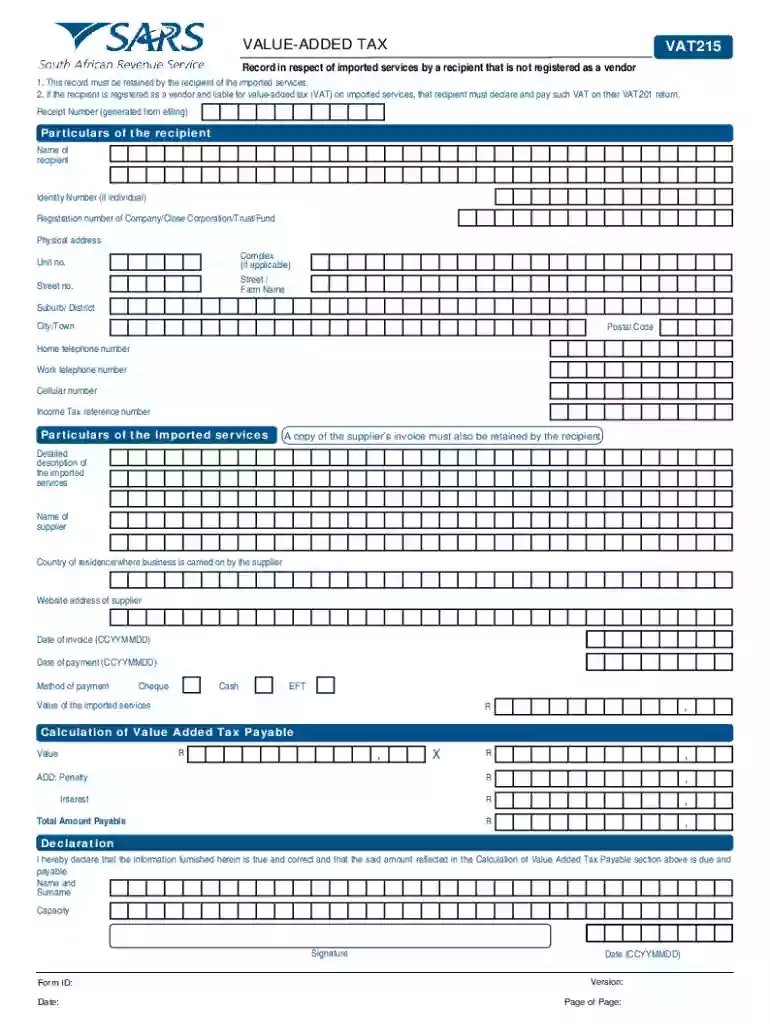
The "Record in respect of imported services by a recipient that is not registered as a vendor" refers to a formal documentation requirement under South African VAT law. This record is necessary for individuals or entities that consume imported services but aren't registered as vendors to account for their value-added tax (VAT) obligations. The record ensures that VAT is appropriately declared and paid, reflecting compliance with the tax regulations applicable to non-registered importers.
Key Elements of the Record
- Recipient Information: Details about the individual or business receiving the imported service, including name, address, and identification number.
- Supplier Information: Information about the foreign service provider, such as their name and location.
- Invoice Details: A comprehensive breakdown of all invoice components, including invoice number, date, and service description.
- Payment Methods: Documenting the method used to pay for services, like bank transfers or credit card transactions.
- Currency Conversion: Guidelines on how foreign currency invoices should be converted into local currency for tax purposes.
- Retention Period: Recipients must keep these records for five years as proof of compliance with taxation rules.
Steps to Complete the Record in Respect of Imported Services
- Gather essential documents, including invoices and payment receipts.
- Fill in recipient details, ensuring accuracy and completeness.
- Record supplier information precisely as indicated in received invoices.
- Document all particulars of the invoice, ensuring the services and charges are listed correctly.
- Use financial software or a reliable source for currency conversion if the transaction involved foreign currency.
- Ensure all entries are accurate, as errors could lead to compliance issues or penalties.
Why You Should Record Imported Services
- Compliance with VAT Laws: Proper documentation ensures adherence to legal tax obligations and avoids penalties.
- Financial Accuracy: Maintaining clear records helps in accurate financial reporting and analysis.
- Audit Preparedness: Comprehensive records are essential if your business undergoes tax audits by authorities.
- Transparency: Facilitates better transparency between businesses and tax authorities.
Penalties for Non-Compliance
Failing to maintain records as required can lead to significant repercussions:
- Fines: Monetary penalties can be imposed on non-compliant entities.
- Interest Charges: Delayed VAT payments due to improper record-keeping may incur interest.
- Legal Consequences: In severe cases, persistent non-compliance may lead to legal actions and further investigations.
Legal Use in the U.S. Context
While this form is specific to South African law, the concept of maintaining records for taxable services applies universally. In the United States, businesses are also required to maintain records for tax auditing purposes, ensuring transparency and accuracy in financial reporting. Different states may have unique regulations, but the principle of accurate record-keeping remains critical.
Taxpayer Scenarios
Different scenarios might necessitate keeping records for imported services:

- Small Businesses: Small enterprises not registered as vendors but using foreign services in operations.
- Freelancers: Independent contractors employing global services.
- Educational Institutions: Universities utilizing specialized international consulting or research services.
Software Compatibility
- Accounting Software: Many businesses use platforms like QuickBooks, Sage, or Xero to manage and maintain their records. These systems facilitate the process by automatically recording transactions and aiding in the currency conversion.
- Digital Record Tools: Platforms like DocHub offer robust document handling, allowing for easy digital record-keeping and sharing of necessary documents for compliance.
Required Documents
Essential documents include:
- Invoices: Original and translated copies if in a foreign language.
- Payment Proof: Bank statements or payment confirmations.
- Contractual Agreements: Copies of any agreement that detail service provision and payment terms.
State-by-State Differences
While the document is from South African law, in the United States, each state might have specific rules regarding taxation on imported services. It's crucial for businesses to consult state guidelines to ensure proper compliance and understanding of their local legal obligations.
Important Terms Related to the Record
- Vendor Registration: Refers to the process of a business becoming a recognized supplier under VAT laws.
- Imported Services: Services purchased from a foreign entity.
- VAT Declarations: Statements filed for declaring tax obligations related to the value-added tax on imported services.