






Definition and Meaning
Alternative septic systems are tailored wastewater treatment solutions designed to address specific site conditions that standard septic systems cannot accommodate. These systems are pivotal in areas with challenging soil types, high groundwater levels, or proximity to sensitive environmental features.
Key Elements of the Alternative Septic System
Alternative septic systems incorporate unique components to ensure effective treatment and dispersal of wastewater. These include advanced treatment units, drip irrigation, and sand filters. Each component is engineered to meet regulatory standards and adapt to site-specific conditions, enhancing the overall efficiency and reliability of the system.
Advanced Treatment Units
- Operate by mechanically processing wastewater to higher purification levels before dispersal.
- Essential for sites near water bodies or with space constraints.
- Typically involve aerobic treatment processes that reduce nutrient loads significantly.
Drip Irrigation
- Utilizes tubing to distribute effluent evenly across a designated area.
- Ideal for properties with limited or uneven terrain.
- Ensures uniform infiltration into the soil, minimizing the risk of localized saturation.
Sand Filters
- Act as a physical and biological treatment medium, further cleaning effluent before it reaches subsurface soils.
- Effective in filtering out remaining solids and pathogens.
- Reduces odor problems commonly associated with traditional septic systems.
Steps to Complete the Alternative Septic System Form
-
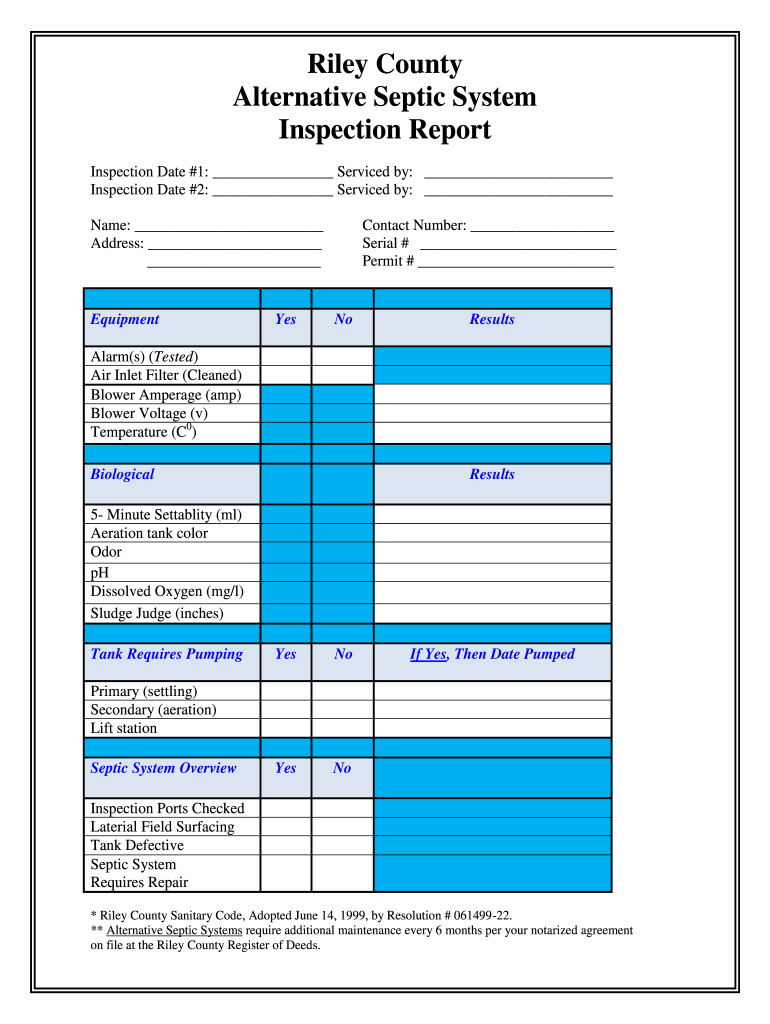
Gather Necessary Documents: Includes site assessments, system specifications, and maintenance agreements.
-
Complete System Details: Accurately fill in all technical details about the septic system used, including type and configuration.
-
Perform Site Evaluation: Indicate results from soil tests and environmental impact assessments carried out on the property.
-
Verify Compliance: Ensure that all components meet Riley County Sanitary Code requirements.
-
Submit Form: Provide completed form along with any necessary attachments to the Riley County Health Department for review.
Who Typically Uses the Alternative Septic System Form
The form is primarily used by property owners and developers in Riley County who need to install or maintain an alternative septic system. Additionally, environmental engineers, septic system designers, and regulatory authorities frequently interact with this form to ensure compliance and appropriate system design.


Important Terms Related to Alternative Septic Systems
- Biannual Maintenance: Regular servicing twice a year to ensure system functionality and compliance.
- Effluent: Wastewater outflow from a septic system, often requiring additional treatment in alternative systems.
- Riley County Sanitary Code: A set of regulations governing environmental health practices, including sewage disposal systems.
Legal Use of the Alternative Septic System Form
Compliance with the form ensures legal installation and operation of alternative septic systems in Riley County. Adhering to the code mitigates legal risk, preventing potential fines or penalties for non-compliance.
State-Specific Rules for Using Alternative Septic Systems
Riley County, like many jurisdictions, has specific regulations addressing the installation and maintenance of alternative septic systems. These are shaped by state laws designed to protect environmental and public health.
- Strict Siting Criteria: Systems must be positioned based on soil type, water table depth, and proximity to sensitive areas.
- Routine Inspection Mandates: Alternative systems require periodic reviews to verify operational integrity and environmental compliance.
Examples of Using the Alternative Septic System Form
A property developer planning a residential project on a lot with poor soil conditions might use an alternative septic system to meet county requirements. Detailed documentation and adherence to Riley County's regulations ensure that the project proceeds smoothly without environmental or legal setbacks.
Required Documents for the Alternative Septic System Form
Essential documents include site plans, soil evaluation reports, system design specifications, and proof of compliance with Riley County codes. These deliverables demonstrate that all criteria for safe and effective waste treatment are met.
- Site Plans: Lays out the proposed system infrastructure within the provided area.
- Soil Evaluation Reports: Details the suitability of the land for wastewater treatment.
- Design Specifications: Technical blueprints and operational plans for the chosen septic system.
Versions or Alternatives to the Alternative Septic System Form
While the primary form addresses the specific regulatory framework of Riley County, other jurisdictions may have variants adapted to local environmental conditions and legal standards. These variations incorporate region-specific regulations and may include additional documentation or alternative approval processes based on the locality.