







Definition & Meaning
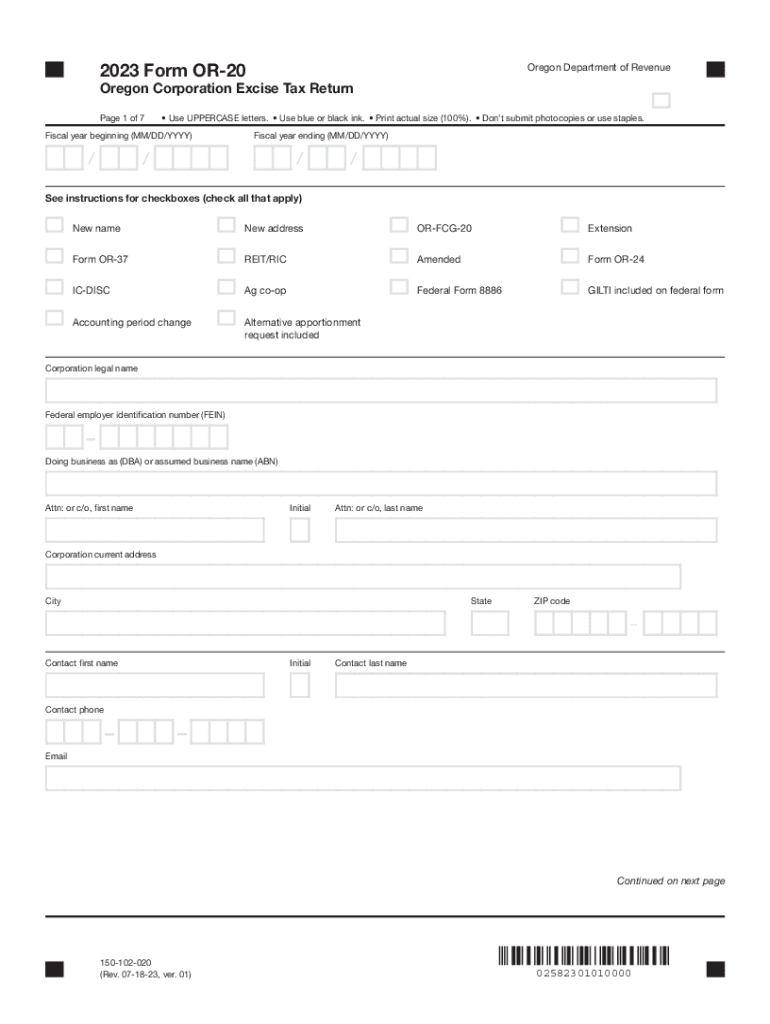
The 2023 Form OR-20-INS is issued by the Oregon Department of Revenue for the purpose of collecting the insurance excise tax from corporations operating within the state of Oregon. This form is specifically designed for insurance companies to report their taxable income and calculate any applicable excise taxes. It consolidates various financial details to accurately reflect a corporation's tax obligations.
How to Use the 2023 Form OR-20-INS
Insurance companies use the 2023 Form OR-20-INS to declare their state-taxable income and determine the excise tax owed to the state of Oregon. To do this effectively, companies must provide detailed financial records, such as income statements and tax credits, to complete the form accurately. The process typically involves calculating net income, applying any allowable deductions and credits, and determining the final tax liability.
Steps to Complete the 2023 Form OR-20-INS
- Gather Required Documents: Collect financial documents, including income statements, deductions, credits, and previous tax filings.
- Enter Corporate Details: Fill in basic company information, such as name, address, and tax identification number.
- Calculate Income: Compute taxable income by listing gross revenue and subtracting allowable expenses and deductions.
- Apply Tax Credits: Deduct any eligible tax credits from the computed tax amount.
- Determine Tax Liability: Calculate the final excise tax owed by applying Oregon's tax rate to the net taxable income.
- Review and Sign: Ensure all information is accurate before signing and dating the form.
Who Typically Uses the 2023 Form OR-20-INS
The form is primarily utilized by insurance companies registered and operating within Oregon. These entities range from local insurance firms to national corporations that conduct business within the state. It includes companies offering a wide range of insurance products, such as life, health, property, and casualty insurance.


Key Elements of the 2023 Form OR-20-INS
- Corporate Details: Information about the insurance corporate entity, including legal name, address, and EIN.
- Financial Reporting: Sections to report income, expenses, deductions, and tax credits.
- Tax Calculation: Fields for determining taxable income and final excise tax owed.
- Signature Section: A required section for signing to verify the form's accuracy.
Filing Deadlines / Important Dates
For the form to be considered timely, it must be filed by the 15th day of the month following the end of the corporation's tax year, usually aligning with federal tax deadlines. Extensions may be available, but they must be officially requested and approved before the deadline.
Required Documents
Corporations need to provide comprehensive documentation supporting their taxable income declarations. These include but are not limited to:
- Income statements for the reporting period
- Documentation of deductions and credits
- Prior tax returns for reference
- Any supporting schedules relevant to the reported income
Form Submission Methods (Online / Mail / In-Person)
- Online: The form can be submitted electronically through the Oregon Revenue Online system, a preferred method for its efficiency and speed.
- Mail: Companies may send completed forms via postal service to designated addresses provided by the Oregon Department of Revenue.
- In-Person: Direct submissions at local Department of Revenue offices are also possible.
Penalties for Non-Compliance
Failure to file the 2023 Form OR-20-INS by the designated deadline may result in penalties. These can include late filing fees, interest charges on unpaid taxes, and additional fines for failing to accurately report taxable income. In extreme cases, enforcement actions may be pursued against non-compliant corporations.
State-Specific Rules for the 2023 Form OR-20-INS
Oregon law mandates specific reporting and filing requirements for insurance companies. Important state-specific considerations include:
- The requirement for utilizing specified deductions and tax credits unique to Oregon
- Conformance with particular income apportionment rules tailored to insurance companies operating both within and outside Oregon
Software Compatibility (TurboTax, QuickBooks, etc.)
While specific business tax preparation software like TurboTax or QuickBooks can assist in preparing financial information for the form, they may not provide direct support for filing it. Companies often use these platforms to maintain financial records and then transfer the information into the required state form. It is advisable to ensure compatibility or consult a tax professional to streamline this process.
Examples of Using the 2023 Form OR-20-INS
An insurance company, XYZ Insurance Corp, operating in Oregon, would use the form to report $10 million in taxable income calculated after allowable deductions and credits. Following the form's instructions, deductions related to claim payouts are applied, and the final excise tax obligation is calculated accurately before submission. Submit your form via Oregon Revenue Online to ensure timely filing.




