




01. Edit your form online
Type text, add images, blackout confidential details, add comments, highlights and more.

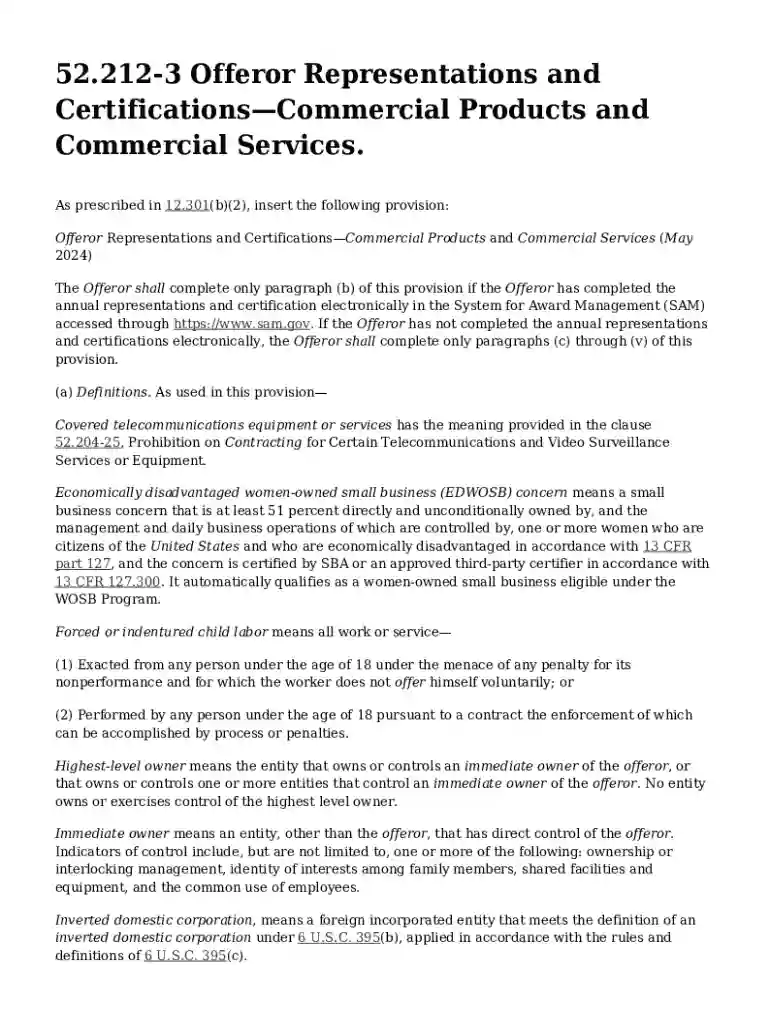
Type text, add images, blackout confidential details, add comments, highlights and more.

Draw your signature, type it, upload its image, or use your mobile device as a signature pad.

Send it via email, link, or fax. You can also download it, export it or print it out.
The "212-3 Offeror Representations and Certifications" document is a critical component for businesses engaging in federal contracting. It requires offerors to certify certain representations relating to their business status, such as whether they qualify as a small business or veteran-owned business. This form ensures that offerors provide accurate information about their operations, complying with various federal regulations.
This document is essential for businesses interested in working with federal agencies. Utilization involves understanding each section of the form and completing the necessary certifications.
Successfully completing the "212-3 Offeror Representations and Certifications" involves a systematic approach to ensure compliance and accuracy.
Understanding terminology associated with the "212-3 Offeror Representations and Certifications" is crucial for accurate completion and compliance.
Legal compliance is a major component when completing the "212-3 Offeror Representations and Certifications" form.
This form is primarily used by businesses seeking to engage in federal contracting activities.


Practical scenarios elucidate how businesses might engage with the form in real-world applications.
Non-compliance with the requirements of the "212-3 Offeror Representations and Certifications" can have significant repercussions for businesses.
We've got more versions of the 212-3 Offeror Representations and form. Select the right 212-3 Offeror Representations and version from the list and start editing it straight away!
At DocHub, your data security is our priority. We follow HIPAA, SOC2, GDPR, and other standards, so you can work on your documents with confidence.

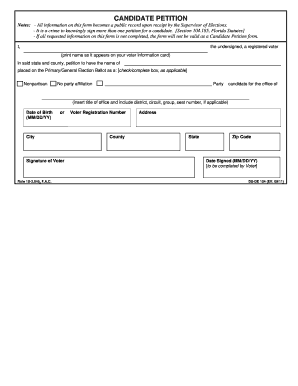



The offeror certifies that it has made a good faith effort to determine whether forced or indentured child labor was used to mine, produce, or manufacture anyRead more
If the Offeror has not completed the annual representations and certifications electronically, the Offeror shall complete only paragraphs (c) through (v) ofRead more


