
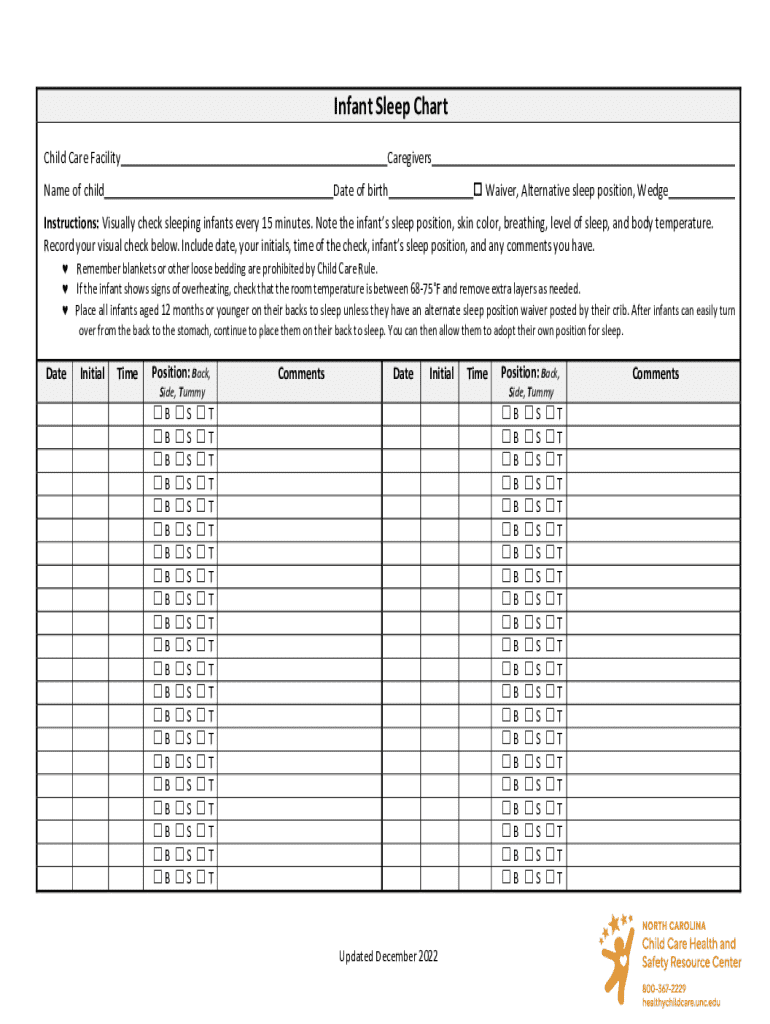







Definition and Meaning of Infant Sleep Chart Daycare
The "Infant Sleep Chart Daycare" is an essential tool used by child care facilities to monitor the sleep patterns and well-being of infants under their care. This document records vital information such as the infant's sleep position, skin color, breathing, and temperature. It plays a crucial role in ensuring the safety and health of infants by emphasizing guidelines for safe sleep practices like placing infants on their backs and avoiding the use of loose bedding. The meticulous record-keeping helps caregivers maintain a routine assessment every 15 minutes, ensuring infants' security and comfort.
How to Use the Infant Sleep Chart Daycare - Fill Online, Printable, Fillable
Using the Infant Sleep Chart Daycare effectively begins with knowing which sections to fill out. Child care providers should:
- Record Observations: Note each infant's sleep position, skin color, breathing, and temperature every 15 minutes.
- Utilize Annotations: Use tools to highlight changes or concerns in observed patterns.
- Add Comments: Provide additional information or note unusual patterns for further reference.
- Ensure Accessibility: Keep the form readily available and ensure it can be filled out online, printed, or saved as a digital file.
Accurate recording is vital, providing actionable insight to caregiving staff, and ensuring compliance with child care standards.
Steps to Complete the Infant Sleep Chart Daycare - Fill Online, Printable, Fillable
- Access the Form: Retrieve the form from your document management system or direct download.
- Input Initial Details: Fill out the child's name, sleep time, and date at the start of the observation.
- Schedule Checks: Set reminders to observe and document every 15 minutes.
- Document Observations:
- Position: Note if the infant is on their back.
- Skin Color: Record any changes.
- Breathing: Ensure regular breath patterns.
- Temperature: Use touch or a thermometer for assessments.
- Review and Save: After completing observations, review the form for accuracy and store it properly.
Key Elements of the Infant Sleep Chart Daycare
- Observation Points: Details like position, skin color, breathing, and temperature are critical for a full picture of the infant's state.
- Time Logs: Each 15-minute interval must be noted to ensure routine checks.
- Comments and Annotations: Space for comments allows for detailed notes on unusual behaviors or conditions.
- Safe Sleep Practices: Guidelines within the chart to reinforce safe sleeping protocols.
- Authorization Section: Accountability is achieved by having the caregiver's signature or initials on the chart.
Who Typically Uses the Infant Sleep Chart Daycare
Caregivers in daycare centers are the primary users of these charts. They include:
- Nannies: Private caregivers can use the chart as a tool to communicate effectively with parents.
- Daycare Workers: Essential for monitoring and ensuring infant safety throughout the child's stay.
- Child Care Administrators: Use these charts to enforce standards and regulate staff adherence to safety protocols.
- Parents: May request these charts to ensure their child's well-being within the daycare facility.


Legal Use of the Infant Sleep Chart Daycare
Compliance with state regulations and ensuring infants' safety is crucial:
- State Inspections: Document provides evidence of adherence to required safety checks.
- Legal Documentation: Acts as a record for addressing any issues or legal concerns that might arise.
- Policy Enforcement: Helps childcare centers enforce universal safety practices and comply with state child care laws.
Important Terms Related to Infant Sleep Chart Daycare
- Sleep Position: Refers to the recommended back-sleeping guideline.
- SIDS (Sudden Infant Death Syndrome): A primary concern the chart aims to mitigate with routine checks.
- Skin Color and Temperature: Indicators of an infant's overall health monitored through each session.
- Annotations: Comments or additional notes provided by caregivers.
State-Specific Rules for the Infant Sleep Chart Daycare
Each state may have specific regulations concerning child care operations:
- Mandated Observation Frequency: While 15-minute checks are standard, state laws may have alternate requirements.
- Training Requirements: Some states mandate formal training for caregivers on how to use these forms effectively.
- Report Filing: Legal provisions on how these records should be stored or shared with parents and authorities.
- Integration with Licensing: Compliance with these charts can be a condition for the licensing of child care facilities.
Understanding these guidelines ensures daycare centers operate within legal frameworks and prioritize infants' well-being.




