




01. Edit your form online
Type text, add images, blackout confidential details, add comments, highlights and more.

Type text, add images, blackout confidential details, add comments, highlights and more.

Draw your signature, type it, upload its image, or use your mobile device as a signature pad.

Send it via email, link, or fax. You can also download it, export it or print it out.
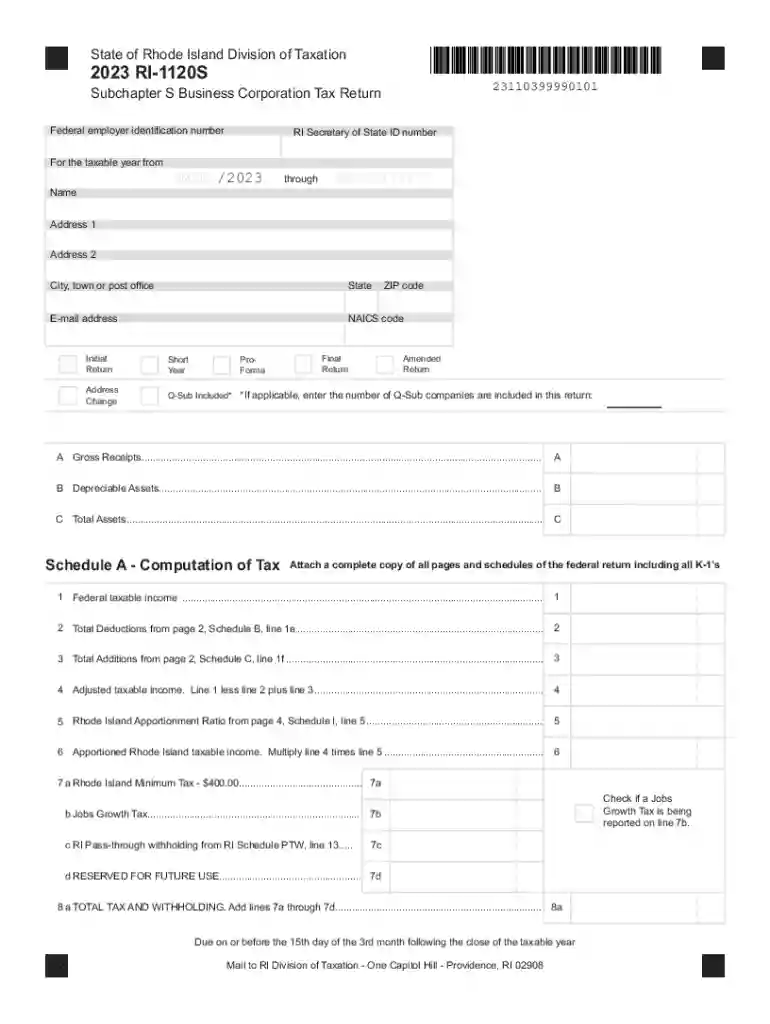
The RI-1120S - Subchapter S Business Corporation Tax Return is a mandatory form used by S corporations in the United States, specifically in the State of Rhode Island. It outlines the corporation's financial activities and calculates the franchise tax owed. This document includes information on gross receipts, deductions, and various schedules necessary for computing the corporation's state tax obligations. Accurate completion is crucial as it ensures that the corporation meets state tax filing requirements, avoiding potential penalties or audits.
Gather Required Documents: Before filling out the form, compile necessary financial documents such as income statements, balance sheets, and previous year tax returns. These documents provide critical information for accurate reporting.
Fill Out Identification Information: Start by entering the corporation’s name, address, and federal employer identification number (FEIN) in the designated fields to accurately identify the business entity.
Report Gross Receipts: Enter the total gross receipts for the fiscal year. This involves calculating all revenue streams before any expenses are deducted, which forms the basis for further tax calculations.
List Deductions and Additions: Identify all allowable deductions to reduce taxable income, such as operating expenses and interest. Include any mandatory additions, like non-deductible expenses, that need to be reported for state tax purposes.
Complete Tax Schedules: Use the form’s schedules to compute the tax liability. This often involves completing sections related to income sources, apportionment factors, and any applicable credits that reduce the overall tax due.
Review and Sign: Carefully review the entire form for completeness and accuracy. Ensure that any required signatures are provided by authorized representatives of the corporation under the appropriate section.
S corporations operating within Rhode Island use this form to report state tax obligations. Typically owned by relatively small groups, S corporations pass income, losses, deductions, and credits through to their shareholders for federal tax reasons, but must file RI-1120S to meet state-specific tax requirements. Businesses structured to benefit from pass-through taxation often fall under this category, as shareholders report profits and losses on their personal tax returns.


S Corporation (S Corp): A type of corporation that meets specific Internal Revenue Code requirements, allowing income to be passed directly to shareholders, avoiding double taxation.
Franchise Tax: A levy paid by certain corporations for the privilege of conducting business in a state.
Apportionment: The process of determining the portion of a corporation’s income that is subject to tax in a specific state, often using a formula based on property, payroll, and sales within the state.
Deductions: Expenses allowed to be subtracted from gross receipts, reducing taxable income.
The RI-1120S form must be filed annually, coinciding with the federal tax filing deadline of March 15th for calendar-year filers unless extensions are requested. It is crucial to adhere to this timeline to avoid penalties and interest that accrue for late submissions. Corporations needing more time can file for an extension, but estimated taxes must still be paid by the original due date. Timely submission ensures compliance and prevents complications during financial audits.
To accurately complete the RI-1120S form, corporations should prepare the following documents:
Financial Statements: Including income statements and balance sheets for the reporting year.
Previous Tax Returns: Last year’s state and federal tax filings provide baseline financial data and prior reporting methods.
Receipts and Invoices: Detailed records of expenses and revenues to substantiate amounts reported.
Bank Statements: Verifying financial transactions that occurred during the fiscal year.
Rhode Island accepts the RI-1120S form through several submission methods:
Electronic Filing: Most corporations choose this method for its speed and reliability. Many tax software packages are compatible with state tax filings, providing ease of use and ensuring accurate calculations.
Mail: Forms can be mailed directly to the Rhode Island Division of Taxation if electronic filing is not an option. Include all necessary documentation and consider sending via certified mail for tracking purposes.
In-Person: For those who prefer a personal delivery or need assistance, submission at a local tax office can be arranged.
Rhode Island has unique tax regulations regarding S corporations. Unlike federal tax code, which allows income distribution to be taxed at the shareholder level, Rhode Island mandates an annual corporate tax based on a flat fee or revenue levels. Additionally, state-specific credits and exemptions must be considered to ensure proper adjustments are made, reflecting credits available under Rhode Island law.
Failure to file the RI-1120S form or correctly report taxes can lead to various penalties, including:
Late Filing Penalties: Imposed on corporations that do not file by the due date and do not have an approved extension, these penalties accrue monthly based on a percentage of unpaid taxes.
Underpayment Penalties: Failure to pay the correct amount of estimated taxes results in additional fees, calculated based on the time the underpayment persists.
Interest Charges: Accrue on unpaid taxes, compounding the financial impact on the business.
Staying informed about filing requirements and deadlines is crucial to mitigate potential financial consequences.
Most major tax software, including TurboTax and QuickBooks, offers compatibility with the RI-1120S form. These programs assist in accurately calculating tax obligations and streamline the submission process through e-filing capabilities. Using such software ensures that users stay aligned with the latest tax law changes and reduces errors that might occur with manual calculations.
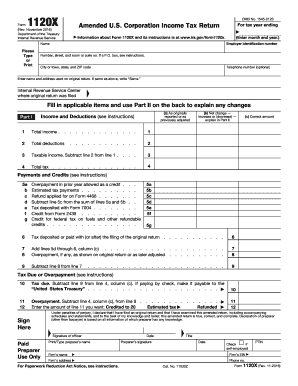
We've got more versions of the RI-1120S - Subchapter S Business Corporation Tax Return form. Select the right RI-1120S - Subchapter S Business Corporation Tax Return version from the list and start editing it straight away!
At DocHub, your data security is our priority. We follow HIPAA, SOC2, GDPR, and other standards, so you can work on your documents with confidence.


Form RI-1120S shall be filed on or before the fifteenth (15th) day of March in the year following the close of the calendar year.
Jul 8, 2026 RI-1120S (2025) Subchapter S Business Corporation Tax Return PDF file, RI-1120S Instructions (2025) Subchapter S Business Corporation Tax


