




01. Edit your form online
Type text, add images, blackout confidential details, add comments, highlights and more.

Type text, add images, blackout confidential details, add comments, highlights and more.

Draw your signature, type it, upload its image, or use your mobile device as a signature pad.

Send it via email, link, or fax. You can also download it, export it or print it out.
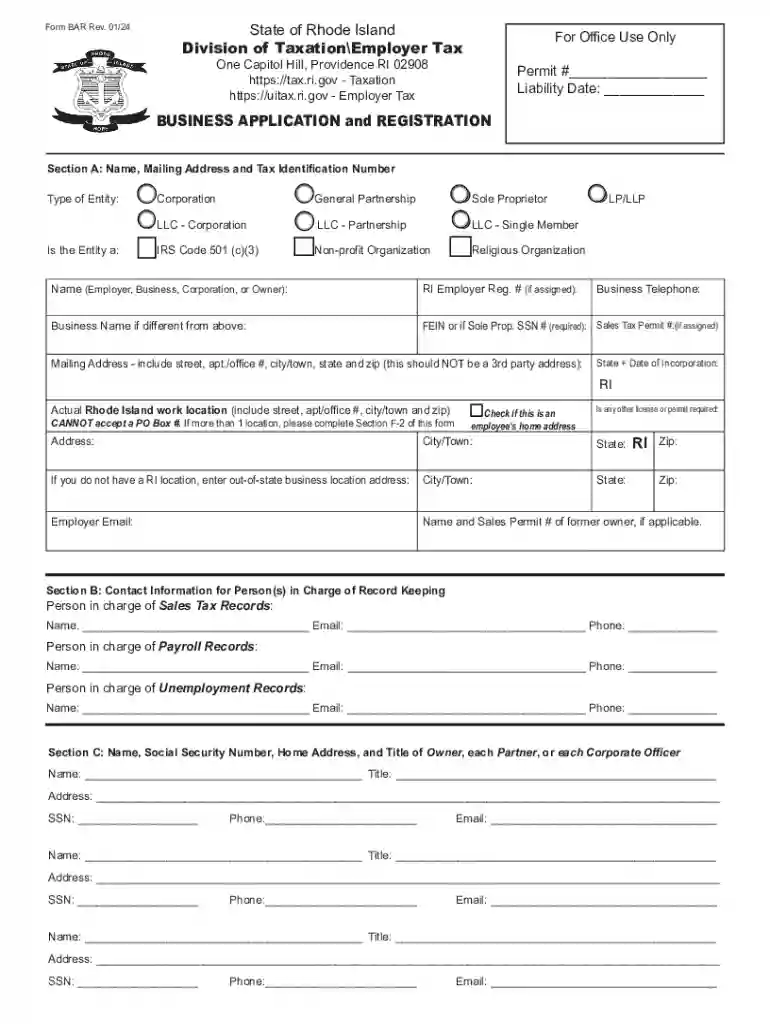
Employer Tax Forms issued by the RI Division of Taxation are official documents that businesses in Rhode Island use to register for various tax permits and licenses. These forms are crucial for businesses to ensure compliance with state tax regulations. They help collect essential business information such as entity type, address, contact details, ownership structure, payroll information, and an industry description.
These forms consist of multiple sections designed to capture comprehensive information about a business. Key elements include:
Businesses can obtain the forms through:
The proper use of these forms is critical for legal compliance with Rhode Island tax laws. Failing to file or inaccurately completing these forms can lead to penalties or increased scrutiny from tax authorities. Businesses must ensure that all information provided is accurate and current.
Businesses should adhere to predetermined state deadlines for submission. Missing a deadline can result in penalties or fines. Typically, filing deadlines align with quarterly or annual tax reporting periods, but businesses should confirm specifics based on their tax situation.
Businesses have the choice between digital and paper submission methods:
Failing to comply with the state’s tax filing requirements can result in penalties such as:
Rhode Island imposes unique tax filing requirements that businesses must understand:
Each section must be completed with attention to detail to ensure compliance and eligibility for all pertinent tax credits or incentives.
We've got more versions of the Employer Tax Forms - RI Division of Taxation form. Select the right Employer Tax Forms - RI Division of Taxation version from the list and start editing it straight away!
At DocHub, your data security is our priority. We follow HIPAA, SOC2, GDPR, and other standards, so you can work on your documents with confidence.
Employees must complete Form RI W-4, Employees Withholding Allowance Certificate, and submit it to their employer. Form RI W-4 may be downloaded from theRead more
Jan 20, 2026 Employer Tax Forms. To have forms mailed to you, please call 401.574.8970. You can either print the form out and complete it by hand, or click


