







Definition & Meaning
Titling a used vehicle refers to the process of legally registering a pre-owned vehicle under the new owner's name. In the United States, this process ensures that the new owner is recognized on official records with the appropriate Department of Motor Vehicles (DMV) or equivalent state agency. Vehicle titling involves submitting specific documents to transfer ownership officially and legally. This process is crucial for establishing rightful ownership, enabling legal resale, and protecting the buyer's investment. Understanding the nuances of vehicle titling helps all parties involved comply with state laws, avoid legal complications, and ensure smooth usage of the vehicle.
How to Obtain the Titling a Used Vehicle
To obtain a title for a used vehicle, one must first ensure all necessary documentation is prepared. This often includes the bill of sale or purchase agreement, the previous title with the seller's release signature, and any necessary identification documents. The process starts with gathering these documents from the seller and verifying their authenticity. Then, visit your state's DMV or equivalent agency to submit the required paperwork. Some states offer online services to expedite this procedure. Be prepared to pay any associated fees, which vary by state. Upon successful submission and processing, you will receive a new title reflecting your ownership.
Steps to Complete the Titling a Used Vehicle
-
Verify Seller Information: Ensure the seller provides a valid certificate of title, free from liens, with a signed release.
-
Gather Relevant Documents: Collect the bill of sale, VIN verification (if required), and valid identification.
-
Check State Requirements: Familiarize yourself with the specific procedure as it varies per state. Some states may require an emissions test or odometer reading.
-
Visit the DMV: If not available online, go to the local DMV office with all documentation.
-
Complete Forms: Fill out the application for title transfer and any additional state-specific forms.
-
Payment of Fees: Pay the necessary registration and title transfer fees.
-
Await Processing: Title processing time can vary. You will be issued a temporary tag or registration if required.
Important Terms Related to Titling a Used Vehicle
Understanding important terms involved in the vehicle titling process is essential for accurate completion. Key terms include:
- Certificate of Title: A legal document indicating the vehicle’s official owner.
- Bill of Sale: An agreement proving the transaction and vehicle sale, often necessary for registration.
- Lien Release: A document showing any previous financial claims against the vehicle are cleared.
- Odometer Disclosure Statement: A statement of the vehicle's mileage at the time of sale, frequently required.
- VIN (Vehicle Identification Number): A unique set of characters identifying the vehicle, necessary for verification.
Legal Use of the Titling a Used Vehicle
Titling a used vehicle is a legal requirement in every state and ensures that you have legitimately acquired ownership of the vehicle. The process is necessary to register the car for road use and to obtain plates and necessary tags. Failure to properly transfer a vehicle's title can lead to legal consequences such as fines, difficulties proving ownership, and issues with insurance claims. Ensuring compliance with titling laws protects you from potential fraud and legal disputes. Conducting this process correctly also facilitates efficient law enforcement tracking and assists with theft recovery.
State-Specific Rules for Titling a Used Vehicle
Titling rules vary significantly from state to state in the U.S. Some states have integrated titling and registration systems, while others handle them separately. For example, California requires a smog check certificate for certain vehicles, whereas Georgia does not include this test in their titling process. States like New York might ask for proof of sales tax payment, contrasting with other states where this is less emphasized. Familiarize yourself with your state’s DMV guidelines and specific requirements to ensure a smooth titling process, as unexpected delays can occur if all conditions are not fully met.
Required Documents for Titling a Used Vehicle
To transfer a vehicle title, specific documents are uniformly required across states, alongside unique regional necessities:
- Previous Title: Must be endorsed by the seller to signal release of ownership.
- Bill of Sale: Accurate sales documentation showcasing both buyer and seller details.
- Identification: Typically a driver’s license to verify the identity of the new owner.
- Lien Release: Needed if the vehicle was previously financed to affirm lien clearance.
- Emissions/Smog Certificate: Required in some states with air quality mandates. Determine the exact list from your local DMV’s website to avoid multiple visits and delays.
How to Use the Titling a Used Vehicle Form
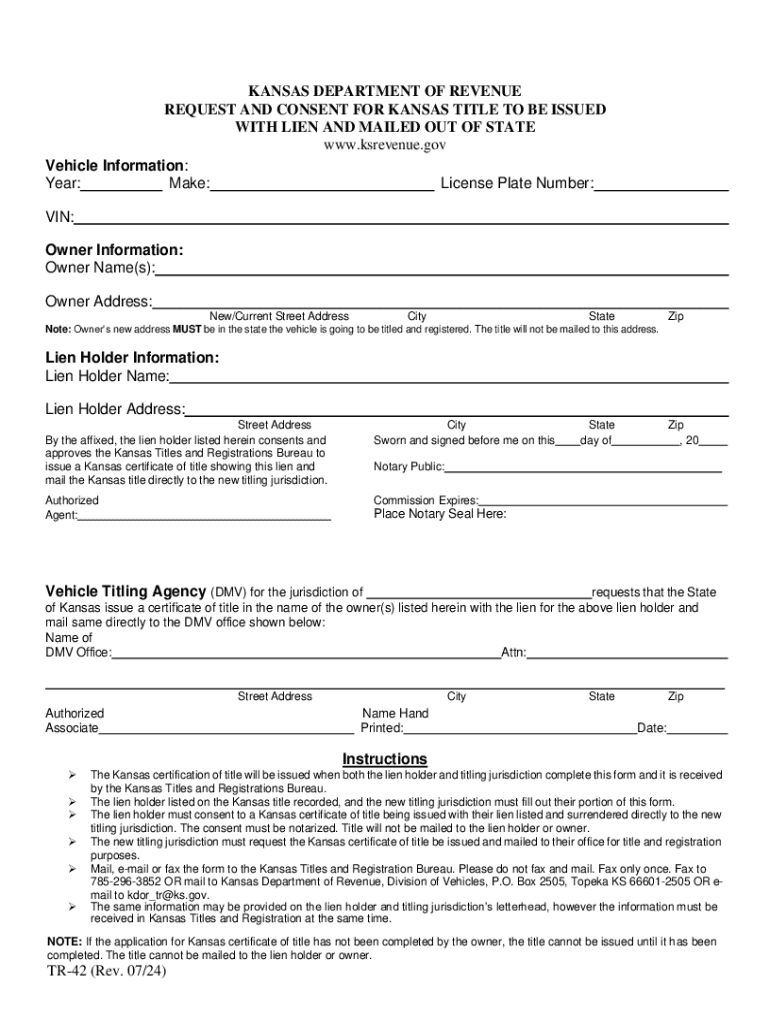
Using the titling form involves accurately completing all sections with precise information. Start by entering the vehicle identification details, including VIN, make, model, year, and any lienholder information if applicable. Fill out personal identification sections with complete names and addresses. Ensure all signatories endorse the form where needed to validate the process. Review your information thoroughly to prevent errors that could delay processing. After completion, submit the form either online, via mail, or in person, as dictated by state requirements. Accurate usage of the form facilitates legal acknowledgment of your new vehicle ownership.




