







Definition & Purpose of Forms GIT REP
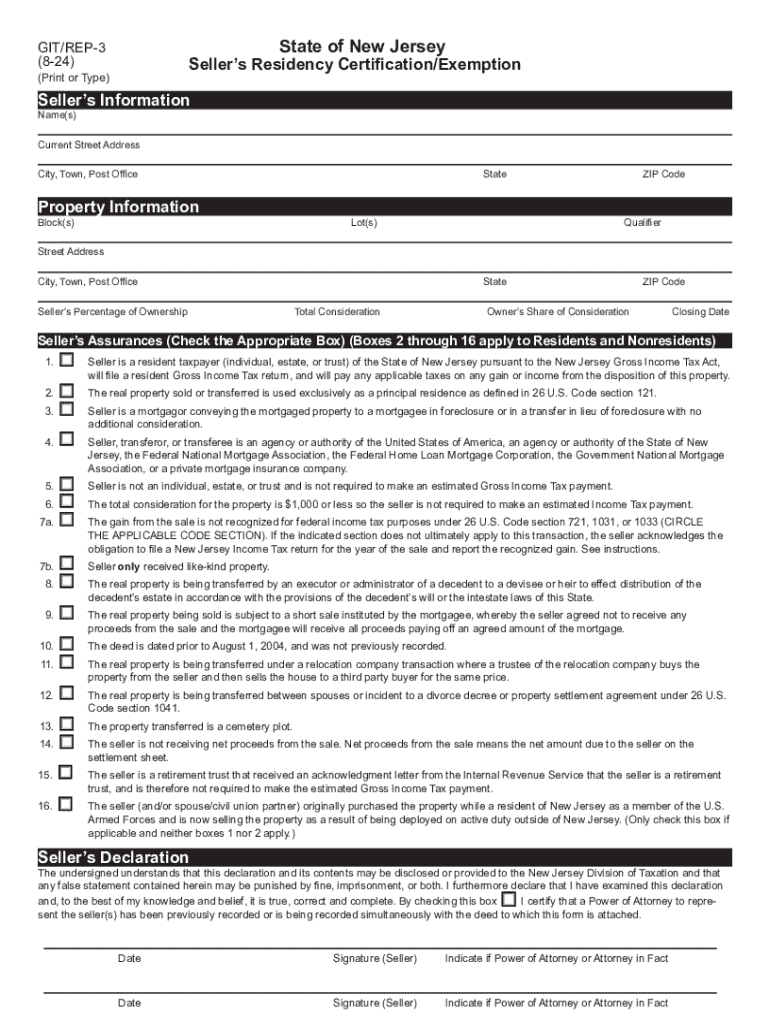
The NJ Division of Taxation's Updated Versions of Forms GIT REP are specifically designed to facilitate the reporting of residency status for tax purposes in New Jersey. These forms are essential for individuals, estates, trusts, or entities selling or transferring property within the state. By providing critical details such as personal and property information, these forms help determine a seller's tax obligations and eligibility for exemption from estimated Gross Income Tax payments.
Elements Included in the Forms GIT REP
- Personal and Property Information: Ensures accurate identification of the seller and the property.
- Residency Declaration: Helps ascertain tax obligations based on residency status.
- Exemption Criteria: Sellers must identify applicable assurances to determine exemption from tax payments.
How to Obtain the GIT REP Forms
Acquiring the updated NJ Division of Taxation - Forms GIT REP can be done through multiple channels, enabling accessibility and convenience for different users.
- Online Access: The NJ Division of Taxation's official website provides downloadable forms, ensuring easy access from any location.
- In-Person Collection: Forms are available at local tax offices for those who prefer direct interaction.
- Mail Request: Sellers can request that forms be mailed to their address for convenience.
Online Distribution Platforms
- Direct downloads ensure the latest version of the form.
- Accessibility around the clock for digital form completion.
Steps to Complete the GIT REP Forms
Filling out the NJ Division of Taxation - Updated Versions of Forms GIT REP requires careful attention to detail to ensure compliance with state regulations.
- Personal Details: Begin by entering accurate personal information, such as name and contact details.
- Property Information: Complete the section on property details, including location and transaction specifics.
- Residency Status: Declare residency status to determine tax obligations.
- Exemption Assurances: Identify applicable assurances for exemption eligibility.
- Review: Double-check all entries for accuracy and completeness before submission.
Who Typically Uses the GIT REP Forms
The NJ Division of Taxation - Updated Versions of Forms GIT REP are primarily used by various entities engaged in property transfer activities.


Typical Users
- Individuals: Those selling personal property need to declare tax obligations.
- Estates and Trusts: Executors and trustees facilitating property transfers complete these forms.
- Business Entities: Corporations or partnerships involved in property transactions utilize these forms to ensure tax compliance.
Important Terms Related to GIT REP Forms
Understanding critical terms associated with the NJ Division of Taxation - Updated Versions of Forms GIT REP is vital for correct completion and submission.
Key Terms
- Residency Status: Determines one's obligation to pay state income tax.
- Exemption Criteria: Conditions under which sellers can avoid paying estimated Gross Income Tax.
- Gross Income Tax: A tax levied based on income earned, pivotal in determining tax responsibilities.
Legal Use of the GIT REP Forms
The legitimacy of using NJ Division of Taxation - Updated Versions of Forms GIT REP is grounded in state taxation laws designed to ensure rightful tax payment and exemption where applicable.
Compliance Requirements
- Accuracy: Information must be truthful and precise to avoid legal repercussions.
- Deadlines: Adhering to submission deadlines is crucial to maintain compliance.
- Documentation: Supporting documents may be required to substantiate exemption claims.
Key Elements of the GIT REP Forms
The structure and content of the GIT REP forms are carefully designed to capture all necessary information related to property transfer and tax obligations.
Section Highlights
- Residency Verification: Crucial for determining tax rates.
- Property Details Section: Ensures the tax is based on precise property valuations.
- Declaration of Exemptions: Helps in claiming any legal exemptions from tax.
Penalties for Non-Compliance
Non-compliance with the NJ Division of Taxation requirements can lead to significant penalties, which underscores the importance of accurate completion of the GIT REP forms.
Possible Penalties
- Fines: Monetary penalties may be incurred for false declarations.
- Legal Action: Repeated non-compliance may result in legal proceedings.
- Interest Accrual: Penalties may include accruing interest on unpaid taxes.
Digital vs. Paper Versions of the GIT REP
Choosing between digital and paper versions of the NJ Division of Taxation - Forms GIT REP depends on user preference and capability.
Comparison of Formats
- Digital Format: Offers convenience, instant updates, and can be completed online.
- Paper Format: Suitable for those who prefer traditional methods and require physical documentation for records.
State-Specific Rules for the GIT REP Forms
New Jersey's specific taxation rules govern the usage and requirements of the GIT REP forms, making it essential for users within the state to be familiar with these directives.
Regional Regulations
- Tax Rate Variance: Residency status influences varying tax rates.
- Exemption Specificity: Detailed criteria for exemptions unique to New Jersey.
- Filing Periods: Defined timelines for form submission specific to New Jersey regulations.
Fulfilling the requirements of the NJ Division of Taxation's updated GIT REP forms ensures adherence to state tax laws and optimizes tax liabilities for those involved in property transactions.




