Definition and Purpose of the Indiana Tax Power of Attorney (Form 49357)
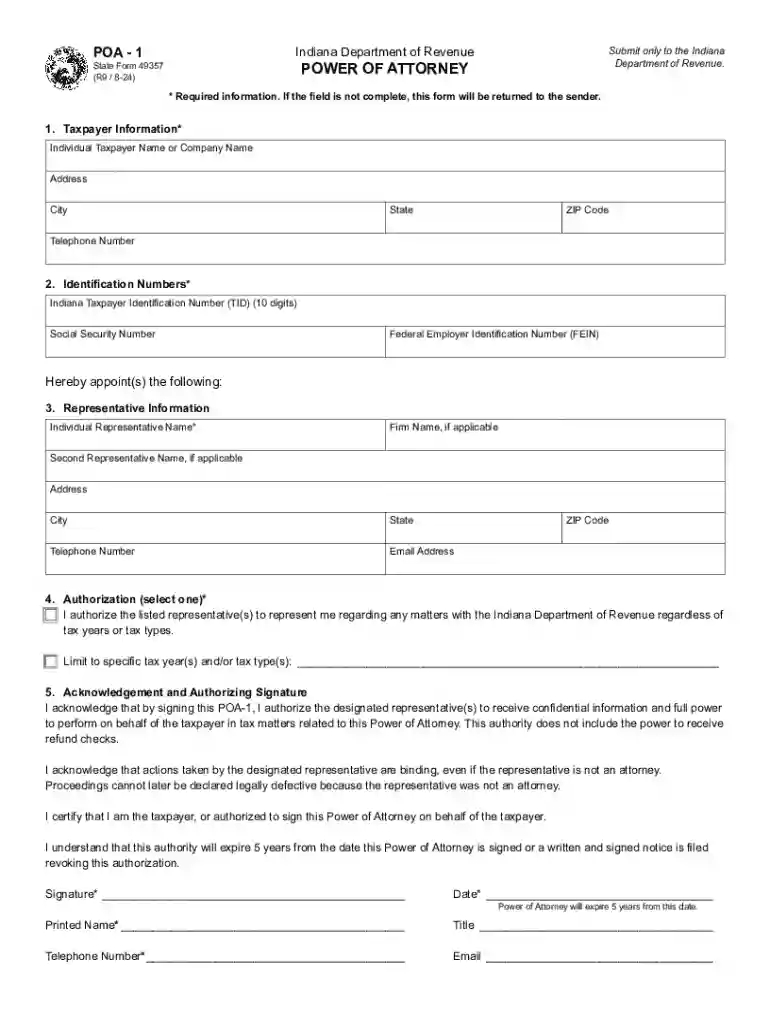
The Indiana Tax Power of Attorney (Form 49357) is a legal document designed to empower taxpayers to appoint a trusted individual or representative to manage their tax-related affairs with the Indiana Department of Revenue. The form facilitates the delegation of authority, allowing the designated person to perform acts like filing tax returns, handling correspondence, and making decisions on tax matters, thus simplifying the taxpayer's obligations. The purpose of this form is to ensure proper representation and management of tax responsibilities, enabling individuals to focus on other aspects of their personal or business activities.
Core Features
- Authorization Scope: Form 49357 allows the taxpayer to specify which tax matters and periods the representative is authorized to handle.
- Validity: The Power of Attorney remains in effect for five years unless earlier revoked or a different period is specified.
- Revocation: Provides a mechanism for the taxpayer to revoke the authorization by submitting a written notification to the Indiana Department of Revenue.
Steps to Complete the Indiana Tax Power of Attorney (Form 49357)
Completing Form 49357 involves several specific steps to ensure accuracy and compliance with legal requirements. Below is a step-by-step guide to assist taxpayers in filling out the form effectively:
Gather Required Information: Collect the taxpayer's identifying information, including name, address, and tax identification number (TIN).
Identify the Representative: Include the name, address, and contact details of the individual or firm appointed to act on behalf of the taxpayer.
Specify Tax Matters: Detail the specific tax types and periods the representative is authorized to handle.
Sign the Form: Both the taxpayer and the representative must sign the form to validate the Power of Attorney arrangement.
Submit the Form: File the completed form with the Indiana Department of Revenue.
Common Mistakes
- Incomplete Sections: Ensure that all sections are filled out completely to avoid processing delays.
- Incorrect Information: Double-check identifying numbers and contact details for accuracy.
Important Terms Related to Indiana Tax Power of Attorney
Understanding key terms related to Form 49357 is crucial for proper compliance:
- Taxpayer: The individual or entity granting authority to a representative.
- Representative: The person or entity appointed to manage the taxpayer's tax-related matters.
- Scope of Authority: The specific tax matters and periods for which the representative is authorized.
- Revocation: The process to formally cancel the Power of Attorney before its expiration date.
Examples for Clarity
- Timespan Example: A taxpayer appoints a CPA to address issues related to income tax for the years 2021 and 2022.
- Revocation Scenario: A taxpayer decides to revoke the Power of Attorney due to dissatisfaction with the representation.
Legal Use and Compliance
The legal use of Form 49357 involves adhering to specific guidelines to ensure its validity:
- Legal Compliance: The form must be completed in accordance with state laws to ensure the taxpayer's representation is recognized.
- Signature Requirement: Both the taxpayer and representative must provide signatures to establish the legal relationship.
Compliance Variations
- State-Specific Rules: Indiana may have unique regulations affecting the use and recognition of a Power of Attorney compared to other jurisdictions.
Key Elements of the Form
Form 49357 includes several critical sections that must be completed accurately:
- Taxpayer Information: Basic identifying information is essential for proper filing.
- Representative Authorization: Outlines the specific roles and responsibilities of the designated party.
- Signature and Declaration: Confirms agreement and consent from both parties involved.
Detailing the Elements
- Taxpayer Details: Must include a valid TIN and current address to prevent miscommunications.
- Scope of Powers: Clearly enumerate the types and periods of tax matters the representative is to manage.
Examples of Use Cases
Understanding practical applications can enhance comprehension of Form 49357 usage:
- Individual Use Case: An elderly taxpayer grants a family member authority to manage tax filings due to health issues.
- Business Scenario: A corporation appoints a tax attorney to handle all state tax matters following an audit notice.
Practical Considerations
- Complex Arrangements: Businesses with varied tax obligations often benefit from tailored representation through a comprehensive Power of Attorney.
- Family Dynamics: Individuals might shift responsibility to trusted relatives due to personal circumstances.
Filing Deadlines and Submission Methods
Navigating deadlines and preferred methods can ensure timely processing of Form 49357:
- Deadlines: Submission should align with the due dates of tax filings or immediately following any change in representation.
- Submission Methods: The form can be submitted either online or through mail to the Indiana Department of Revenue. Online submission is typically faster and can reduce delays.
Timely Compliance
- Proactive Filing: Submitting the form early can help ensure no lapse in representation during critical tax assessments.
- Digital Advantages: Using electronic submission methods often allows for quicker processing and confirmation of receipt.
Digital Versus Paper Versions
Understanding the differences between digital and paper versions of Form 49357 can facilitate efficient submission practices:
- Digital Forms: Often preferred for their ease of completion and faster submission times. Enhanced compatibility with document management tools provides additional convenience.
- Paper Forms: Some may prefer or require paper submissions due to technical limitations or preference. Ensures broader accessibility.
Advantages of Digital Use
- Efficiency: Digital versions streamline the submission process and improve tracking capabilities for both taxpayers and the Department of Revenue.
- Environmentally Friendly: Reduced paper usage offers an eco-friendly alternative to traditional filing.