







Definition and Purpose of CA Form 568
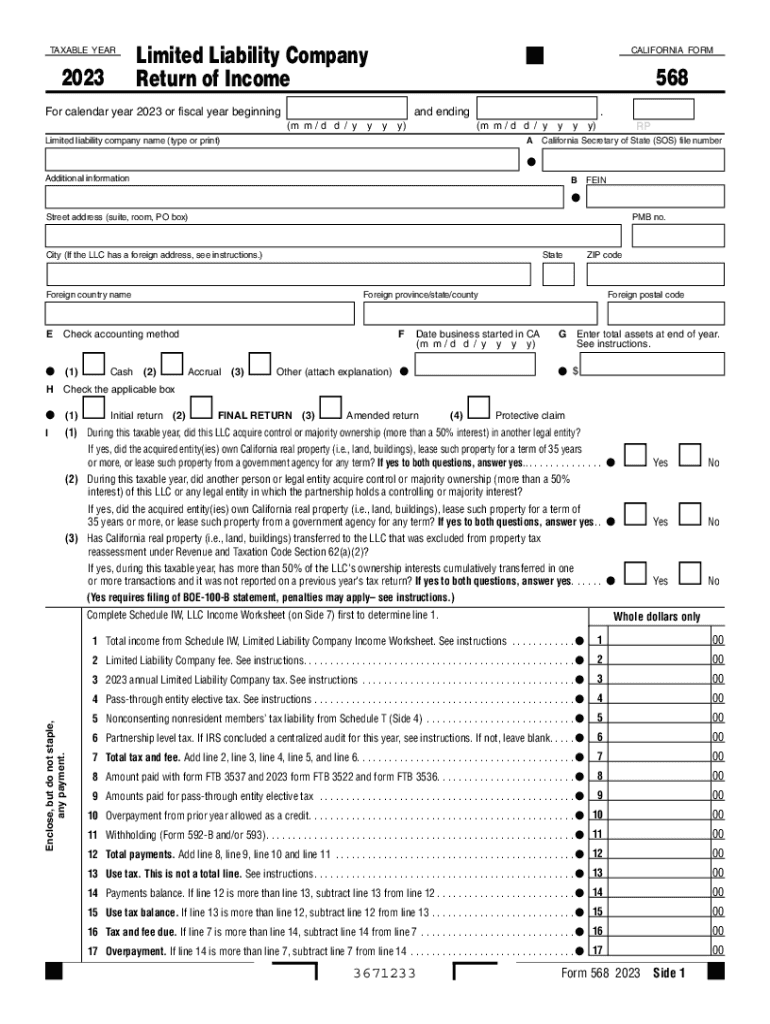
CA Form 568, known as the Limited Liability Company Return of Income, is a crucial tax document for Limited Liability Companies (LLCs) operating in California. This form serves to report income, deductions, and other relevant financial information of the LLC to the California Franchise Tax Board. By filing CA Form 568, LLCs provide an overview of their business activities and financial standing, fulfilling state taxation requirements.
Key Features
- Income Reporting: The primary function of CA Form 568 is to detail the total income generated by the LLC within the specific tax year.
- Deductions and Credits: The form allows for the reporting of any applicable deductions or credits that the LLC is entitled to, affecting overall tax liability calculation.
- Member Information: It requires comprehensive information about the LLC's members, including ownership details, to ensure accurate representation of business operations.
Obtaining CA Form 568
How to Access the Form
CA Form 568 can be easily accessed through various channels to accommodate the preferences of LLCs. This flexibility ensures that businesses can obtain the necessary documents without facing administrative delays.
- Online Access: The California Franchise Tax Board's website offers a downloadable version of CA Form 568, enabling immediate access for digital processing.
- Mail Requests: LLCs can request a physical copy of the form to be mailed to their business address if digital access is not feasible.
- Professional Tax Software: Popular tax preparation software like TurboTax and QuickBooks often include CA Form 568 as part of their tax forms library, streamlining the filing process for digital-savvy users.
Steps to Complete CA Form 568
Completing CA Form 568 requires careful attention to detail to ensure all financial and operational information is correct. This section outlines a step-by-step process to facilitate accurate and efficient form completion.
-
Gather Required Documents: Collect financial statements, income records, member information, and any other pertinent documents to accurately fill out the form.
-
Enter General Information: Begin by inputting the LLC's basic details, including name, address, and federal employer identification number (FEIN).
-
Income and Deductions: Fill in sections related to income earned by the LLC, and detail allowable deductions to calculate net taxable income accurately.
-
Compile Member Information: List all members, their ownership percentages, and their contributions to the LLC's operations.
-
Calculate and Report Tax: Utilize the form's instructions to compute total taxes and fees due, including the California LLC fee.
-
Review and Sign: Ensure that all information reported is accurate before signing the form. Retain a copy for your records before submission.
Filing Deadlines and Important Dates
Adhering to filing deadlines for CA Form 568 is imperative to avoid any penalties or fees. Understanding these timelines will help ensure that LLCs remain in good standing with the Franchise Tax Board.
- Annual Filing Deadline: CA Form 568 is generally due on the 15th day of the fourth month following the close of the LLC's taxable year. For most LLCs operating on a calendar year, this means the form is due by April 15th.
- Extensions: If additional time is needed, LLCs can file for an extension, typically granting a six-month window. However, note that this only extends the filing time, not any payment obligations.
Legal Use and Compliance
LLCs must adhere to state regulations when using CA Form 568. Compliance is not only a legal obligation but also a demonstration of the LLC’s commitment to transparency and financial responsibility.
- Accurate Reporting: Provide truthful and complete information to avoid legal repercussions or audits.
- Payment of Fees: Pay any fees or taxes calculated on the form to maintain compliance with California tax laws.
Penalties for Non-Compliance
Failure to file or improper filing of CA Form 568 can lead to severe penalties, impacting the LLC’s financial health and operational integrity.
- Late Filing Fees: LLCs face substantial fines for missing the filing deadline, with penalties accruing the longer the delay.
- Interest on Unpaid Taxes: Interest will be added to any unpaid taxes, compounding over time and increasing the financial burden on the LLC.
- Potential Audits: Non-compliance may trigger audits, requiring the LLC to provide extensive documentation and justification for discrepancies.
Eligibility Criteria for CA Form 568
Understanding which entities are required to file CA Form 568 is crucial for maintaining compliance. This section outlines the specific eligibility criteria for filing.
- Active California LLCs: Any LLC that is active, registered, or conducting business within California territory must complete this form.
- Foreign LLCs: Out-of-state LLCs that generate income within California are also required to file, demonstrating their business activities in the state.
- LLCs with Income: Any LLC earning income, regardless of amount, should report to ensure transparency and adherence to state laws.


State-Specific Rules
California state regulations offer unique parameters for filing CA Form 568, which LLCs must understand and adhere to thoroughly.
- California LLC Fee: An annual fee is levied on LLCs based on their total income derived from California sources. This is separate from the state’s franchise tax.
- Apportionment: LLCs operating in multiple states need to calculate an apportionment factor to determine the portion of income attributable to California.
Understanding these elements not only helps with correct filing but also ensures LLCs are meeting all state-specific legal standards.




