




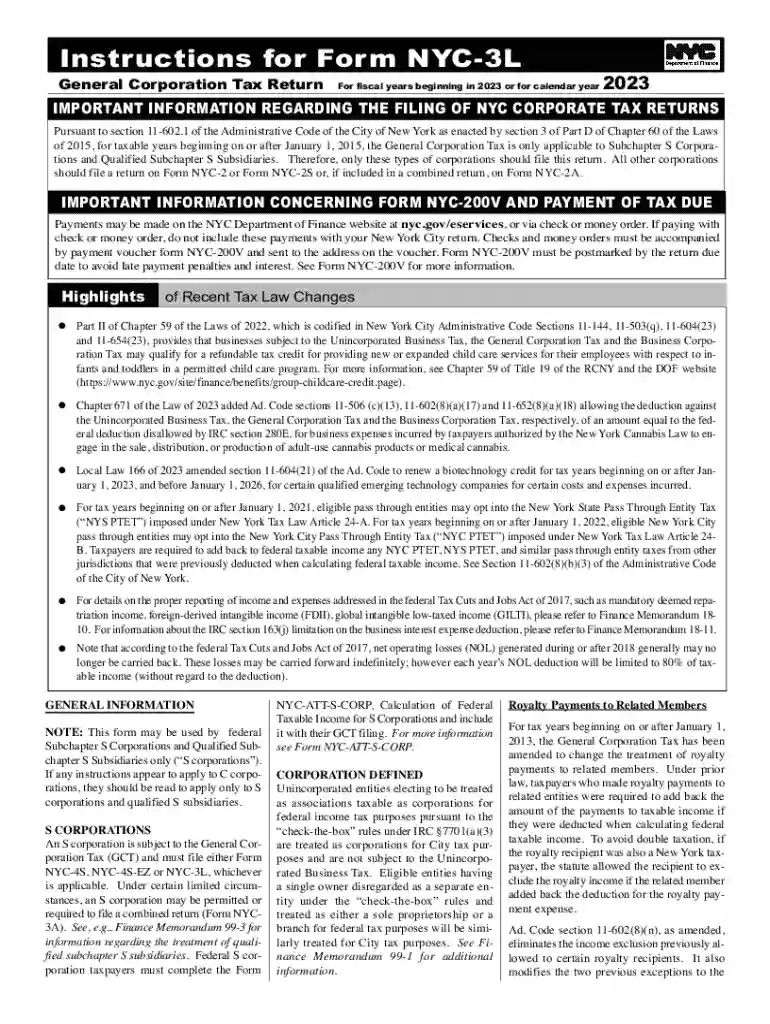
01. Edit your ct 3 a instructions 2023 online
Type text, add images, blackout confidential details, add comments, highlights and more.

Type text, add images, blackout confidential details, add comments, highlights and more.

Draw your signature, type it, upload its image, or use your mobile device as a signature pad.

Send it via email, link, or fax. You can also download it, export it or print it out.
Form CT-3-A is structured for corporations that operate in New York State, specifically to consolidate tax returns. The purpose is to ensure that corporations report their taxable income accurately, reflecting their financial activities within the state. Utilizing Form CT-3-A aids in maintaining compliance with state tax regulations, providing a clear framework for businesses to follow during the filing process. The form ensures unified reporting for corporations, which might naturally support complex business structures. Corporations use this standardized form to present a comprehensive view of their taxable elements, such as income, deductions, and credits.
Form CT-3-A is governed by New York State tax laws, which spell out how corporations should file, calculate, and report their taxes. These legal guidelines ensure that appropriate measures are taken to align with both state expectations and federal tax obligations. For instance, this form allows for the integration of tax calculations from varied sources within a corporation, ensuring accurate and total income portrayal. Furthermore, the state provides detailed legal references that guide businesses in filling out the form, ensuring adherence to all pertinent tax statements.
Corporations must follow a step-by-step process when completing Form CT-3-A, adhering to the provided instructions to ensure accuracy. Instructions include definitions of key terms, detailed line-by-line explanations, and examples of how each section should be filled. Corporations can refer to these instructions to identify which financial figures need to be included and how to apply specific tax credits or deductions. By following the instructions closely, businesses can ensure that they submit a complete and compliant tax filing.
Instructions for Form CT-3-A are critical as they provide a structured approach to filing taxes, significantly reducing the risk of errors. They help clarify complex tax scenarios that corporations might face, offering solutions and specific steps for resolution. Moreover, these instructions are an invaluable resource for tax preparers, ensuring they have a reliable source of information to guide their work efficiently. By furnishing explicit guidelines, the instructions facilitate compliance with state laws, thereby helping corporations avoid penalties for inaccuracies or omissions.
Failure to complete Form CT-3-A correctly can lead to various penalties, including fines for underreporting income or late submissions. The state enforces these penalties to maintain compliance and ensure corporations meet their fiscal responsibilities. It is crucial for businesses to adhere to deadlines and verify the accuracy of their submissions to avoid these financial setbacks. The instructions outline potential penalties, urging corporations to stay informed and judicious in their tax filing activities.
Form CT-3-A is mainly utilized by C corporations, which may include subsidiaries and larger corporate entities operating across various sectors in New York State. This includes businesses with complex structures that require detailed tax reporting due to multiple income streams or regional operations. Typically, such corporations engage tax professionals who are well-versed in state-specific tax rules to ensure precise submission of Form CT-3-A.
Adhering to filing deadlines is essential for all tax forms, including Form CT-3-A. The deadline typically aligns with the federal tax deadline, unless there are state-specific adjustments. Corporations should review yearly updates to the filing schedule to ascertain they submit their taxes on time. The instructions outline these deadlines explicitly, including information on how corporations can apply for extensions if necessary.
To correctly complete Form CT-3-A, corporations must compile various financial documents, such as profit and loss statements, balance sheets, and records of tax credits or deductions. The documentation required is elaborated in the instructions, supporting a precise and lawful filing. Additionally, supporting schedules that provide context for the figures reported are necessary to reinforce the information presented on Form CT-3-A.
Corporations that have multiple subsidiaries or complex revenue structures benefit significantly from the consolidated approach offered by Form CT-3-A. This setup allows them to manage their tax obligations efficiently while presenting an all-encompassing picture of their financial activities. The form is particularly advantageous for businesses seeking to streamline their tax submission process across multiple components or operational sectors.
By understanding the comprehensive nature of Form CT-3-A instructions, businesses can optimize their tax filing process, ensuring compliance while taking advantage of any available credits and deductions specific to New York State.
We've got more versions of the ct 3 a instructions 2023 form. Select the right ct 3 a instructions 2023 version from the list and start editing it straight away!
| Versions | Form popularity | Fillable & printable |
|---|---|---|
| 2025 | 4.6 Satisfied (22 Votes) | |
| 2023 | 4.7 Satisfied (59 Votes) | |
| 2022 | 4.8 Satisfied (25 Votes) | |
| 2021 | 4.8 Satisfied (49 Votes) | |
| 2020 | 4.2 Satisfied (59 Votes) | |
| 2019 | 4.3 Satisfied (105 Votes) | |
| 2018 | 4.3 Satisfied (65 Votes) | |
| 2018 | 4.1 Satisfied (79 Votes) | |
| 2017 | 3.7 Satisfied (28 Votes) | |
| 2013 | 4.3 Satisfied (139 Votes) |
At DocHub, your data security is our priority. We follow HIPAA, SOC2, GDPR, and other standards, so you can work on your documents with confidence.



Dec 10, 2025 Form CT‑3‑A/BC is an individual certification which includes a detail schedule of the members business and investment capital and businessRead more
by JA Bennett 2010 If the taxpayer reported a federal gain or loss because of the disposition of stock or indebtedness of an. S corporation, and if that SRead more


