







Definition & Meaning
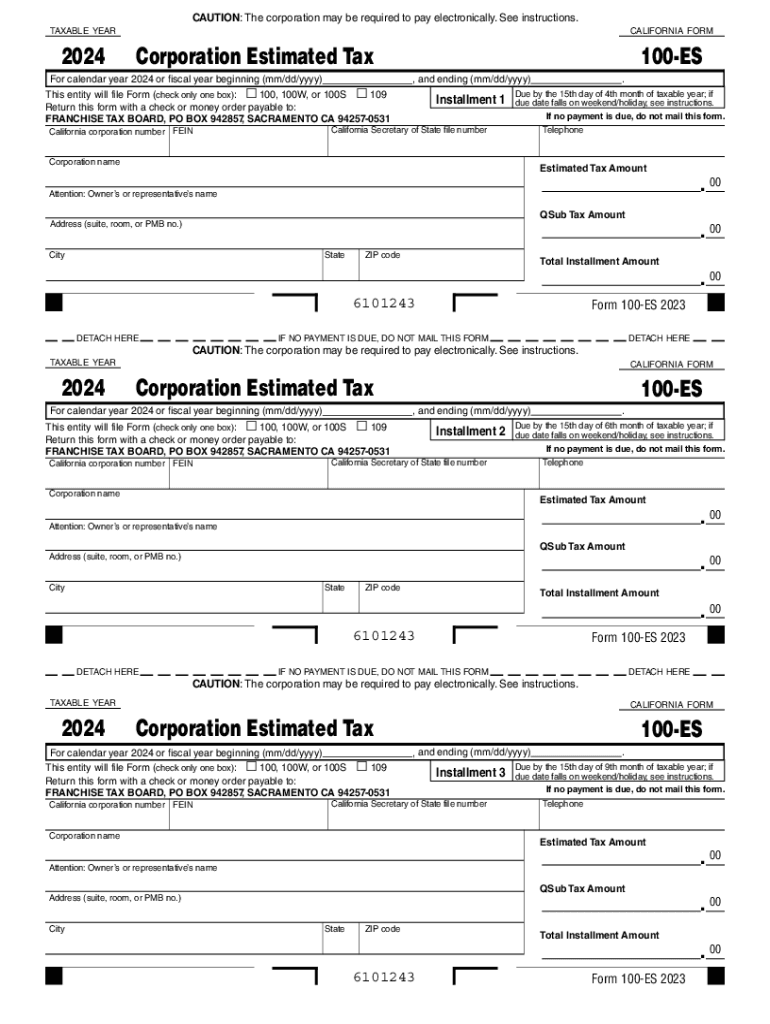
The "2024 Form 100-E S Corporation Estimated Tax" and "2024 Form 100-ES Corporation Estimated Tax" are documents used by S corporations and other corporations in California to declare their estimated tax liabilities for the tax year 2024. These forms serve a critical role in ensuring that corporations accurately estimate and pay the required taxes in a timely manner, thereby avoiding potential penalties and ensuring compliance with California tax laws. The documents outline important details such as payment schedules and reporting requirements, helping corporations manage their tax obligations effectively.
How to Use the 2024 Form 100-E S Corporation Estimated Tax
To use the 2024 Form 100-E and 100-ES, S corporations must calculate their estimated tax for the upcoming year. This involves projecting income, allowable deductions, and tax credits to determine the amount of tax owed. The forms guide corporations through the calculation process, requiring detailed information about income forecasts and expenses. Once completed, the forms are used to determine installment amounts and are submitted quarterly along with the tax payments. Corporations should ensure accuracy in calculations to prevent underpayment penalties.
Steps to Complete the 2024 Form 100-E S Corporation Estimated Tax
- Gather Necessary Information: Collect data on projected income, deductions, and any eligible tax credits that the corporation might apply for the financial year.
- Calculate Estimated Tax: Use the form instructions to calculate the total estimated tax for the year based on projections.
- Divide into Installments: The yearly estimated tax should be divided into four equal installments.
- Fill Out the Form: Enter all required information including the corporation’s Federal Employer Identification Number (FEIN), name, and the calculated tax amounts.
- Review for Accuracy: Double-check all entries to ensure there are no mistakes.
- Submit Payment: Send the form with the payment for the first installment by the specified deadlines.
Filing Deadlines / Important Dates
Corporations are required to submit estimated tax payments in four installments throughout the year. The deadlines typically fall on April 15, June 15, September 15, and January 15 of the following year. It is essential to adhere to these dates to avoid penalties for late payments. Each installment corresponds to one-fourth of the estimated yearly tax.
Required Documents
To accurately complete the 2024 Form 100-E or 100-ES, corporations will need existing financial statements, previous tax returns, income projections, and any documentation related to eligible tax credits or deductions. These documents help in making accurate estimates of tax liabilities.
Form Submission Methods (Online / Mail / In-Person)
Corporations can choose to submit the completed forms and payments either online through the California Franchise Tax Board’s secure portal, via mail, or in person at designated tax offices. Submitting online is often recommended for its efficiency and the immediate confirmation of receipt.
IRS Guidelines
While the 2024 Form 100-E and 100-ES are state forms specific to California, IRS guidelines impact their completion. Corporations must align their estimated tax calculations with federal tax structures, ensuring consistency in reporting. Adhering to IRS guidelines helps maintain accuracy and reduces risks of discrepancies between state and federal tax filings.
Penalties for Non-Compliance
Failure to file estimated taxes or underpayment can lead to significant penalties. These may include fines based on the percentage of tax owed or interest accumulation on the unpaid balance. To avoid penalties, it is critical for corporations to make accurate estimates and meet all filing deadlines.
Key Elements of the 2024 Form 100-E S Corporation Estimated Tax
- FEIN and Corporation Information: Essential for identifying the corporation.
- Payment Calculations: Includes the estimated income, allowable deductions, and total taxable income projections.
- Installment Amounts: Reflects the quarterly payments due.
- Signature Section: Confirms the authenticity and accuracy of the statements made in the form.
Understanding and accurately completing all sections ensures compliance and keeps the corporation in good standing with tax authorities.




