






Definition & Purpose of Form 5805
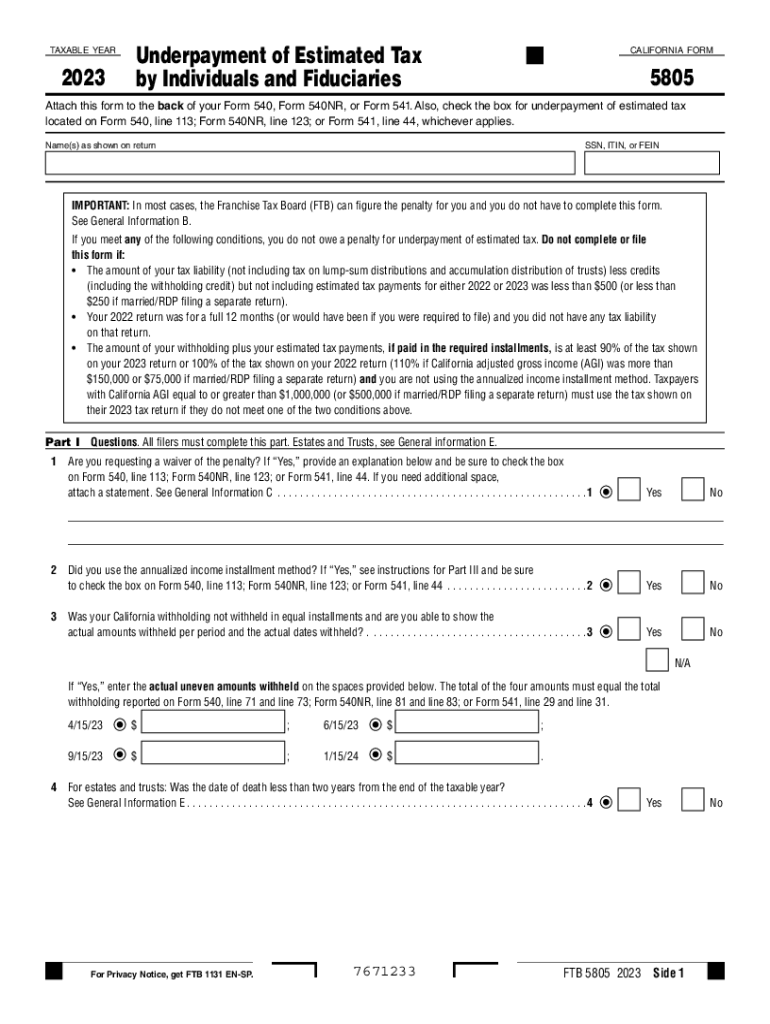
Form 5805, "Underpayment of Estimated Tax by Individuals and Fiduciaries," is designed for taxpayers in California who need to calculate any penalties related to the underpayment of their estimated taxes. This form is crucial for those whose estimated tax payments or withholding did not meet the required amounts. By using Form 5805, taxpayers can determine whether they owe any penalties and understand how to comply with California's tax laws regarding timely payments.
Eligibility for Using Form 5805
To determine if you need to file Form 5805, you must assess whether you have underpaid your estimated state income taxes throughout the year. This typically applies to individuals or fiduciaries who have not had enough taxes withheld from their earnings or income. The form can help you figure out if your tax payments meet the state's safe harbor thresholds, thus exempting you from penalties.
Specific Eligibility Criteria
- Taxpayers whose withholding and estimated payments do not cover at least 90% of their 2023 tax liability.
- Taxpayers whose payments account for less than 100% (or 110% for higher-income taxpayers) of their prior year's tax liability.
- Individuals with fluctuating income who may elect to use the annualized income installment method to avoid underpayment penalties.


Steps to Complete Form 5805
-
Gather Relevant Documents:
- Collect your payment records, withholding statements, and prior year tax information.
- Ensure you have details about all income sources, deductions, and credits applicable.
-
Calculate Installment Payments:
- Use Schedule A on the form to compute the required installments based on income received during each period.
- If your income varies, consider Schedule AI for the annualized income installment method.
-
Determine Underpayment Amounts:
- Calculate if any underpayment exists for each installment. This includes comparing the required payment against actual payments made.
-
Calculate Penalties:
- Complete the penalty calculation section based on the underpayment amounts for each period.
- Apply any exceptions or waiver criteria, if applicable.
-
Attach to Tax Return:
- Attach Form 5805 to your California state tax return, listing necessary penalty amounts in the designated fields.
Important Definitions Related to Form 5805
Understanding specific terms is essential when filling out Form 5805:
- Estimated Tax Payments: Four quarterly payments taxpayers make to cover income taxes not subjected to withholding.
- Safe Harbor Amounts: Payments made that equal the prior year's tax liability under certain conditions.
- Annualized Income Installment Method: A technique allowing calculation of estimated tax payments based on actual income throughout different periods, beneficial for those with variable income streams.
State-Specific Rules for California
California imposes specific guidelines that differ from federal requirements. This includes defining the percentage thresholds for avoiding penalties and the use of the annualized income method. California's regulations may have higher thresholds or different exemptions than federal rules, making it crucial to understand these distinctions for compliance.
IRS Guidelines for Underpayments
While Form 5805 is a California-specific document, it assists in ensuring alignment with broader IRS guidelines. The IRS typically requires taxpayers to pay at least 90% of their current year's tax liability or 100% of the preceding year's tax. You should compare state requirements and penalties with federal expectations when preparing both state and federal tax returns.
Examples of Using Form 5805
Consider a self-employed consultant in California who did not set aside enough for quarterly estimated tax payments and faces a substantial tax bill:
-
Scenario 1: Fluctuating Income: If the consultant had a particularly high income in one quarter, they might benefit from using the annualized income installment method to justify uneven payment distribution.
-
Scenario 2: Consistent Payments with Shortfall: Despite consistent quarterly payments, a shortfall due to underestimating income needs to be calculated using Form 5805.
Penalties and Consequences for Non-Compliance
Failing to correctly calculate or pay the necessary estimated taxes can lead to penalties beyond the standard tax liability. Form 5805 provides a structured approach to mitigate such penalties by calculating and demonstrating compliance with alternative methods available under California's tax laws.
Types of Penalties
- Monthly Accruals: Penalties accrue monthly on underpayments until resolved with correct payments or demonstrated compliance using the form.
- Non-Deductible Penalties: These penalties cannot be written off on future tax returns, increasing overall fiscal responsibility over time.
Filing and Submission Guidelines for Form 5805
Submit Form 5805 with your California state tax return through the various available channels:
Methods of Submission
- Online: Electronically file using compatible tax preparation software that supports California tax forms.
- Mail: Submit a paper form through the designated physical address for state returns.
- In-Person: Drop off your completed form and tax return at designated state tax offices.
By understanding and carefully completing Form 5805, taxpayers can manage their tax obligations more effectively, minimizing penalties and ensuring compliance with California's tax requirements.