




01. Edit your 199 online
Type text, add images, blackout confidential details, add comments, highlights and more.

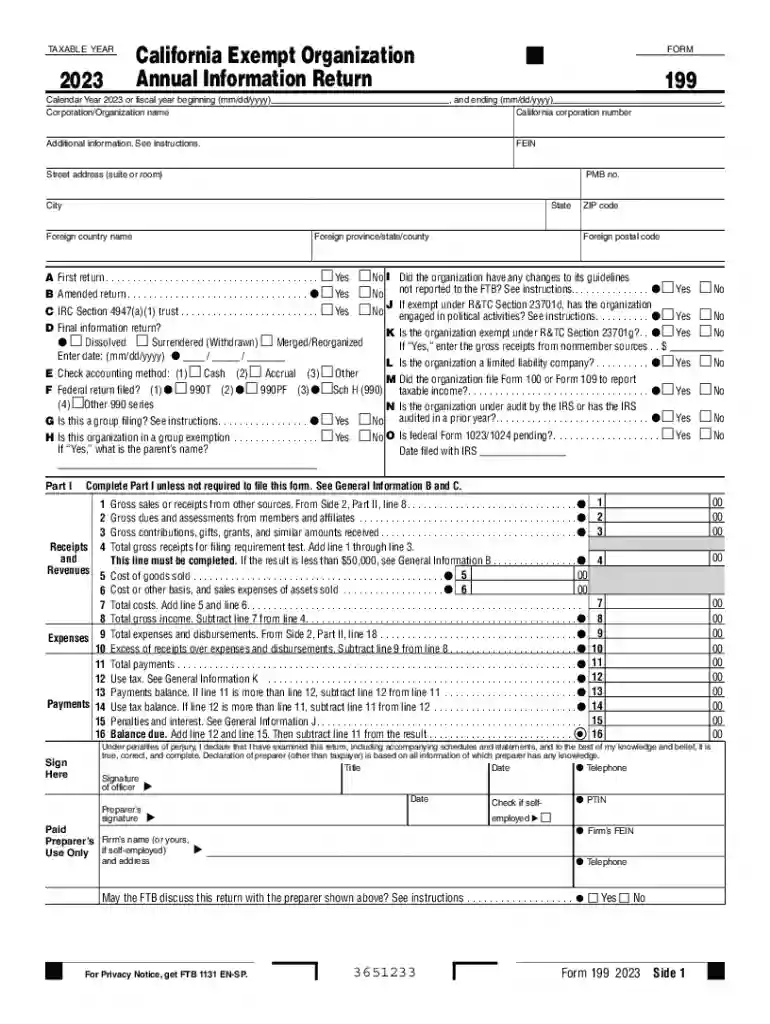
Type text, add images, blackout confidential details, add comments, highlights and more.

Draw your signature, type it, upload its image, or use your mobile device as a signature pad.

Send ca state withholding form via email, link, or fax. You can also download it, export it or print it out.
The 2023 Form 199, officially known as the California Exempt Organization Annual Information Return, is a document that exempt organizations must file to report their financial activities to the State of California. It captures details including gross receipts, expenses, and changes in organizational guidelines or operations. The form ensures compliance with state tax regulations and transparency in financial reporting.
Completing the 2023 Form 199 requires careful attention to detail to ensure all necessary information is accurately reported.
Certain documents are essential for completing the 2023 Form 199 accurately. Ensuring their collection ahead of time facilitates a smoother filing process.
Organizations have several options for submitting the 2023 Form 199. Choosing the correct method is critical for ensuring timely and accurate filing.
Understanding the legal implications of the 2023 Form 199 is crucial for all organizations to avoid penalties.
Failure to file accurately or on time can result in penalties, ranging from fines to potential loss of exempt status for severe infractions.
Using appropriate software can streamline the process of completing and submitting the 2023 Form 199.
Different business entities uniquely benefit from filing the 2023 Form 199, emphasizing transparency and compliance.
Knowing the deadlines for filing the 2023 Form 199 is imperative for ensuring compliance and avoiding penalties.
We've got more versions of the 199 form. Select the right 199 version from the list and start editing it straight away!
| Versions | Form popularity | Fillable & printable |
|---|---|---|
| 2024 | 4.3 Satisfied (32 Votes) | |
| 2023 | 4.3 Satisfied (49 Votes) | |
| 2022 | 4.8 Satisfied (52 Votes) | |
| 2021 | 4.8 Satisfied (141 Votes) | |
| 2020 | 4.3 Satisfied (197 Votes) | |
| 2019 | 4.4 Satisfied (205 Votes) | |
| 2018 | 4.4 Satisfied (74 Votes) | |
| 2017 | 4.3 Satisfied (105 Votes) | |
| 2016 | 4.4 Satisfied (123 Votes) | |
| 2015 | 4.4 Satisfied (273 Votes) | |
| 2014 | 4.3 Satisfied (65 Votes) | |
| 2013 | 4.3 Satisfied (65 Votes) | |
| 2012 | 4.2 Satisfied (44 Votes) | |
| 2011 | 4 Satisfied (39 Votes) | |
| 2010 | 4 Satisfied (37 Votes) |
At DocHub, your data security is our priority. We follow HIPAA, SOC2, GDPR, and other standards, so you can work on your documents with confidence.
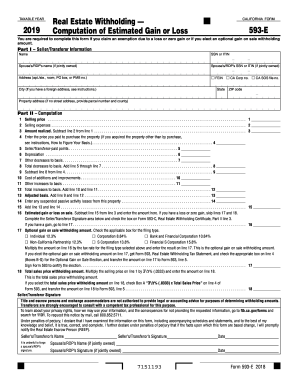


TOTAL TO FORM 199, PART II, reviewing the exempt organizations return. found in annual tax booklets or online. To request this notice by mail, call 800.338.
Use Form 199 to report information relevant to maintaining your tax-exempt status. Most tax-exempt organizations are required to file Form 199 or FTB 199N.


