
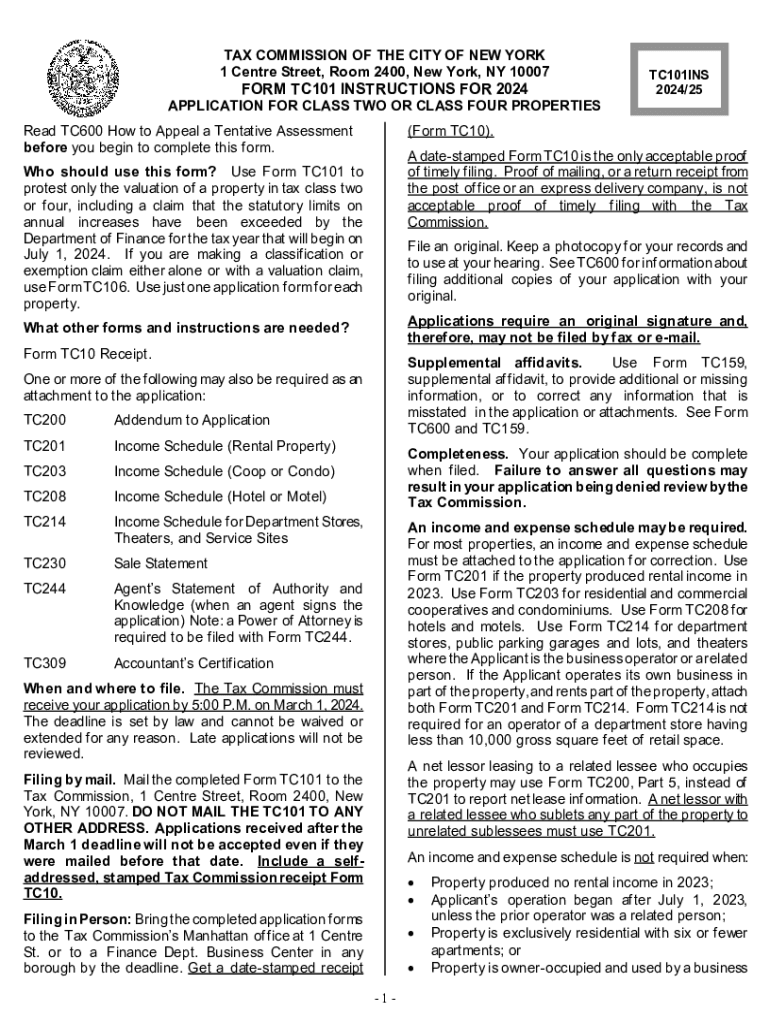







Definition & Purpose of the NY TC Form
The NY TC form is utilized to challenge the assessed valuation of Class Two or Class Four properties in New York City for the tax year beginning July 1, 2024. This form is central to property owners who wish to protest property assessments made by the New York City Tax Commission, aiming to ensure fair taxation values.
Key Elements of the Form
- Property Class: Targets Class Two (residential rental buildings with 11 or more units) and Class Four (commercial properties) valuations.
- Filing Purpose: Specifically used for contesting valuation inaccuracies that might result in improper tax liabilities.
Steps to Complete the NY TC Form
- Gather Documentation: Assemble property assessment notices, property tax bills, and any relevant property valuation reports.
- Complete Required Sections: Fill out ownership details, property location, and the specific grounds for your contest.
- Attach Supporting Evidence: Include appraisals, recent sales data of comparable properties, and photos that support your claim.
- Review and Submit: Ensure the form is thoroughly completed, double-checking for accuracy before submission.
Common Mistakes to Avoid
- Incomplete Information: Omitting property details or sections related to valuation grounds.
- Lack of Evidence: Insufficient documentation can lead to automatic denial.
Legal Use of the NY TC Form
The NY TC form must be used in compliance with specific legal guidelines provided by the New York City Tax Commission. It is a legal means to request a reduction in property tax assessments based on perceived inaccuracies.
Legal Obligations
- Timely Filing: Ensure submission within the specified deadlines to avoid dismissal.
- Truthful Representation: Provide accurate and truthful data, as any false representation may lead to penalties.
Who Typically Uses the NY TC Form
The primary users of the form include property owners and legal representatives of residential buildings with 11 or more units and commercial properties in New York City. Small businesses, real estate investors, and large corporations may also use this form to contest property tax assessments.


Common User Scenarios
- Property Owners: Challenging unexpected increases in property tax assessments.
- Legal Representatives: Acting on behalf of clients who need professional advocacy in tax disputes.
Important Terms Related to the NY TC Form
Understanding specific terms is critical for accurate form completion:
- Property Assessment: The evaluated value of a property as determined by the taxing authority.
- Tax Year: The accounting period for which tax is calculated, beginning July 1, 2024, for this form.
- Class Two and Class Four Properties: Tax classifications denoting different property types impacting assessment criteria.
Filing Deadlines and Important Dates
The filing deadline associated with the NY TC form is crucial to ensure that submissions are considered:
- Submission Deadline: Typically aligns with the annual property tax cycle, often in the early months of the tax year.
- Response Timeframe: The Tax Commission will review and respond within a specified period after the filing deadline.
Impact of Missing Deadlines
Failure to meet submission deadlines results in the inability to contest property valuation until the next assessment cycle, potentially leading to unjust tax payments.
Required Documents for Submission
Submitting the NY TC form requires the inclusion of several supporting documents to substantiate the claim:
- Recent Appraisals: Demonstrates the property's current market value.
- Comparative Sales Data: Offers evidence by showing sales of similar properties.
- Property Photographs: Visual evidence of the condition and attributes of the property.
Document Preparation Tips
- Ensure all documents are current and clearly labeled.
- Organize documents in a logical order aligning with form sections for efficient review.
Digital vs. Paper Submission Methods
The NY TC form can be submitted through both traditional and online methods:
Online Submission
- Electronic Form Completion: Utilize platforms like DocHub for seamless editing and submission.
- Convenience and Speed: Reduces mailing time and provides immediate submission records.
Paper Submission
- Traditional Mailing: Preferred by those not comfortable with digital submissions or lacking proper online access.
- Requires Additional Time: Account for mailing times when approaching submission deadlines.
Common Errors and Penalties for Non-Compliance
Errors in form submission can lead to penalties or denial of review. Ensuring compliance with submission requirements is vital to a successful appeal process.
Types of Errors
- Omission of Critical Information: Such as incorrect property identification numbers.
- Lack of Signature: Key signatory fields must be completed to validate the application.
By following these structured guidelines, users of the NY TC form can navigate the form's complexities effectively, ensuring their property tax disputes are articulated and supported appropriately.




