01. Edit your form online
Type text, add images, blackout confidential details, add comments, highlights and more.

Type text, add images, blackout confidential details, add comments, highlights and more.

Draw your signature, type it, upload its image, or use your mobile device as a signature pad.

Send it via email, link, or fax. You can also download it, export it or print it out.
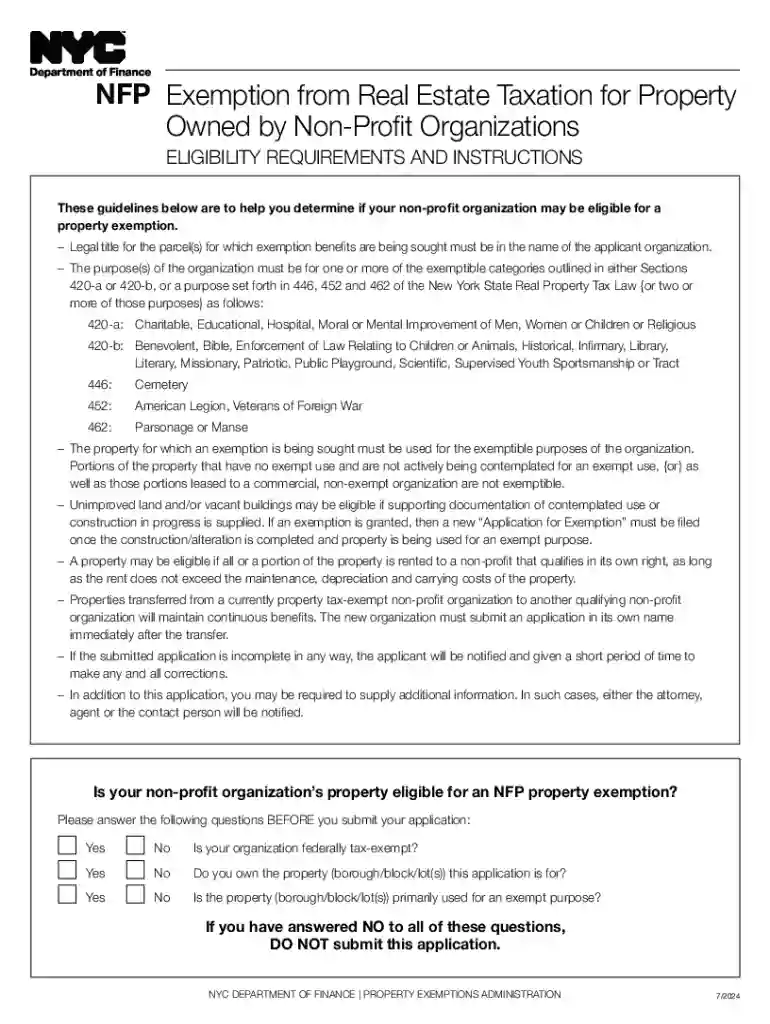
Understanding the "Know Your Rights on Not-for-Profit Property Tax Exemptions" involves recognizing its role as an informational guide for non-profit organizations in the United States. This guide outlines the legal framework surrounding property tax exemptions applicable to non-profits. By comprehending the key elements, organizations can ensure they meet the necessary criteria to qualify for tax exemptions, which can enhance their financial sustainability. It specifically addresses how property owned and used by non-profits for exempt purposes can qualify for tax exemption under U.S. legal regulations.
Eligibility for property tax exemptions depends on several specific criteria related to ownership, purpose, and use of the property. The organization must own the property, and it must be used exclusively for exempt purposes, such as charitable, educational, or religious activities. Documented proof demonstrating the alignment of the property's use with the organization's mission is necessary. Additionally, the non-profit must hold a current IRS 501(c)(3) status. Certain states may impose additional requirements, such as the length of time the property has been owned or specific community benefit measures, making compliance with both federal and state guidelines essential.


Each state may have distinct rules regarding property tax exemptions for non-profits. It's crucial for organizations to check the specific regulations and criteria in the state where the property is located. States may vary in terms of required documentation, deadlines, and specific exemption application forms. For instance, New York City requires detailed narratives of property use, whereas California might focus more on the benefits an organization provides to the community.
The application process involves a detailed review by tax authorities. After submission, authorities verify the documentation and may conduct site visits or interviews. The timeline for approval can vary significantly based on the state's processing efficiency and the completeness of the application. Generally, applicants should expect a period of three to six months before receiving a decision.
Understanding these rights can provide significant financial relief to non-profit organizations, allowing them to allocate resources more effectively towards their mission. It equips organizations with the knowledge to maintain compliance and avoid penalties. Additionally, awareness empowers organizations to advocate in cases of disputes or denials, fostering a proactive approach to resource management.
The legal application of these rights involves using the exemption to reduce or eliminate property tax liabilities for legitimate non-profit use. Organizations must ensure compliance with federal and state laws, regularly updating documentation to reflect any changes in property use or organizational shifts. The legal framework assists in resolving disputes and guiding tax-related decision-making processes.
Consider a community church using its owned property for religious services. By filing for exemption, the church can qualify to have its property taxes waived, directing funding instead towards community service initiatives like food banks or educational workshops. Another instance involves a non-profit educational institution leveraging exemptions to reallocate resources to improve educational facilities and curricula.
These insights provide a comprehensive understanding of how to navigate the intricacies of property tax exemptions for non-profits, emphasizing the significance of precise adherence to legal and procedural requirements in maximizing financial and operational efficiency.
We've got more versions of the Know Your Rights on Not-for-Profit Property Tax Exemptions form. Select the right Know Your Rights on Not-for-Profit Property Tax Exemptions version from the list and start editing it straight away!
At DocHub, your data security is our priority. We follow HIPAA, SOC2, GDPR, and other standards, so you can work on your documents with confidence.