01. Edit your form online
Type text, add images, blackout confidential details, add comments, highlights and more.

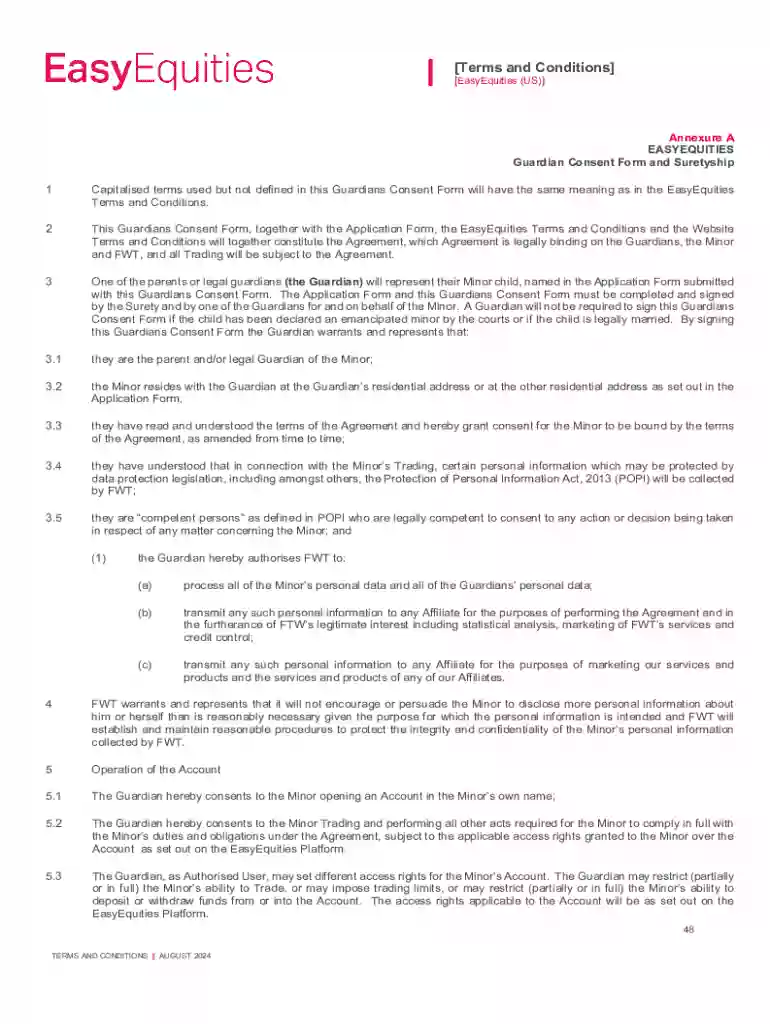
Type text, add images, blackout confidential details, add comments, highlights and more.

Draw your signature, type it, upload its image, or use your mobile device as a signature pad.

Send it via email, link, or fax. You can also download it, export it or print it out.
Investing can seem daunting for beginners, but the "A COMPREHENSIVE Beginners Guide To Investing With Easy" serves to demystify the process. This guide is designed to provide foundational knowledge on investment principles, allowing newcomers to understand the basics of investing. It offers clear explanations of various investment types, risk management strategies, and the role of financial markets in enhancing personal wealth. Through this guide, individuals can gain insights into how to make informed investment decisions tailored to their financial goals and risk tolerance.
Using the "A COMPREHENSIVE Beginners Guide To Investing With Easy" effectively involves a step-by-step approach. Start by familiarizing yourself with basic investment concepts such as asset allocation, diversification, and the importance of setting clear financial goals. It's beneficial to read through the guide systematically, taking notes and highlighting key sections that are most relevant to your financial situation. Utilize real-world scenarios included in the guide to visualize how different investment strategies apply to your life. This will help solidify your understanding and prepare you for practical application.
Familiarize with Investment Terminology: Begin by understanding fundamental investment terms such as stocks, bonds, ETFs, and mutual funds. This knowledge will serve as a foundation for more complex concepts.
Set Financial Goals: Define what you hope to achieve through investing, whether it's saving for retirement, buying a house, or funding education.
Understand Risk and Return: Learn how the potential for investment returns is closely tied to the level of risk you're willing to take.
Develop an Investment Plan: Using the guide's tips, create a blueprint that outlines your investment strategy, including asset allocation and investment timeline.
Monitor and Adjust: Regularly review your investments, using guidance from the guide to make adjustments in response to market changes or personal financial shifts.
Investment Strategies: Detailed discussions on the various strategies beginners can adopt, such as value investing, growth investing, and index investing.
Risk Management: Techniques for assessing and mitigating risk to secure financial investments.
Market Analysis: Insights into analyzing market trends and economic indicators that can influence investment decisions.
Tools and Resources: Recommendations for software, calculators, and platforms that can aid in making informed decisions.
To illustrate its practical application, the guide includes case studies of individuals at different life stages:
Asset Allocation: The process of dividing investments among different categories like stocks, bonds, and cash.
Diversification: A risk management strategy that mixes a wide variety of investments within a portfolio.
Compound Interest: Earnings on an investment's initial principal and the accumulated interest from previous periods.
The guide is primarily targeted at beginners with no prior experience in investing. It is suitable for anyone above the age of 18 interested in starting their investment journey. However, it is especially advantageous for those with a basic understanding of finance who are ready to delve deeper into the mechanics of investment.


Several business types can leverage this guide for corporate financial planning:
The guide is available in both digital and paper formats. The digital version offers the convenience of accessing hyperlinked resources and interactive tools, whereas the paper version provides a tangible reference for those who prefer physical books. Both versions contain identical content and provide the same comprehensive insights and strategies.
The digital version of the guide is compatible with various financial planning software such as TurboTax and QuickBooks. This allows users to integrate investment strategies directly with their budgeting and accounting systems for seamless financial planning.
The guide serves a wide demographic, including:
It acts as an essential resource for any individual or organization aiming to enhance their understanding of investments and improve their financial literacy.

We've got more versions of the A COMPREHENSIVE Beginners Guide To Investing With Easy form. Select the right A COMPREHENSIVE Beginners Guide To Investing With Easy version from the list and start editing it straight away!
At DocHub, your data security is our priority. We follow HIPAA, SOC2, GDPR, and other standards, so you can work on your documents with confidence.