







Definition & Meaning
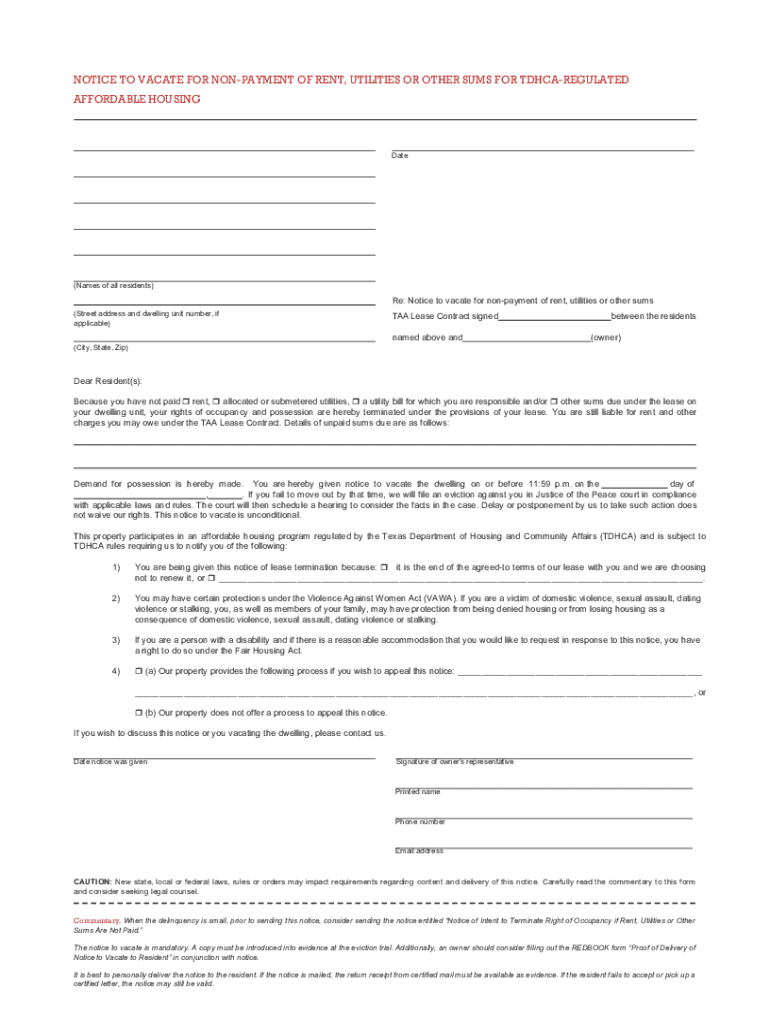
The "Notice to Vacate for Non-Payment of Rent, Utilities, or Other Sums for TDHCA-Regulated" is a formal document used in the United States, particularly within Texas Department of Housing and Community Affairs (TDHCA)-regulated housing. It serves as a legal notification to tenants who have failed to fulfill their financial obligations related to rent, utilities, or other specified sums. The notice clarifies the tenant's failure to comply with payment terms outlined in their rental agreement and lays the groundwork for potential eviction proceedings if the issue is not rectified within a specified timeframe. This notice is a crucial component of property management, ensuring that both landlords and tenants are aware of their rights and obligations under Texas property laws.
How to Use the NOTICE
To effectively use the Notice to Vacate, landlords must ensure its proper completion and delivery. The process typically begins with verifying the tenant's payment history to confirm non-compliance. Once confirmed, the landlord should prepare the notice, clearly stating the amounts owed and the deadline by which the tenant must vacate the property if payments are not made. It is essential to include all pertinent details, such as the tenant's name, property address, and contact information. This notice must be delivered in accordance with state laws, which may dictate methods such as in-person delivery or certified mail. Correct usage ensures that landlords maintain compliance with legal standards while effectively communicating the gravity of the situation to tenants.
Steps to Complete the NOTICE
- Gather Tenant Information: Start by collecting all relevant tenant details, including their full name, property address, contact number, and lease agreement terms.
- Calculate Outstanding Amounts: Accurately assess the total amount of unpaid rent, utilities, or other charges that are overdue.
- Fill Out the Notice: Input all gathered details into the notice form, ensuring clarity and precision in communicating the owed sums and tenant responsibilities.
- Specify the Compliance Date: Clearly state the deadline by which the tenant must either settle their dues or vacate the property.
- Preview for Accuracy: Double-check the notice for any inaccuracies or omissions that could render it invalid.
- Deliver the Notice: Send the completed notice to the tenant using an approved method, ensuring you respect any state-specific delivery provisions.
Key Elements of the NOTICE
- Tenant and Property Details: Comprehensive information about the tenant and the property in question establishes the context and validity of the notice.
- Statement of Non-Compliance: Clear articulation of the specific contract violations, such as unpaid rent or utility charges, and their amounts.
- Deadline for Action: A defined deadline for either payment or vacating, providing a clear timeframe for tenant response.
- Legal Basis and Potential Actions: Explanation of the legal foundation for the notice and potential follow-up actions, including eviction proceedings if compliance is not achieved.
Important Terms Related to the NOTICE
- Non-Payment of Rent: Refers to the failure to fulfill rent payment obligations as per the lease agreement.
- Utilities: Includes water, electricity, gas, and any other essential services the tenant is responsible for under the lease.
- TDHCA-Regulated Housing: Housing units that fall under the regulatory oversight of the Texas Department of Housing and Community Affairs.
- Eviction: A legal process where the tenant is removed from the property due to non-payment or other lease violations.
Legal Use of the NOTICE
The legal application of this notice is bound by specific state and federal regulations. For TDHCA-regulated properties, adherence to Texas property laws is mandatory. Landlords must ensure that the notice meets all statutory requirements, including provision timelines and methods of delivery. Given the serious implications of eviction, this notice serves as a vital procedural step that legally allows landlords to reclaim their property when tenants default on their obligations. Failure to properly execute this notice may lead to complications in subsequent legal proceedings.
State-Specific Rules for the NOTICE
Texas, as the focal point, has particular stipulations regarding notice periods and delivery methods. Typically, a three-day notice period is common in Texas, providing tenants a short window to settle unpaid amounts or vacate. It's important for landlords to be abreast of local amendments and ensure compliance with any changes in state legislation that could affect these timelines or procedures. Other states might have extended notice periods or additional requirements, making awareness of regional regulations critical for landlords operating across state lines.
Examples of Using the NOTICE
Consider a case where a tenant in a TDHCA-regulated apartment has missed two months of rent payments. The landlord, after unsuccessful payment requests, issues a Notice to Vacate, stating that the tenant owes $2,000 in overdue rent. The notice outlines a three-day window for either payment or vacancy, as per Texas law. Upon receiving the notice, the tenant arranges a payment plan to settle the arrears, thus avoiding eviction. This example illustrates the notice's role as both a compliance tool and an opportunity for tenants to rectify their payment issues prior to eviction.




