






Definition & Meaning
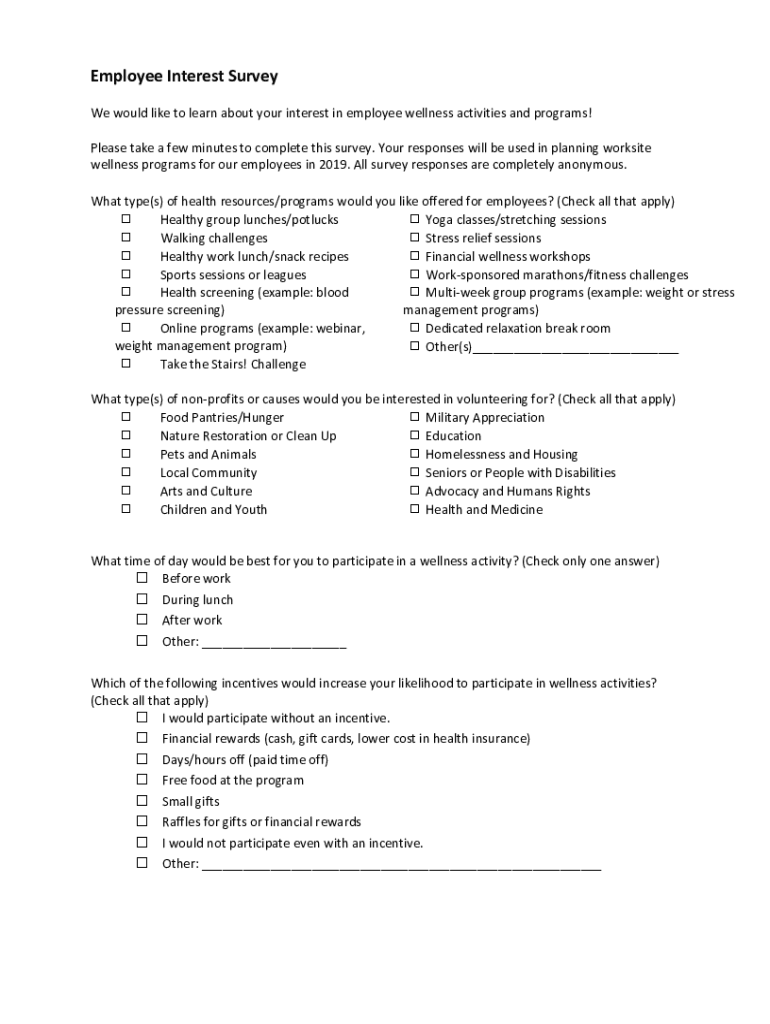
Employee wellness surveys are instrumental tools designed to assess employee preferences, interests, and feedback related to wellness activities within the workplace. These surveys are integral for employers aiming to tailor wellness programs that fit the needs of their workforce. Structured with a series of questions, templates, and instructions, these surveys facilitate the gathering of comprehensive data on employee well-being, interests in health resources, and participation incentives. By providing insights into the factors that influence employee participation and engagement, these surveys enable employers to design initiatives that support a healthier, more productive work environment.
How to Use the Employee Wellness Surveys: Questions, Templates, and More
Using employee wellness surveys effectively involves a few strategic steps. First, identify the primary objectives the survey intends to achieve, such as understanding participation barriers or identifying popular wellness activities. Next, select or customize survey templates that are aligned with these objectives and include relevant questions. It's critical to ensure anonymity and confidentiality for honest feedback. Employers should clearly communicate the purpose of the survey to encourage maximum participation. Distributing the survey digitally may be optimal, as it allows for ease of completion and data collection. Upon collecting responses, data analysis should focus on identifying trends and actionable insights that inform the design and implementation of wellness programs.
Key Steps in the Process
- Determine Objectives: Define what information is needed from the survey.
- Select or Create Templates: Choose or design relevant surveys with tailored questions.
- Ensure Anonymity: Facilitate honest and unbiased feedback by assuring respondents of their privacy.
- Distribute the Survey: Use digital platforms like emails or intranet systems for easy administration.
- Analyze Results: Focus on extracting actionable insights from collected data.
- Implementation: Use insights to develop or refine wellness programs that address findings.
Key Elements of the Employee Wellness Surveys
Several core elements must be included in an effective employee wellness survey. These include:
- Introduction and Instructions: Clear instructions and an overview of the survey's purpose to set the right expectations.
- Demographic Questions: Basic questions about the respondent's role or department for contextual analysis.
- Lifestyle and Health Questions: Items that explore current health habits and wellness interests.
- Barriers to Participation: Inquiry into potential obstacles employees face in engaging with wellness programs.
- Preferred Resources and Activities: Questions that identify what resources and activities would engage employees.
- Feedback and Suggestions: Open-ended questions that allow respondents to share personalized input or creative ideas.
Example Questions
- What wellness resources have you used in the past year?
- How does the current work environment support your physical and mental health goals?
- Are there specific wellness activities you would like to see introduced?
Importance of Employee Wellness Surveys
Conducting employee wellness surveys is crucial for fostering a supportive and healthy work environment. These surveys provide valuable insights into employee needs and preferences, allowing organizations to tailor their wellness programs effectively. By prioritizing wellness, companies can improve employee morale, reduce absenteeism, and boost productivity. Additionally, well-structured wellness programs can enhance employer branding, making a company more attractive to potential hires interested in balanced workplace culture.
Examples of Using Employee Wellness Surveys
Real-world application of employee wellness surveys can be seen in various industries:
- Tech Sector: A tech company may use wellness surveys to roll out mental health resources; responses revealed high stress among developers.
- Education: A school district conducted surveys to gauge interest in fitness programs, resulting in a successful yoga initiative for teachers.
- Healthcare: Hospitals implemented nutrition workshops after wellness surveys indicated staff interest in healthy eating resources.
Steps to Complete the Employee Wellness Surveys
Completing employee wellness surveys involves several straightforward steps designed to elicit comprehensive responses:
- Access the Survey: Employees receive a link or email to access the online survey platform.
- Read Instructions: Carefully read the introduction and guidelines provided.
- Answer Accurately: Achieve honest responses by thoughtfully considering each question.
- Submit Responses: Ensure all questions are answered based on the survey design before submitting.
- Provide Feedback: Use any open-ended sections to give additional suggestions or thoughts.
Software Compatibility
Employers can enhance the administration of employee wellness surveys through software tools compatible with various systems:
- Google Forms: Easy to distribute via email and integrates smoothly with Google Workspace.
- SurveyMonkey: Offers a robust platform with analytics for deeper insights.
- Qualtrics: Ideal for large organizations requiring complex survey logic.
Business Types That Benefit Most from Employee Wellness Surveys
While any organization can benefit from employee wellness surveys, certain business types may derive more pronounced advantages:
- Large Corporations: With diverse workforces, surveys enable tailored wellness solutions for distinct employee segments.
- Remote Companies: Measure remote worker engagement and identify isolated employees' health needs.
- Start-ups: As business environments rapidly evolve, surveys offer critical feedback to shape innovative wellness initiatives.
By effectively leveraging employee wellness surveys, organizations across different sectors can enhance employee satisfaction and overall workplace efficacy.