






Definition and Meaning
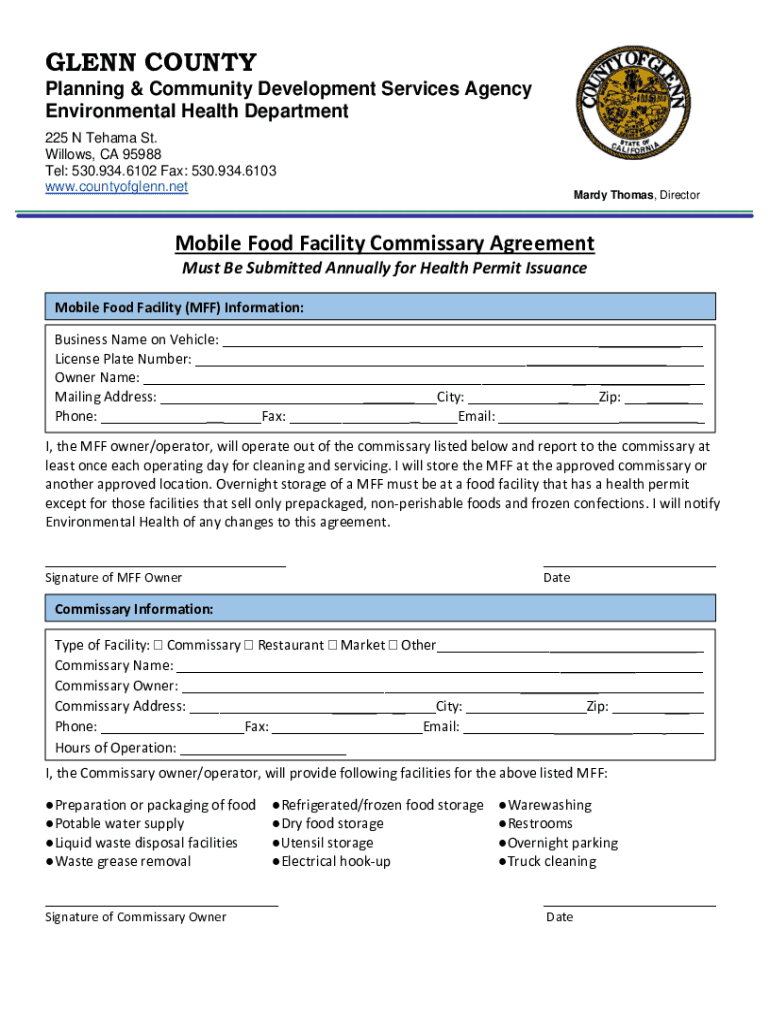
The Mobile Food Facility Commissary Agreement is a formal document essential for mobile food vendors who require a secure and licensed location to prepare, store, and sell their food products. This agreement outlines the contractual relationship between a mobile food facility (MFF) owner and a commissary operator. It serves as proof of compliance with local health and safety regulations, which are crucial for obtaining operational permits. The agreement delineates responsibilities such as sanitation procedures, storage availability, and operational guidelines that both parties must uphold. In essence, it is a regulatory tool designed to ensure that mobile food services meet the necessary public health standards.
Steps to Complete the Mobile Food Facility Commissary Agreement
Completing the Mobile Food Facility Commissary Agreement involves several key steps that ensure all parties fulfill their responsibilities. First, the MFF owner must gather necessary business details, including the facility's legal name, address, and contact information. Next, the owner should identify a licensed commissary that meets local health department standards and expresses willingness to collaborate.
- Verify Commissary Licensing: Ensure the commissary has current permits and adheres to health regulations.
- Negotiate Terms: Discuss and agree on reasonable terms regarding storage, waste disposal, and facility usage.
- Detail Responsibilities: Clearly outline duties related to cleaning schedules, equipment maintenance, and supply management.
- Sign Agreement: Both parties need to sign the agreement, making it legally binding.
- Submit for Approval: Forward the signed agreement to the appropriate local health authority for review and approval.
Important Terms Related to Mobile Food Facility Commissary Agreement
Understanding the terminology within the Mobile Food Facility Commissary Agreement is vital for compliance and operational efficiency. Some important terms include:
- Commissary: A licensed, commercial-grade kitchen where mobile food vendors can prepare and store food.
- Mobile Food Facility (MFF): A permitted vehicle or cart from which food is sold or served.
- Permit Holder: The individual or entity legally recognized as responsible for the operation of the MFF.
- Sanitation Practices: Procedures outlined to ensure cleanliness and prevent contamination.
- Storage: Designated areas within the commissary for storing food, equipment, and other necessary materials.
Key Elements of the Mobile Food Facility Commissary Agreement
The Mobile Food Facility Commissary Agreement comprises several critical components to ensure a clear understanding between MFF owners and commissary operators. Key elements typically include:
- Contact Information: Full details of both the MFF and the commissary operator.
- Facility Usage Details: Specific areas and equipment the MFF is authorized to use.
- Sanitation and Maintenance Responsibilities: Obligations of each party regarding cleaning and equipment upkeep.
- Operational Schedule: Agreed times when the MFF can access the commissary.
- Signatures: Endorsements of both the MFF owner and commissary operator, validating the agreement.
Who Typically Uses the Mobile Food Facility Commissary Agreement
The Mobile Food Facility Commissary Agreement is primarily utilized by individuals and entities operating mobile food services. This includes food truck owners, street food vendors, and operators of food carts. Typically, these businesses lack the necessary infrastructure for food preparation and storage, making it imperative to partner with a licensed commissary. This agreement is also vital for commissary operators who provide their facilities to ensure their assets are managed and maintained according to health standards.


Why You Should Use the Mobile Food Facility Commissary Agreement
Utilizing the Mobile Food Facility Commissary Agreement is crucial for several reasons. Firstly, it is often a legal requirement to possess such an agreement before a health permit is issued to the MFF. Furthermore, it clearly delineates the roles and expectations of both parties, minimizing potential disputes. Having a commissary agreement also reassures customers and health inspectors that your business meets food safety and quality standards. Finally, it safeguards the MFF owner's operations by providing a designated space for essential activities like food storage and preparation, thus maintaining business continuity.
Legal Use of the Mobile Food Facility Commissary Agreement
The Mobile Food Facility Commissary Agreement must be used legally to prevent any penalties or legal disputes. Compliance with local and state regulations is critical, and any deviation can result in fines or suspension of business operations. The agreement serves as evidence that the MFF meets all necessary health standards and is authorized to operate under local laws. Both parties should review and understand all terms before signing, ensuring that the agreement aligns with their operational needs and legal obligations.
Examples of Using the Mobile Food Facility Commissary Agreement
Several scenarios illustrate the practical application of the Mobile Food Facility Commissary Agreement:
- Food Truck Startup: A new food truck owner partners with a local commissary to access a commercial kitchen for food preparation, facilitating compliance with health regulations needed for their permit.
- Seasonal Vendor: A street vendor uses the agreement to legally access refrigerated storage necessary during the busy summer months.
- Event Catering: Catering businesses operating from mobile units use the agreement to securely store prepared foods before large events, ensuring safety and adherence to health codes.
These examples highlight the agreement's role in facilitating various mobile food service operations, ensuring both compliance and efficiency.