




Definition and Meaning of Property Easement Agreements
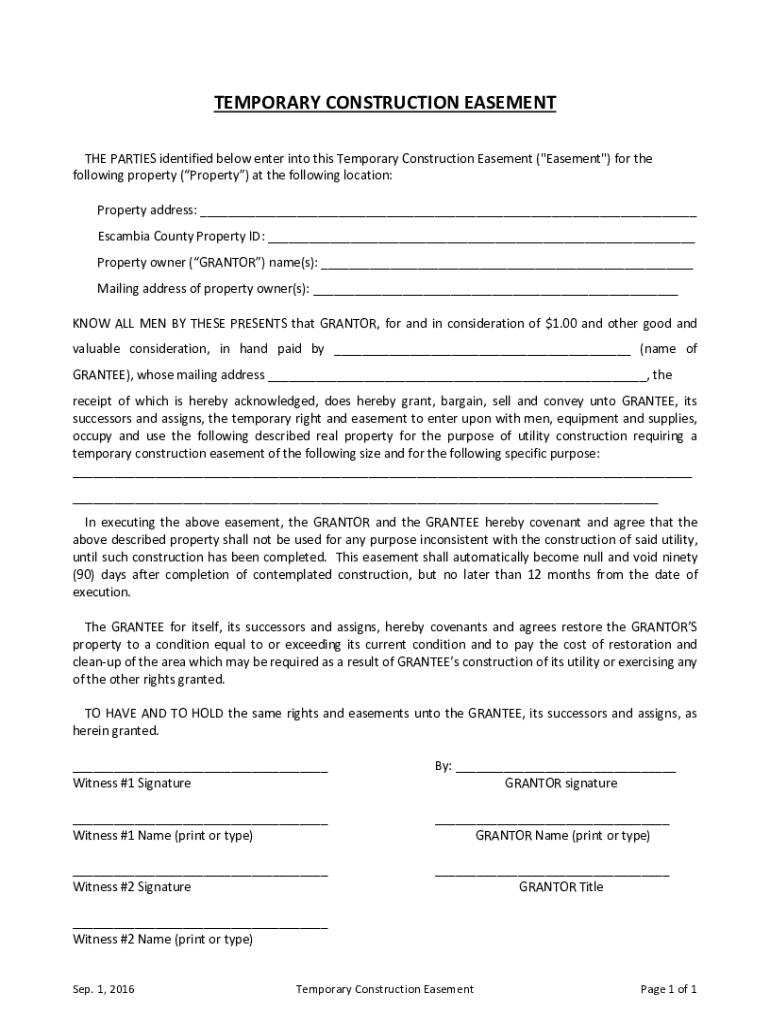
Property easement agreements are legally binding documents that grant permission to use a portion of a property for a specific purpose while maintaining ownership. These agreements are crucial in facilitating actions such as installing utility lines, accessing neighboring properties, or constructing temporary structures. Easements ensure that the property owner and the party granted access have their rights and responsibilities clearly outlined, which helps prevent disputes. A temporary construction easement, for example, allows for utility construction with conditions that protect the property's integrity and ensure restoration after the project.
How to Use Property Easement Agreements: Getting it Right
Using a property easement agreement involves understanding its application and ensuring that all parties involved are in agreement with its terms. Begin by identifying the specific need for the easement, such as utility installation or access paths. Clearly outline the purpose, duration, and any conditions associated with the easement. Engage with all stakeholders, including legal advisors, to review the agreement's terms to ensure compliance and avoid future conflicts. It's essential to have the agreement documented and signed by both parties to formalize its legally binding status.
Steps to Complete Property Easement Agreements
- Identify the Purpose: Determine why the easement is required and what it will encompass.
- Draft the Agreement: Include essential elements such as the parties involved, property description, duration, and specific conditions.
- Review Legal Requirements: Ensure the agreement complies with local laws and regulations.
- Negotiate Terms: Discuss with the involved parties to agree on terms that protect everyone's interests.
- Execute the Document: Both parties should sign the agreement in the presence of a notary or appropriate witness for validity.
- Record the Agreement: File the signed document with the relevant local government office to put it on public record.
Key Elements of Property Easement Agreements
- Party Identification: Clear delineation of the grantor and grantee involved in the agreement.
- Property Description: Detailed description of the property area subject to the easement.
- Duration and Expiration: Specific timeframe for the easement, including any automatic expiration conditions.
- Conditions and Restrictions: Any requirements for the property’s use, such as restoration obligations post-use.
- Compensation or Fees: If applicable, mention any fees or compensation for granting the easement.
Legal Use of Property Easement Agreements
Easement agreements serve as a legal framework to manage property rights and obligations. They allow for activities like access, construction, or installation while protecting the landowner’s rights. Ensuring legality involves compliance with state laws, fulfilling recording requirements, and obtaining necessary permits. Legal advisors often help draft and review these agreements to safeguard all parties involved.
Important Terms Related to Property Easement Agreements
- Grantor/Grantee: The property owner granting the easement, and the party receiving rights to use the property.
- Servient/Dominant Estate: The property burdened by the easement and the property benefiting from it.
- Appurtenant/In Gross Easement: Easements tied to the land versus those tied to a person or entity.
- Termination: Conditions or events that can lead to the end of the easement’s validity.
State-Specific Rules for Property Easement Agreements
State laws can significantly impact how property easement agreements are structured and enforced. Variations may include differences in required documentation, the legal process for recording agreements, and the rights of involved parties. In some states, easement agreements must be recorded within a specified timeframe to be enforceable. It's essential to consult local regulations and legal professionals to ensure compliance with state-specific requirements.
Examples of Using Property Easement Agreements
- Utility Easement: A utility company may need access to install and maintain power lines. The agreement could specify access routes, construction duration, and restoration responsibilities.
- Access Easement: A landlocked property owner may require an easement across a neighbor’s land to reach a public road. The agreement might include rights of passage and any maintenance duties.
- Temporary Easement for Construction: A developer may seek temporary access to a portion of a neighboring lot for construction purposes, agreeing to compensate the owner and restore the land after use.