




01. Edit your form online
Type text, add images, blackout confidential details, add comments, highlights and more.

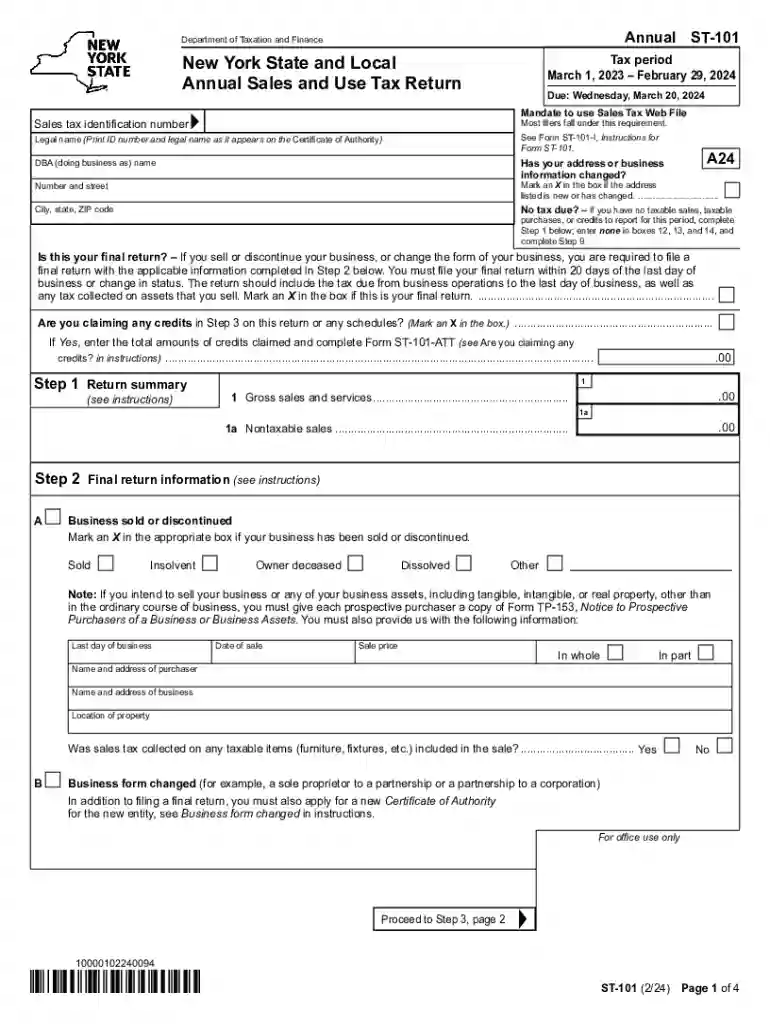
Type text, add images, blackout confidential details, add comments, highlights and more.

Draw your signature, type it, upload its image, or use your mobile device as a signature pad.

Send it via email, link, or fax. You can also download it, export it or print it out.
The Form ST-101, known officially as the New York State and Local Annual Sales and Use Tax Return Revised 2 24, is designed for businesses operating in New York State to report their annual sales and use tax obligations. It serves multiple purposes, including capturing information on taxable sales, recording credits claimed, and ensuring compliance with state tax laws. This form is pivotal for businesses to accurately detail their sales activities and financial responsibilities.
The Form ST-101 for the tax period from March 1, 2023, to February 29, 2024, needs to be submitted by March 20, 2024. Timely filing is crucial, as missing this deadline could result in penalties and interest charges.
To complete the Form ST-101 efficiently, the following documents are essential:
Failing to submit the Form ST-101 by the due date or providing inaccurate information can result in substantial penalties:
Businesses of varying sizes and industries operating within New York State are required to use the Form ST-101 to report their sales and use tax liabilities. This form is particularly relevant for:


Both digital and paper versions of the Form ST-101 are available to accommodate different filing preferences:
Different types of business entities, such as LLCs, corporations, and partnerships, can use the Form ST-101 to report sales and use taxes. Each entity type may have specific filing requirements and obligations that necessitate careful review:
The legal application of the Form ST-101 is multifaceted, encompassing compliance with New York's state tax laws and providing accurate information about taxable sales activities. Businesses must adhere to legal standards when completing the form to avoid legal challenges or audits:
We've got more versions of the Form ST-101 New York State and Local Annual Sales and Use Tax Return Revised 2 24 form. Select the right Form ST-101 New York State and Local Annual Sales and Use Tax Return Revised 2 24 version from the list and start editing it straight away!
| Versions | Form popularity | Fillable & printable |
|---|---|---|
| 2025 | 4.4 Satisfied (29 Votes) | |
| 2024 | 4.8 Satisfied (37 Votes) | |
| 2023 | 4.8 Satisfied (29 Votes) | |
| 2022 | 4.8 Satisfied (192 Votes) | |
| 2021 | 4.2 Satisfied (41 Votes) | |
| 2020 | 4.4 Satisfied (38 Votes) | |
| 2019 | 4.2 Satisfied (52 Votes) | |
| 2018 | 4.3 Satisfied (56 Votes) | |
| 2017 | 4.3 Satisfied (62 Votes) | |
| 2016 | 4.4 Satisfied (48 Votes) | |
| 2015 | 4.4 Satisfied (63 Votes) | |
| 2013 | 4 Satisfied (31 Votes) | |
| 2001 | 4 Satisfied (43 Votes) |
At DocHub, your data security is our priority. We follow HIPAA, SOC2, GDPR, and other standards, so you can work on your documents with confidence.
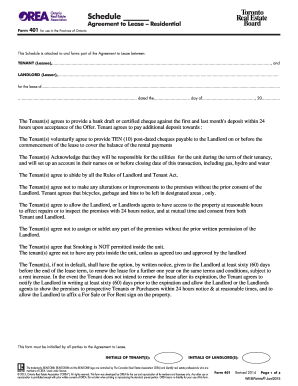



Feb 19, 2026 Use Sales Tax Web File to file your annual return. Benefits include: automatic calculation of amounts due; up-to-date taxing jurisdictionRead more
by JA Bennett 2010 Filing status conforms to federal statusexcept that where the New York resident status of spouses differs, separate returns must be filed. TwoRead more


