Definition & Meaning
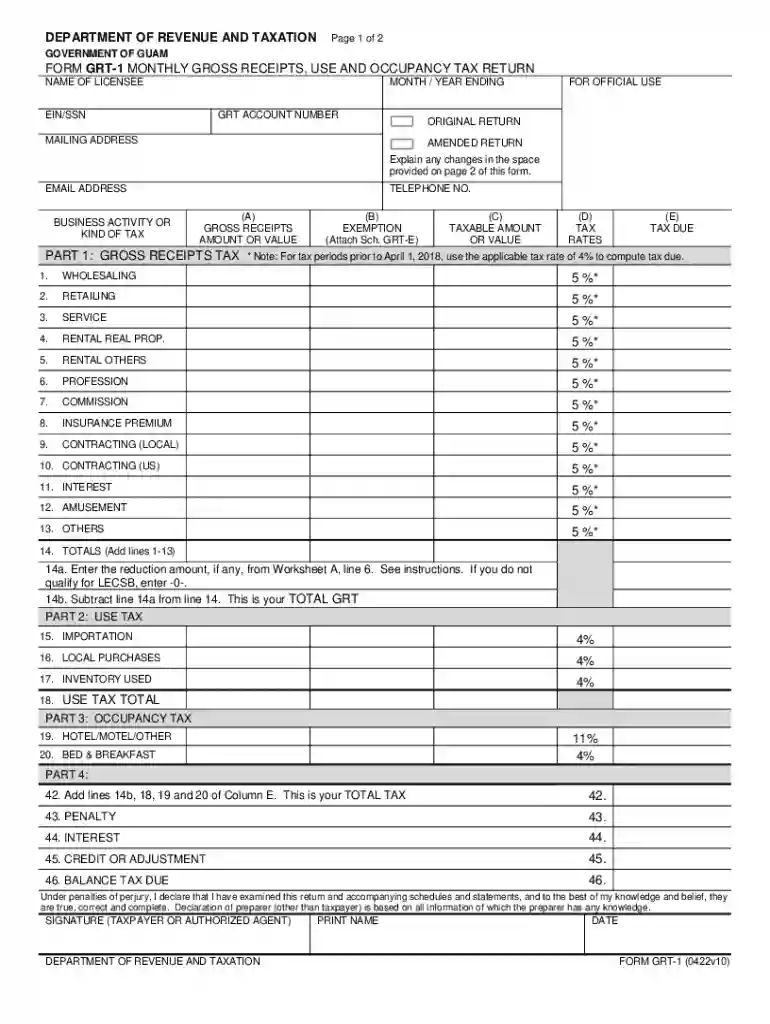
The FORM GRT-1, issued by the Department of Revenue and Taxation of Guam, is essential for reporting monthly gross receipts, use, and occupancy taxes. It serves as a critical document for taxpayers to declare their earnings, deductions, and taxable income, helping to maintain compliance with regional tax laws.
- Official Use: This form is specific to business activities on Guam and is used to calculate taxes owed based on gross income from sales or services.
- Importance: Correctly filing the GRT-1 ensures that businesses are meeting their tax obligations, avoiding legal issues, and contributing to state revenue.
Key Elements of the Form GRT-1
Understanding the structure and requirements of FORM GRT-1 is crucial.
- Gross Receipts Reporting: Document sections guide users in reporting total income against allowable deductions.
- Exemption Claims: Instructions on eligible exemptions reduce taxable income.
- Calculations: Detailed fields for tax computation, ensuring accuracy in financial declarations.
- Amended Returns: Sections for correcting previously submitted data, vital for ongoing compliance.
Steps to Complete the Form GRT-1
Filling out the form accurately is essential for tax accuracy and compliance.
- Gather Financial Records: Include all receipts and documentation of income and expenditures.
- Calculate Gross Receipts: Determine total earnings for the period in question before deductions.
- Determine Exemptions: Evaluate and list applicable exemptions to reduce taxable income.
- Compute Tax Owed: Use the provided sections to calculate the tax using the applicable rates.
- Double-Check Entries: Review all information for completeness and accuracy.
- Submit Form: File through the designated method, either digitally or via mail to the Department of Revenue and Taxation.
How to Obtain the Form GRT-1
Accessibility to the FORM GRT-1 is streamlined for taxpayer convenience.
- Online Download: Available on official government websites for direct download.
- Physical Copies: Visit local government offices in Guam to obtain physical copies if necessary.
- Third-Party Services: Utilize document management platforms like DocHub to obtain and fill out forms digitally.
Who Typically Uses the Form GRT-1
This form principally serves businesses and individuals operating within Guam.

- Businesses: All business entities generating income in Guam, including LLCs, corporations, and sole proprietors.
- Small Enterprises: Particularly relevant for small businesses claiming exemptions.
- Tax Professionals: Serve clients by ensuring all tax filings are complete and accurate per state requirements.
Legal Use of the Form GRT-1
Compliance with the legal framework is essential to avoid penalties.
- Regulatory Compliance: Ensure adherence to regional tax codes and reporting requirements.
- Audit Trail: Provides a formal record should there be any audits or inquiries from tax authorities.
- Dispute Resolution: Acts as a legal document in case of discrepancies or disputes with tax calculations or exemptions.
State-Specific Rules for the Form GRT-1
Navigating state-specific regulations is crucial for correct filing.
- Local Guidelines: Understand the unique requirements set by the Department of Revenue and Taxation of Guam.
- Regional Exemptions: Identify exemptions that are specific to business operations in Guam to maximize allowable deductions.
- Filing Deadlines: Stay aware of key filing dates to avoid late penalties and ensure timely compliance.
Examples of Using the Form GRT-1
Practical scenarios can illuminate the proper use of the form.
- Retail Business: Reporting monthly sales and applying eligible deductions for cost of goods sold.
- Service Providers: Accurately declaring service income while capitalizing on small business exemptions.
- Online Sellers: Combining digital sales receipts with the form to accurately assess tax obligations.