







Definition and Meaning
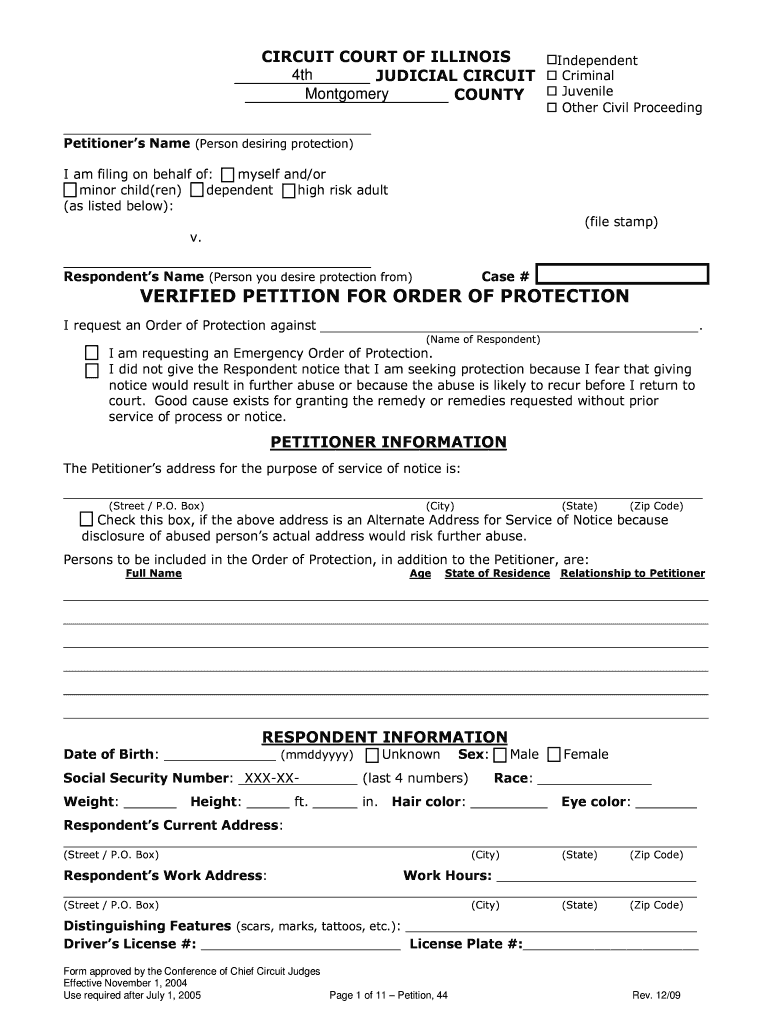
A verified petition for order of protection is a legal document filed in Montgomery County to safeguard individuals from threats or actual instances of abuse or harassment. This petition is designed to provide protection to the petitioner by legally preventing the respondent from engaging in harmful or threatening behavior. The order typically includes measures such as prohibiting contact, maintaining a specified physical distance, or relinquishing firearms. The term "verified" indicates that the petitioner affirms the truthfulness of the information provided, under penalty of perjury, ensuring the integrity and seriousness of the claims made within the petition.
How to Use the Verified Petition for Order of Protection - Montgomery County
Utilizing the verified petition involves several critical steps:
-
Identify the Need: Understand the specific circumstances that justify the petition, such as instances of domestic violence, stalking, or harassment.
-
Gather Information: Collect detailed information about both the petitioner and the respondent, along with evidence of incidents requiring protection.
-
Complete the Form: Accurately fill out the petition with all necessary personal information and specify the protective measures sought.
-
Submission: File the petition with the appropriate court in Montgomery County, ensuring any necessary fees are paid or waivers are requested if applicable.
-
Attend Hearings: Be prepared to attend any scheduled court hearings to provide testimony and evidence supporting the need for protection.
-
Compliance: Once an order is granted, ensure compliance with its terms and report any violations to the authorities.
Steps to Complete the Verified Petition for Order of Protection - Montgomery County
Completing the petition requires careful attention to detail:
-
Read Instructions: Begin by reading any instructions provided with the form carefully.
-
Provide Personal Information: Include details about the petitioner, such as full name, address, and relationship to the respondent.
-
Document Incidents: Clearly document incidents of abuse or harassment, providing dates, times, locations, and descriptions.
-
Specify Requests: Indicate what protective measures you are seeking, whether it be a no-contact order, custody arrangements, or other remedies.
-
Verification: Sign the petition under oath, affirming that the information is true to the best of your knowledge.
-
Submit: File the completed petition with the Circuit Court in Montgomery County and retain copies for your records.
Who Typically Uses the Verified Petition for Order of Protection - Montgomery County
The petition is predominantly used by:
- Individuals experiencing domestic violence or stalking
- Victims of harassment seeking legal recourse
- Family members acting on behalf of minors needing protection
- Persons receiving threats or aggressive behavior from others, such as neighbors or acquaintances
These individuals turn to this legal remedy to ensure their safety and well-being through judicial intervention.


Key Elements of the Verified Petition for Order of Protection - Montgomery County
Key elements of the petition include:
- Personal Identifiers: Full names and addresses of involved parties.
- Incident Details: Specific instances of alleged abuse or threats.
- Protective Measures: The specific actions the court is requested to enforce.
- Verification Statement: Petitioner's attestation to the truthfulness of the information.
Each element is crucial in shaping the court's decision on whether to grant the order of protection.
Legal Use of the Verified Petition for Order of Protection - Montgomery County
The petition is legally used to:
- Enforce Protective Measures: Ensure that respondents are legally obligated to cease harmful actions.
- Provide Relief and Security: Offer legal recourse for victims seeking safety.
- Facilitate Legal Proceedings: Document incidents that may be used in further civil or criminal actions.
Failing to adhere to an order may result in legal penalties for the respondent, reinforcing its importance and authority.
State-Specific Rules for the Verified Petition for Order of Protection - Montgomery County
In Montgomery County and broader state contexts:
-
Eligibility Criteria: Specific criteria determine who may file a petition, often linked to the type of relationship between involved parties.
-
Variations in Forms: Different counties or states may have variations in forms or processes, so local rules must be followed.
Understanding these nuances ensures that petitions are appropriately filed and considered viable under state law.
Required Documents
To support the petition, you may need:
- Identification: Government-issued ID for the petitioner.
- Evidence of Abuse: Photographs, medical records, or police reports documenting recent incidents.
- Related Legal Documents: Any existing court orders or custody arrangements.
Having these documents ready can facilitate a smoother filing process and provide additional weight to the petitioner's claims.




