







Definition & Meaning
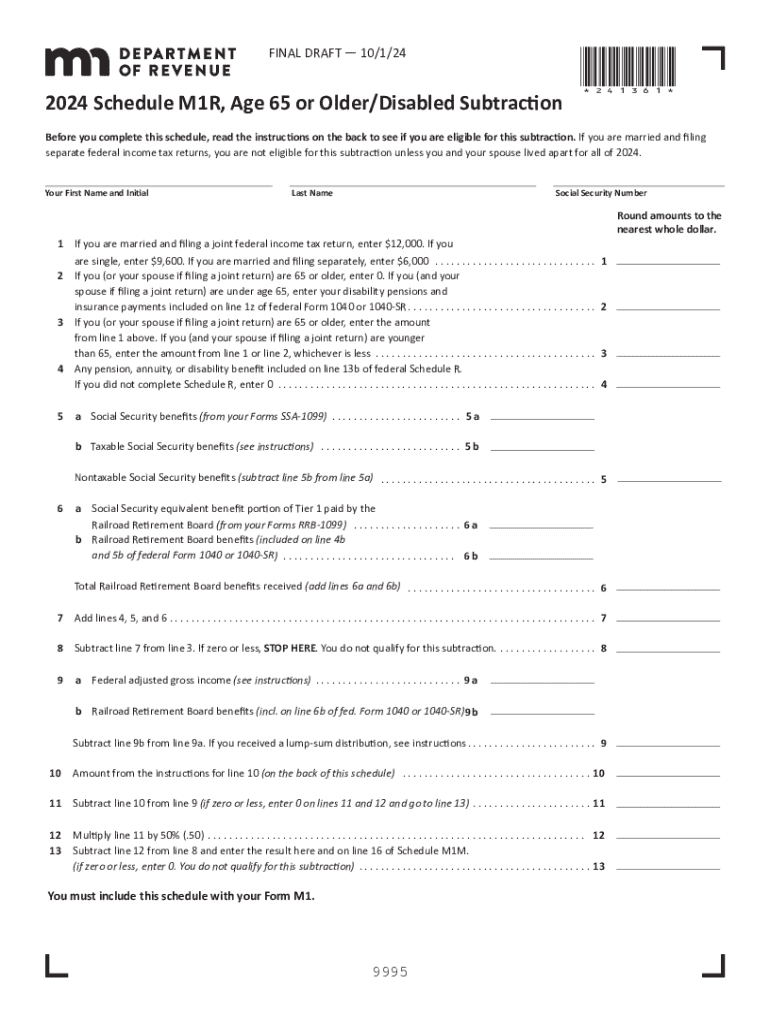
The 2024 Schedule M1R for individuals aged 65 or older and those with disabilities is a form designed to authorize a specific tax subtraction. This subtraction caters to individuals meeting age or disability status criteria, allowing them to reduce their taxable income. The form is integral in ensuring eligible taxpayers can claim necessary deductions on their state tax returns, effectively reducing their tax liabilities.
Eligibility Criteria
To qualify for the 2024 Schedule M1R subtraction, individuals must either be aged 65 or older by the end of the tax year or have a qualifying disability. Eligibility also depends on specific income limits set by filing status. This ensures that the subtraction is available to those whose incomes fall below certain thresholds, taking into account adjusted gross income (AGI), pensions, and Social Security benefits.
Specific Income Limits
- Single Filers: Income limits differ for individuals filing singly and those filing jointly. It's essential to check state provisions for precise figures.
- Joint Filers: A higher income ceiling applies, providing more flexibility for married couples filing jointly.
- Head of Household: There are distinct caps for those qualifying as head of household, reflecting their unique tax situation.


How to Use the 2024 M1R Form
Once eligibility is determined, the next step involves accurately completing the 2024 Schedule M1R. Follow these sequential steps to ensure a smooth filing process:
- Download the Form: Obtain the latest version of Schedule M1R from the Department of Revenue's website or similar authorized sources.
- Gather Required Information: Collect all necessary financial records, including details about pensions and Social Security.
- Fill in Personal Details: Complete the taxpayer identification section, including name, social security number, and filing status.
- Calculate Adjusted Income: Use current AGI figures, including adjustments for pensions and Social Security.
- Submit with Tax Return: Ensure the filled form accompanies your state tax return.
Practical Example
Consider John, a retiree aged 67 with a qualifying disability. Following these steps, he successfully claims a subtraction of $3,000, reducing his overall taxable income.
Important Terms Related to the 2024 M1R Form
Understanding key terminology is vital for accurate form completion and maximizing tax benefits:
- Adjusted Gross Income (AGI): The income after applying specific adjustments, critical for calculating eligibility.
- Pension Income: Retirement earnings included in income calculations for the form.
- Subtraction Limit: The maximum allowed reduction of taxable income.
- Qualifying Disability: A state-defined disability that qualifies taxpayers for additional benefits.
IRS Guidelines
While the 2024 Schedule M1R is state-specific, understanding how it aligns with IRS guidelines is vital for compliance. Although state strategies differ, IRS publications can provide clarity on definitions of AGI and taxable benefits, ensuring consistency between state and federal submissions.
Steps to Complete the 2024 M1R Form
Completing the 2024 Schedule M1R involves carefully following a process to avoid errors:
- Verify Eligibility: Confirm age or disability status and review income thresholds.
- Accurate Calculations: Ensure figures for AGI and income sources are precise.
- Fill Grounds for Subtraction: Properly outline qualifying criteria for the subtraction in designated sections.
- Cross-Check Information: Double-check entries for accuracy and completeness before submission.
State-Specific Rules
Tax laws and resulting forms can vary significantly across states. The Schedule M1R may have different rules or parameters depending on where one resides, affecting filing processes and calculations.
Examples Across States
- State A: Allows higher subtractions for pension incomes.
- State B: Offers additional benefits for those living in high-cost areas.
Form Submission Methods
Individuals can choose between various submission methods to file their 2024 Schedule M1R:
- Online Submission: Digital filing platforms or state tax department websites.
- Mail: Traditional postal submission.
- In-Person: Delivery at designated tax office locations, though availability may vary by state.




