







Definition and Meaning
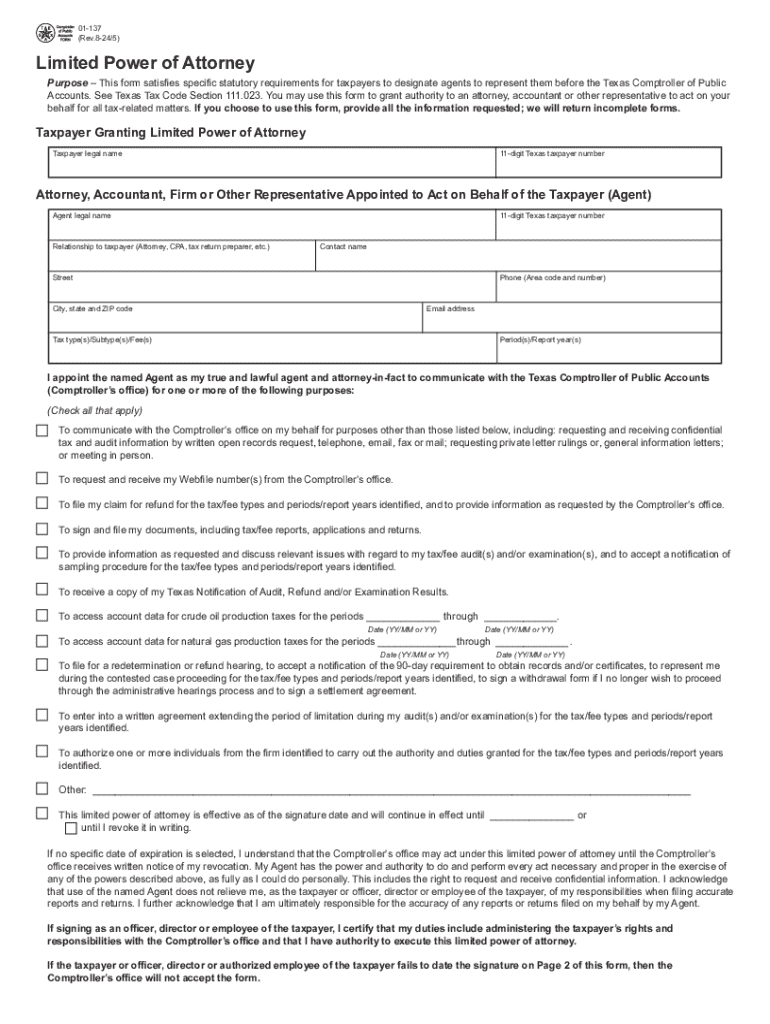
The Texas Tax Power of Attorney (Form 01-137) is an official document that allows taxpayers in Texas to appoint an agent to manage their tax-related matters before the Texas Comptroller of Public Accounts. This designated agent, who can be an attorney, accountant, or another qualified individual, is granted the authority to access sensitive tax information and represent the taxpayer in various tax proceedings. It is a critical tool for those who need assistance with navigating complex tax issues or require someone to handle their tax obligations.
How to Use the Texas Tax Power of Attorney (Form 01-137)
To use the Texas Tax Power of Attorney, the taxpayer must first complete and submit Form 01-137, ensuring all required information is provided. Once the form is approved, the appointed agent can perform activities on behalf of the taxpayer, such as negotiating settlements or discussing tax liabilities. It is important to clearly define the scope of authority granted to the agent to prevent any misunderstanding or misuse of power. The form remains in effect until it is revoked by the taxpayer or until a specified expiration date if mentioned.
Steps to Complete the Texas Tax Power of Attorney (Form 01-137)
- Download the Form: Obtain Form 01-137 from the Texas Comptroller of Public Accounts website.
- Provide Taxpayer Information: Enter the taxpayer's full legal name, address, and taxpayer identification number.
- Designate an Agent: Include the agent's name, address, and contact information to be granted the power of attorney.
- Specify Powers Granted: Clearly outline the specific tax matters and types of authority being granted to the agent.
- Signatures Required: The form must be signed and dated by the taxpayer to be valid. In some cases, a witness or notary may also be required.
- Submit the Form: After completion, submit the form as instructed, typically either by mail or electronically.
Legal Use of the Texas Tax Power of Attorney (Form 01-137)
The form is legally binding and must comply with all state-specific regulations. It allows the appointed agent to engage in legal discussions about the taxpayer's tax matters, receive tax documents, and make informed decisions on the taxpayer's behalf. It is crucial that both the taxpayer and the agent fully understand the legal implications, as misuse or unauthorized actions could lead to legal consequences.
Key Elements of the Texas Tax Power of Attorney (Form 01-137)
- Taxpayer and Agent Identification: Essential for establishing authority.
- Scope of Authority: Defines what actions the agent can perform.
- Effective Date: Indicates when the power of attorney begins.
- Expiration or Revocation: Outlines conditions under which the power of attorney will terminate.
- Signatures: Required for the form to be legally valid.
Important Terms Related to Texas Tax Power of Attorney (Form 01-137)
- Taxpayer Identification Number (TIN): A unique identifier for the taxpayer.
- Authorized Agent: The person designated to act on behalf of the taxpayer.
- Scope of Authority: The range of actions the agent is permitted to undertake.
- Revocation: The official cancellation of the power granted to the agent.
State-Specific Rules for the Texas Tax Power of Attorney (Form 01-137)
Texas has unique regulations regarding the execution and use of the Tax Power of Attorney. The form must adhere to these state-specific guidelines to be recognized as valid. This includes specific language requirements, submission protocols, and compliance with Texas tax statutes. Furthermore, Texas may have particular provisions for certain types of tax issues that should be explicitly addressed when granting authority.
Examples of Using the Texas Tax Power of Attorney (Form 01-137)
- Handling Audits: An agent can oversee communication and negotiations with tax authorities during an audit.
- Tax Disputes: Agents can be empowered to settle disputes on behalf of the taxpayer.
- Complex Tax Filing: Those with intricate tax situations, such as multiple income sources, can use an agent to ensure proper filing and compliance.
Filing Deadlines / Important Dates
Timely submission of Form 01-137 is crucial for its effectiveness in managing tax-related affairs. While there are no specific annual deadlines for filing this form, it should be submitted well in advance of any tax proceedings or events where representation is needed. The form must also be updated if there are any changes in the taxpayer’s or agent’s circumstances.
Form Submission Methods
The Texas Tax Power of Attorney (Form 01-137) can be submitted online, via mail, or in person. Online submissions are often preferred for their speed and efficiency. Mail submissions should be sent to the address specified by the Texas Comptroller's office, ensuring enough time is allowed for postal delivery. In-person submissions should be coordinated with the relevant tax office to ensure proper processing.




