







Definition and Purpose of Document
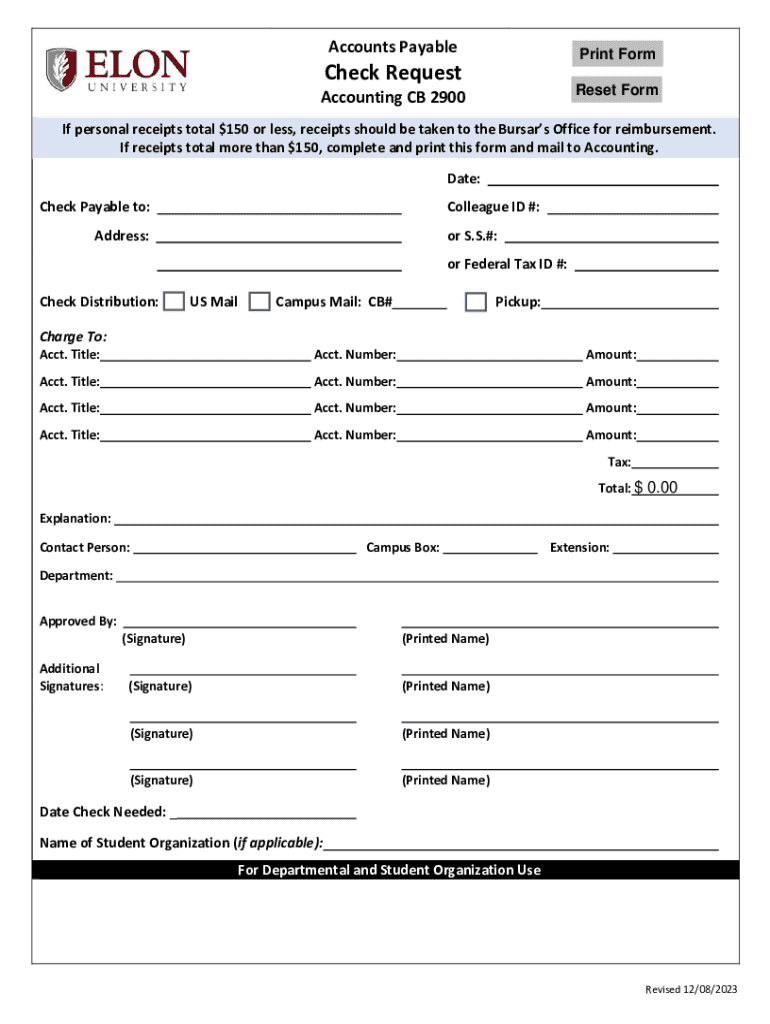
The form "Do you reimburse expenses when people paid cash and" is utilized to request reimbursement for cash expenditures. This document facilitates the process of individuals seeking to recuperate funds spent out-of-pocket for authorized business or organizational expenses. The primary focus is on ensuring that individuals are reimbursed for expenses incurred where cash was the method of payment, aligning financial records with actual spending.
How to Use the Form Efficiently
To utilize this reimbursement form effectively, follow a few strategic steps:
-
Detail Entry: Clearly fill in all personal data such as your contact information and details about your role within the organization. Ensure accuracy in the sections capturing what the expenses were for.
-
Expense Documentation: Include as much supporting documentation as possible, such as receipts or invoices, to substantiate cash transactions. Since cash payments leave less of a paper trail, attaching a clear description of each purchase helps avoid processing delays.
-
Approval Requirements: Ensure that any necessary approvals are completed by authorized personnel before submission. This often includes supervisors or financial officers who verify the legitimacy and necessity of the expenses.
Steps to Complete the Reimbursement Process
Completing the form involves a series of structured tasks to ensure all details are captured accurately:
-
Receipt Submission: Gather all related receipts for expenses totaling more than $150. For amounts under $150, receipts should be taken directly to the Bursar’s Office.
-
Form Completion: Fill out each section of the form with the required personal and financial information, ensuring clarity and precision.
-
Submission: For expenses exceeding $150, submit the form via mail to the designated Accounting department.
Eligibility and Usage Scenarios
The primary user of this form is typically an employee or a member of an organization needing reimbursement for work-related expenses paid in cash. Here are common scenarios:
-
Business Travel: Employees traveling for work might use cash for minor purchases such as meals or taxi services when corporate cards are not accepted.
-
Urgent Purchases: Cash is often used for urgent, unexpected purchases required immediately in business environments that cannot wait for traditional procurement methods.
Legal Considerations and Supporting Terms
When dealing with reimbursements, especially involving cash transactions, certain legal aspects need careful attention:
-
Complete and Accurate Records: It's crucial to maintain every relevant receipt or invoice as proof of purchase for auditing purposes.
-
Organizational Policies: Adherence to company or organizational policies regarding expense reimbursements is mandatory. These policies typically detail the types of expenses eligible for reimbursement and the documentation required.
Key Elements of the Reimbursement Form
The form includes several sections critical for the processing of reimbursements:
-
Personal Information: Capturing the requester’s details, aiding identification and processing within the organization.
-
Expense Details: Each field should clearly outline the nature of the expenditure, the amount spent, and the purpose, such as a trip or specific assignment.
-
Approval Signatures: Signatures from supervisors or finance department officials to validate the claimant’s expenditures.
State-Specific Regulations and Variations
Regulations and practices regarding expense reimbursement can vary significantly across different states, particularly concerning taxation and documentation requirements:
-
Tax Implications: Different states might have varying tax implications on reimbursements, which should be carefully reviewed to ensure compliance.
-
Data Retention: Some states mandate longer record-keeping durations for financial documents, impacting how organizations manage document storage and retrieval.
Real-World Applications and Examples
Practical examples support the understanding of how to efficiently use and process the form:
-
Example Scenario: An employee attends a conference and spends cash on meals. Upon returning, they submit all receipts and the completed form to receive reimbursement.
-
Case Studies: A case where a small business utilizes this form to maintain accurate and efficient tracking of petty cash expenses, ensuring accountability and transparency in financial records.




