




Key Elements of the Personal Data Sheet
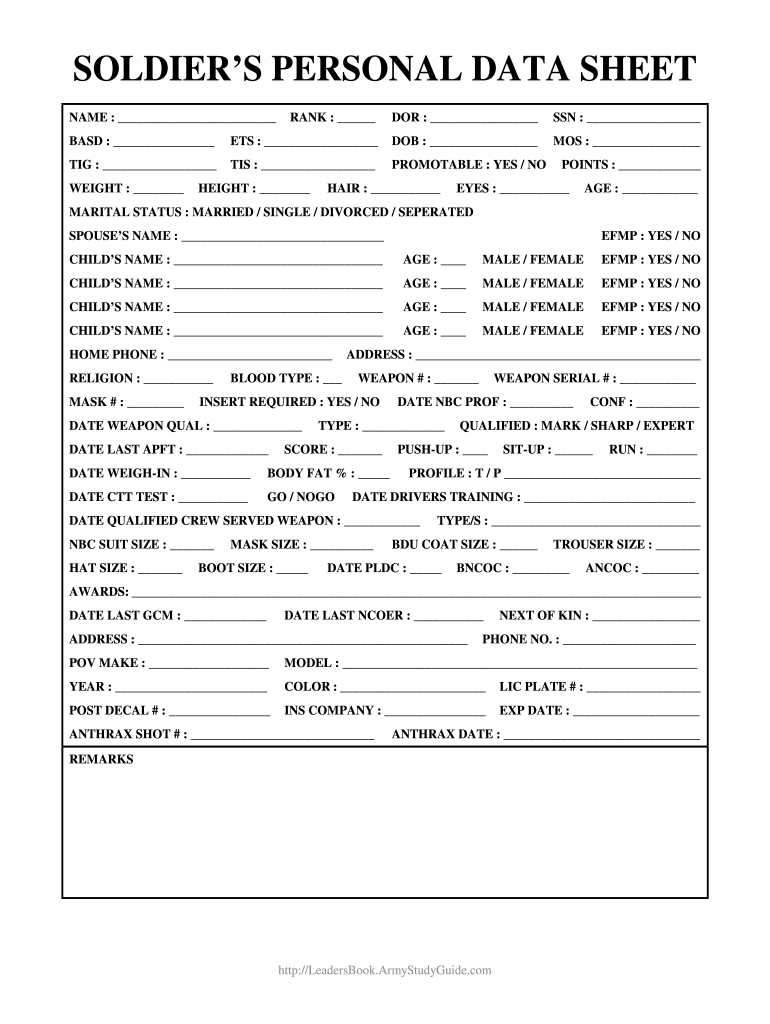
The personal data sheet, particularly in the context of military personnel, serves as a comprehensive record to document vital personal and military-related information. Such forms are crucial for administrative purposes and ensuring that accurate, up-to-date information is accessible when needed. Here are the key elements typically included in a soldier's personal data sheet:
-
Personal Information: Basic details such as full name, Social Security number, date of birth, and address. This section may also include contact information for family members.
-
Military Information: Enlistment details including rank, unit designation, and service dates. Other relevant military history such as deployments, awards, and commendations may also be listed here to showcase a soldier's achievements.
-
Physical Attributes: Data about the soldier's height, weight, blood type, and other medical information may be relevant for logistical and health considerations within military operations.
-
Family Information: This section details familial relationships and responsibilities, which may impact deployment and assignments. It includes spouse and children’s names, ages, and contact information.
-
Qualifications and Training Records: Information regarding military occupational specialties (MOS), training sessions, certifications, and educational credentials. Keeping this updated is critical for career advancement and reassignment considerations.
This structured approach to documenting essential information ensures that all parties involved have immediate access to a soldier’s critical data.
How to Complete the Personal Data Sheet
Filling out a personal data sheet requires adherence to specific guidelines to ensure all information is accurate and complete. Here’s a step-by-step process to effectively guide you through this:
-
Gather Necessary Documents: Collect all pertinent identification documents, military service records, and any other relevant paperwork to ensure you have accurate information for each section of the form.
-
Fill in Personal Information: Start with your name, Social Security number, and contact details. Make sure to double-check the spelling of your name and verify your Social Security number for accuracy.
-
Detail Military Information: Include your rank, current unit, and enlistment dates. If you have previously served in different capacities, list these positions chronologically to give a complete overview of your service.
-
Include Physical Attributes: Input your height, weight, and other medical specifics as required. It's essential to provide exact measurements and verified health details.
-
Document Family Information: Provide complete names and relationships of family members. Include their ages and contact information, which can be useful for administrative purposes.
-
List Qualifications and Training: Update this section with all relevant educational courses, trainings, and certifications that relate to your military career or professional development.
By following these steps, you ensure your personal data sheet is comprehensive and up-to-date, which is vital for ongoing administrative processes within the military.
Legal Use of the Personal Data Sheet
The personal data sheet is not only a practical record but also serves legal functions, especially regarding military regulations and personnel management. Understanding its legal implications is crucial for both service members and administrative personnel.
-
Compliance and Accountability: By maintaining an accurate personal data sheet, military members ensure compliance with Department of Defense regulations. It serves as an established record that can be referenced in various administrative processes, including promotions and legal inquiries.
-
Access to Benefits: The accurate completion of a personal data sheet is vital for access to military benefits, including health care, housing, and family support services. Missing or incorrect information can delay or jeopardize these benefits.
-
Employment Verification: The personal data sheet often serves as a foundation for employment verification within government and civilian positions after military service. Future employers may reference this accurate and formal documentation for confirmation of service and qualifications.
-
Legal Obligations: Failing to provide accurate information on a personal data sheet can have legal consequences, particularly during service evaluations or during processes related to benefits claims and entitlements.
Understanding and utilizing the personal data sheet legally ensures members are protected and adequately represented within the military framework.
Who Typically Uses the Personal Data Sheet
The personal data sheet is a versatile document used by various stakeholders within the military context. This section outlines key users and contexts where such forms are essential:
-
Military Personnel: Active duty, reserve, and retired service members use personal data sheets to maintain their records accurate for administrative and operational purposes.
-
Human Resources Departments: Military HR personnel rely on these forms to manage personnel records effectively, ensuring compliance with regulations and maintaining up-to-date rosters.
-
Commanding Officers: Officers utilize the personal data sheets during evaluations, assignments, and to assess soldiers’ readiness for various operational roles.
-
Family Members: For family assistance programs, the personal data sheet includes critical family information that impacts benefits and support services available to military families.
Understanding the diverse range of users helps emphasize the importance of maintaining accurate and comprehensive personal data sheets.

Examples of Using the Personal Data Sheet
Real-world applications of the personal data sheet show its significance in various situations. Here are some practical examples:
-
Deployment Preparation: Before deployment, service members must ensure their personal data sheet is updated. This information is crucial for determining logistics, such as family communications and medical emergencies.
-
Career Advancement: A soldier may prepare for a promotion board by ensuring their personal data sheet reflects all training and qualifications accurately. This record influences decisions made by superiors regarding promotions or additional responsibilities.
-
Transition to Civilian Life: Servicemen preparing to transition to civilian life use their personal data sheets to provide future employers with an official document of their military service records and qualifications.
-
Benefits Administration: When applying for veteran benefits or military spouse programs, the personal data sheet provides necessary personal, family, and military information to ensure seamless processing of applications.
These examples underscore the personal data sheet's critical role in the military infrastructure and its ongoing necessity from enlistment through to retirement and beyond.