







Definition & Meaning
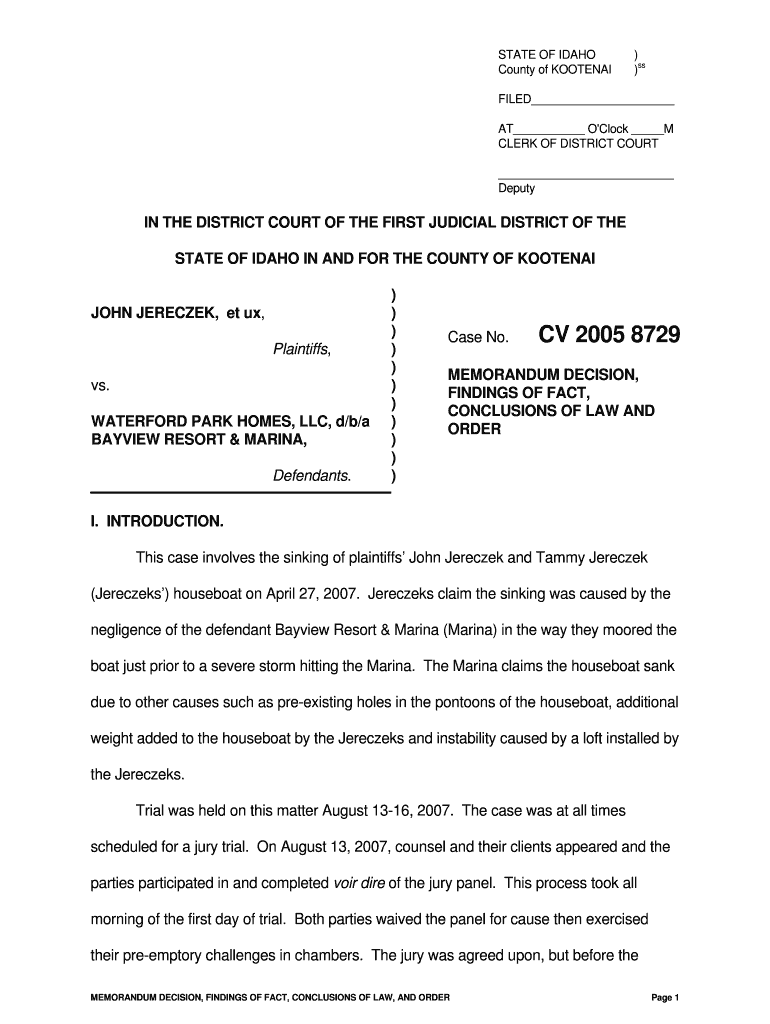
The form "STATE OF IDAHO County of KOOTENAI ) )ss FILED AT O 'Clock M CLERK OF DISTRICT COURT Deputy IN THE DI" pertains to legal and court documentation within Kootenai County, Idaho. It represents a formal record used within the district court system to log and document legal actions, decisions, and filings. This type of form is essential for maintaining official court records, ensuring that all proceedings and judgments are documented accurately and comprehensively. It forms part of the clerical processes that underpin the functioning of the legal system in Idaho.
How to Use the Form
To use the "STATE OF IDAHO County of KOOTENAI ) )ss FILED AT O 'Clock M CLERK OF DISTRICT COURT Deputy IN THE DI" form, individuals typically follow a precise protocol.
- Filing a Court Case: Initiate the process by submitting this form as part of the documentation required when filing a lawsuit or legal motion.
- Providing Personal Details: Include the necessary personal and case-specific information, such as names of parties involved, case number, and a concise description of the action taken.
- Filing Date and Time: Record the precise date and time of filing to establish an official court record.
- Court Clerk Endorsement: The form must be processed and endorsed by the court clerk to confirm its acceptance into the court's official registry.
Steps to Complete the Form
Completing this form involves a structured approach:
- Gather Required Information: Assemble all necessary details, including party names, case number, and document descriptions.
- Document Preparation: Accurately fill in sections that relate to the case specifics and participants' information.
- Legal Review: Before submission, have the document reviewed by legal counsel if possible, to ensure accuracy and compliance.
- Submission: Submit the completed form to the district court's clerk for filing. This may require an in-person submission or mailing, depending on the court's procedures.
Important Terms Related to the Form
Understanding specific legal terminology is crucial when completing and filing the form:
- Plaintiff/Defendant: The parties involved in a legal action; the plaintiff initiates the lawsuit, while the defendant responds to it.
- Case Number: A unique identifier assigned to a legal case, used for tracking within the court system.
- Clerk of Court: An official responsible for maintaining court records and managing procedural aspects of court filings.
Legal Use of the Form
The legal application of this form is grounded in court proceedings:
- Documenting Legal Proceedings: It records the actions taken and decisions made within the court related to a specific case.
- Establishing Court Records: Forms part of the official documentation that courts maintain to ensure transparency and accountability.
- Compliance with Legal Standards: It ensures that legal proceedings adhere to established procedural norms, which helps avoid disputes over documentation.
Key Elements of the Form
The form includes several critical elements that must be correctly completed:
- Header Information: Details about the court, location, and the nature of the filing.
- Filing Details: Date and time of filing, which is essential for the legal time-stamp of the action.
- Clerk Endorsement: Signature or initials of the court clerk, which authenticate the document's acceptance.
Examples of Using the Form
Practical scenarios illustrating the use of the form include:
- Filing for a Divorce: When initiating a divorce proceeding, this form serves as part of the suite of documents necessary for the court's review.
- Civil Litigation: Used in filing or responding to civil suits, such as negligence cases, property disputes, or contract breaches.
- Occupational Licensing Appeals: Individuals contesting administrative decisions may use this form to formalize their appeal within the district court.
State-Specific Rules for the Form
In Idaho, certain state-specific regulations govern the use and completion of this form:
- Filing Protocols: Idaho courts require adherence to specific procedures for document submissions, including format and content requirements.
- Certified Copies: When necessary, certified copies of the form must be requested through the court clerk, upholding integrity and accuracy.
- Submission Deadlines: Varies by case type and court jurisdiction; ensure awareness of specific timing stipulations to avoid delays or rejections.




