







Definition & Meaning
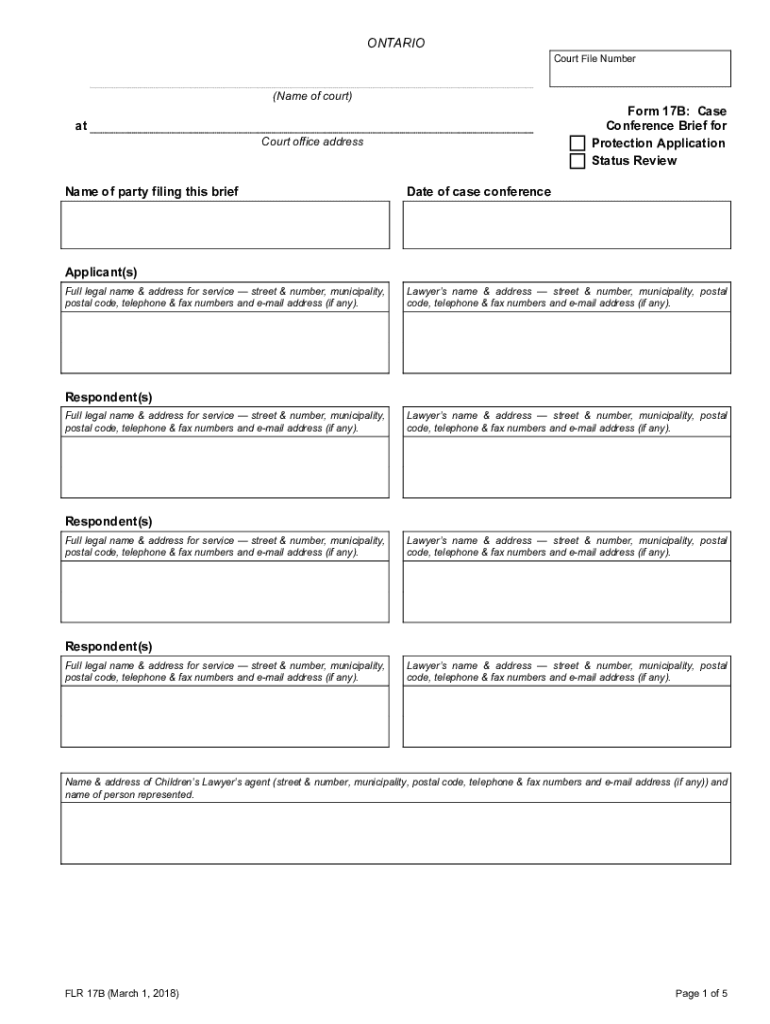
Form 17B, known as the "Case at Conference Brief for Court," serves as a critical legal document used in Ontario courts during case conferences. These conferences are typically part of child protection applications and status reviews, where parties involved discuss outstanding issues and seek resolutions. The form is structured to capture essential details about the child in question, the parties' agreed points, unresolved matters, and any urgent topics that require immediate attention.
Steps to Complete the Form 17B: Case at Conference Brief for Court
-
Gather Required Information:
- Include names and contact information of all parties involved.
- Provide detailed information about the child, including age and current living situation.
-
List Outstanding Issues:
- Clearly specify all unresolved issues pertaining to the case.
- Include any disputes over custody, visitation, or support matters.
-
Outline Proposals for Resolution:
- Describe potential solutions or compromises that could address the outstanding issues.
- Highlight any agreements previously reached between the parties.
-
Address Procedural Matters:
- Indicate if any procedural steps need to be discussed, such as the need for additional evidence or witness lists.
-
Fill in Specific Sections:
- Ensure each section of the form is completed accurately and thoroughly to avoid any delays or misunderstandings.
- Make sure to adhere to any format requirements specified by the court.
Key Elements of the Form 17B: Case at Conference Brief for Court
- Basic Information About the Child: Essential details such as age, residence, and any special circumstances affecting the child's situation.
- Outstanding Issues: Identification of all matters that need to be resolved, ranging from parental custody to educational needs.
- Proposals for Resolution: Suggestions for settling disputes, which could include mediation outcomes or compromise offers.
- Procedural Needs: Aspects related to the preparation and presentation of the case, like additional documentation or conference requirements.
Legal Use of the Form 17B: Case at Conference Brief for Court
The Form 17B holds significant legal weight as it outlines the primary subjects of discussion in a family court conference setting. Its use is specific to Ontario, and it requires detailed recording of issues and proposed solutions to guide the conference process. It is a legal obligation for parties to accurately fill this form to assist the court in making informed decisions about the child's welfare.
Who Typically Uses the Form 17B: Case at Conference Brief for Court
- Parents or Guardians: Primarily used by those involved in a child protection or custody dispute.
- Legal Representatives: Lawyers who advocate on behalf of their clients in family law cases.
- Court Personnel: Judges and court officials who utilize the form's content to facilitate productive case conferences.

Important Terms Related to the Form 17B
- Case Conference: A structured meeting facilitated by the court to address issues in a legal case, usually with the aim of finding resolutions outside of a trial.
- Protection Application: A legal request to secure the safety and welfare of a child, often initiated by child services.
- Status Review: A routine evaluation of a child’s placement and the conditions of their care arrangements.
State-Specific Rules for the Form 17B: Case at Conference Brief for Court
Even though Form 17B is specialized for Ontario courts, its usage must align with provincial laws and regulations related to family law. Each province may have varying procedures, and it's crucial for users to consult legal professionals within Ontario to ensure compliance with these specific rules when completing the form.
Required Documents
- Previous Court Orders: Copies of any past decisions or special measures previously ordered by the court.
- Supporting Evidence: Documentation supporting claims or issues stated within the form (e.g., medical records, school reports).
- Agreement Documents: Any documented agreements previously reached by the involved parties.
Examples of Using the Form 17B: Case at Conference Brief for Court
- Custody Dispute Resolution: A family in which parents disagree over the preferred custody arrangement can use the form to articulate individual viewpoints and propose joint custody solutions.
- Child Support Issues: Parties debating over maintenance payments can present their financial circumstances and potential compromise settlements within the form.
- Emergency Matters: Urgent situations, such as immediate risks to the child's well-being, are detailed to prioritize them during the conference discussions.




