







Definition and Meaning of Justice of the Peace in New Hampshire
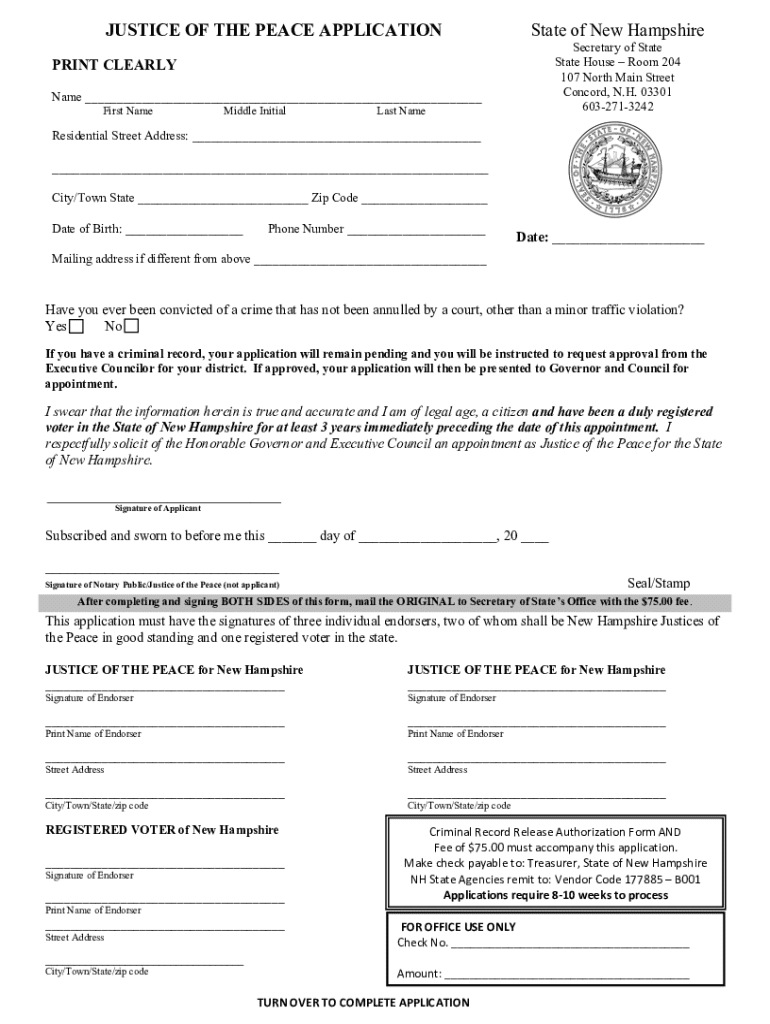
The "Justice of the PeaceNew Hampshire Secretary of State" refers to the process and form through which individuals are appointed as Justices of the Peace in New Hampshire. This role carries various responsibilities, including the ability to perform marriages, administer oaths, and witness signatures. The New Hampshire Secretary of State oversees this appointment process, ensuring that candidates meet state-specific requirements and follow the proper procedures to obtain their commission.
Roles and Responsibilities
- Conducting civil marriage ceremonies
- Administering oaths and affirmations
- Witnessing and acknowledging documents, such as affidavits or contracts
These duties play a vital role in ensuring community access to essential legal services and providing official validation for certain transactions.
Obtaining a Justice of the Peace Title
Becoming a Justice of the Peace in New Hampshire involves a comprehensive application process managed by the Secretary of State. Prospective candidates must meet specific eligibility criteria, complete the application, and submit the required fee.
Eligibility Criteria
- Must be a resident of New Hampshire
- Minimum age of 18 years
- Clear criminal history, with a mandatory background check


Application Steps
- Collect Endorsements: Gather signatures from existing Justices of the Peace and registered voters to support your application.
- Criminal Record Check: Undergo a background check ensuring your record is free of serious offenses.
- Submit Application: Send your completed application form along with a $75 fee to the Secretary of State's office.
- Approval and Appointment: After approximately eight to ten weeks of processing, approved applicants receive their appointment documentation.
Important Terms and Legal Use
Several essential terms and legal guidelines define the role of a Justice of the Peace in New Hampshire, crucial for understanding and fulfilling the role accurately.
Key Terms
- Appointment: Formal assignment to the role following approval from the Secretary of State.
- Endorsements: Required support signatures from peers that validate the applicant's good standing and community involvement.
Legal Guidelines
- Adherence to state laws governing the scope of duties.
- Ethical conduct in public service and performance of responsibilities.
Application Form Structure and Key Elements
The application form for Justice of the Peace in New Hampshire contains multiple sections requiring accurate and thorough completion.
Sections of the Form
- Personal Information: Includes name, contact details, and proof of residency.
- Declarations: Applicants must disclose any prior criminal history.
- Endorsements and Signatures: A section to provide supporting signatures.
Completing these components accurately ensures an applicant's compliance with state requirements and facilitates a smooth approval process.
Required Documentation and Filing Deadlines
Submitting the correct documentation and adhering to deadlines are imperative for a successful Justice of the Peace application.
Necessary Documents
- Completed application form
- Criminal record check confirmation
- Endorsement signatures from registered voters and existing Justices
Filing Deadlines
- Submission of the application ideally several months before the desired appointment date, considering the 8- to 10-week processing time.
Timely submission helps avoid delays, aiding in the swift procurement of appointment credentials.
Methods for Submitting the Justice of the Peace Application
New Hampshire offers multiple ways to file the application for a Justice of the Peace, providing flexibility for applicants.
Submission Options
- Online: Digital submission via the Secretary of State’s online portal provides an efficient method.
- Mail: Traditional mailing of physical documents, suitable for those who prefer or require paper submissions.
- In-Person: Direct submission at the Secretary of State's office for immediate acknowledgment of receipt.
Choosing the most convenient method ensures a secure and correctly processed application submission.
Penalties and Compliance Issues
Understanding potential penalties for non-compliance is essential for all prospective Justices of the Peace.
Potential Consequences
- Application Denial: Resulting from incomplete submissions or failure to meet eligibility criteria.
- Fines or Legal Action: Potential penalties for misconduct or failing to adhere to the legal obligations of the Justice of the Peace role.
By adhering to all rules and regulations, applicants can avoid these penalties and maintain their good standing within the community.
Practical Scenarios and Use Cases
Being a Justice of the Peace in New Hampshire involves handling various real-world situations that benefit the community.
Common Scenarios
- Civil Marriage Ceremonies: Providing ceremonial services in different settings, adhering to the judicial standards and personal preferences of the marrying couple.
- Document Authentication: Rapidly verifying and legitimizing essential documents for local residents, aiding in business and legal processes.
Providing these services demonstrates the role's importance in maintaining societal order and access to legal services.




