
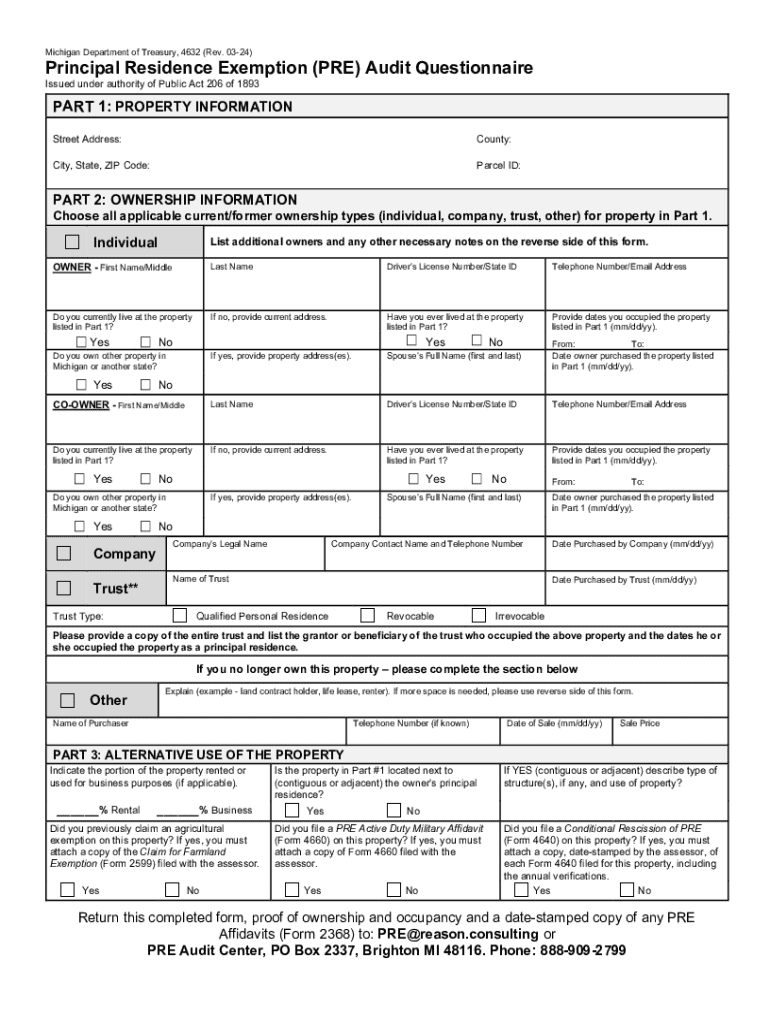







Definition and Meaning of Form 4632, Principal
Form 4632, Principal, often referred to as the Principal Residence Exemption (PRE) Audit Questionnaire, is a document issued by the Michigan Department of Treasury. It's designed to collect information on property and ownership details. This form is essential for individuals or entities claiming a Principal Residence Exemption (PRE), a provision that allows homeowners to exempt their primary residence from certain local school operating taxes, thereby reducing their overall property tax burden. The form involves providing detailed data about ownership types, occupancy history, and alternative uses of a property. Understanding the nuances of this form helps ensure accurate completion and submission.
Steps to Complete Form 4632, Principal
-
Gather Necessary Information: Before starting, compile all relevant documents and data, including proof of ownership, occupancy details, and any affidavits pertinent to the Principal Residence Exemption.
-
Fill Out Personal Information: Complete sections that require names, addresses, and contact information of all property owners.
-
Provide Ownership Details: Specify current and former ownership types and dates of transfer if applicable.
-
Submit Occupancy History: Clearly list the history of your occupancy, including dates of primary and any secondary usage.
-
Additional Uses of the Property: Declare and explain any alternate uses of the property during the exemption period.
-
Attach Supporting Documents: Include necessary documentation, such as affidavits, that validate your occupancy and ownership claims.
-
Review and Sign: Ensure all information is accurate before signing the form. Errors or omissions can lead to penalties or denial of exemption.
Key Elements of Form 4632, Principal
-
Ownership and Occupancy Information: This section verifies the owner-occupancy status essential for the PRE claim. Providing complete and accurate data ensures the legitimacy of your exemption.
-
Significant Dates: Each entry should detail exact dates of ownership changes and occupancy periods to avoid discrepancies.
-
Multiple Property Use: The form requires transparency about any additional uses of the property, such as rental or business activities, as these can impact exemption eligibility.
Required Documents for Form 4632, Principal
-
Proof of Ownership: Documents like deeds or tax records confirming ownership status.
-
Occupancy Evidence: Utility bills, driver's licenses, or residence licenses that establish the primary residence claim.
-
Affidavits: Legal statements affirming stated facts, which need to be notarized for credibility.
Legal Use and Compliance
Form 4632 ensures that your principal residence receives its appropriate tax exemptions according to Michigan’s property tax laws. Compliance with this form is crucial as misstated or fraudulent claims can result in legal consequences, including fines or additional taxes. Accurately reporting ownership and occupancy data adheres to both state and federal property tax regulations.
Penalties for Non-Compliance
-
Filing inaccurate information can lead to financial penalties and revocation of the PRE.
-
Intentional fraud could result in more severe legal actions, including fines and repayment of exempted taxes with interest.
-
Missing deadlines for submission or required documentation may cause denial of exemption.
State-Specific Rules for Form 4632
Michigan has specific guidelines governing the PRE, tailored to align with state property and tax laws. These rules necessitate that the property serves as the main residence for factors like tax years. Understanding these state-specific conditions is vital for the correct application and utilization of the form. Use state resources or consult with a tax attorney if you have questions about how these rules affect your filing.
Software Compatibility
While Form 4632 itself doesn't require submission through software, compatibility with tax programs such as TurboTax or QuickBooks can aid in managing necessary financial documentation required for form completion and ensuring a comprehensive audit trail. These platforms help maintain accurate records integral to filling out Form 4632 effectively, aligning your principal residence exemption with other tax obligations efficiently.




