
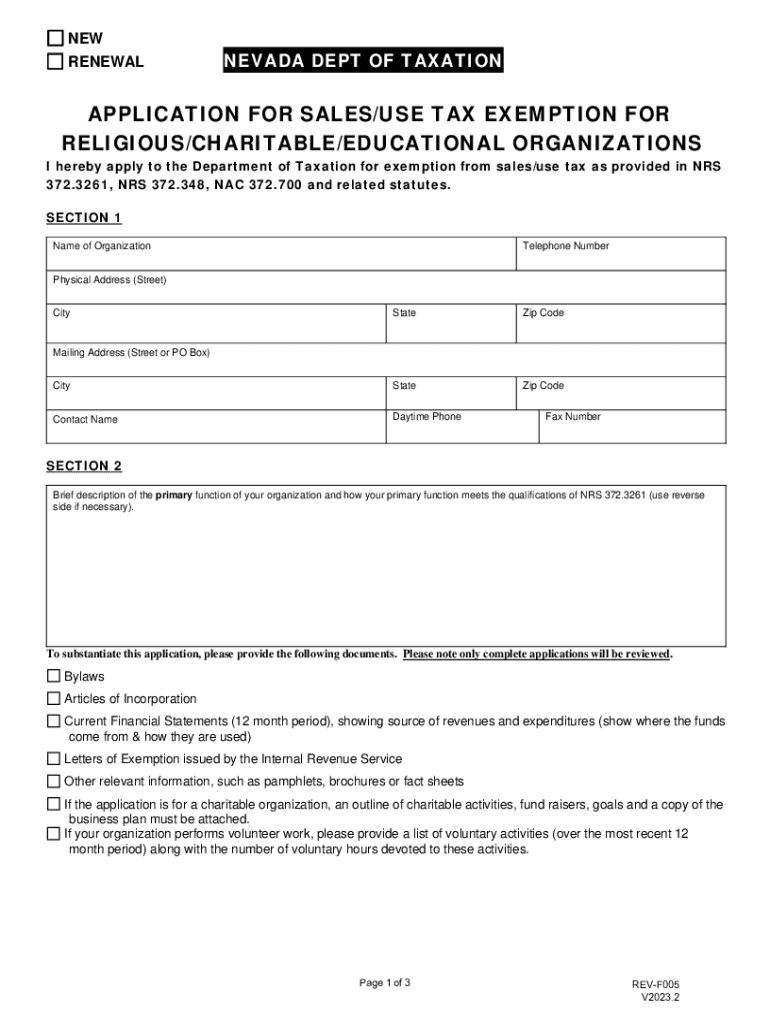







Definition and Meaning of Sales Tax and Use Tax in Nevada
Sales tax in Nevada applies to the sale of goods and certain services, and is collected by the retailer at the point of sale. It is a consumption tax imposed on consumers, but the responsibility to remit the collected tax to the state lies with the seller. Use tax, on the other hand, applies to the use, storage, or consumption of goods in Nevada when sales tax has not been collected. This typically occurs when goods are purchased out-of-state and brought into Nevada or purchased online from a seller not authorized to collect Nevada sales tax.
Key Differences Between Sales Tax and Use Tax
- Sales Tax: Paid by consumers and collected by sellers at the point of sale.
- Use Tax: Self-assessed by the consumer when sales tax is not collected by the seller.
- Point of Collection: Sales tax is collected at the time and place of purchase, while use tax is reported and paid by the consumer directly to the state.
How to Use the Sales Tax and Use Tax Form for Nevada
Using the Sales Tax and Use Tax form involves understanding when each tax is applicable and how to properly report and remit the taxes.
- Understand Your Obligations: Determine if your purchase requires sales tax collection or if use tax must be remitted.
- Accurately Report Transactions: Ensure all taxable transactions are reported accurately on the form.
- Timely Remittance: Pay any taxes owed by the reporting deadline to avoid penalties.
Practical Scenarios for Form Use
- Retailers: Must fill out the form to remit collected sales tax.
- Consumers: Use the form to report use tax for out-of-state or online purchases.
Steps to Complete the Sales Tax and Use Tax Form
Completing the Sales Tax and Use Tax form involves several critical steps to ensure compliance.
- Gather Necessary Information: Collect all transaction data, including sales receipts and purchase confirmations.
- Fill Out the Form: Enter sales data on the relevant sections, distinguishing between taxable and non-taxable sales.
- Calculate Amounts Due: Use the appropriate tax rate to calculate the total tax due for both sales and use tax transactions.
- Review and Verify: Double-check all entries to ensure accuracy and completeness.
- Submit the Form: Follow the submission method required, either online or via mail.
Important Tips for Accurate Completion
- Stay Within Deadlines: Mark important dates on a calendar to avoid missing deadlines.
- Detail Documentation: Keep detailed records to back up entries on the form.
Required Documentation for Sales and Use Tax Reporting
Proper documentation is crucial for accurately completing the form and proving compliance during audits.
Types of Documents to Prepare
- Sales receipts and invoices
- Proof of delivery for out-of-state purchases
- Purchase confirmations from online stores
Importance of Documentation
Documentation provides the necessary evidence to substantiate the amounts reported on the form and helps in case of discrepancies or audits.
Legal Use of the Sales Tax and Use Tax Form
Understanding the legal implications of the Sales Tax and Use Tax form is essential for both compliance and avoiding potential penalties.
Key Legal Considerations
- Statutory Compliance: Ensure that all applicable laws are followed when reporting and remitting taxes.
- Filing Requirements: Meet the filing frequency mandated by the Nevada Department of Taxation, whether monthly, quarterly, or annually.
Potential Legal Issues
Failing to properly remit taxes can lead to penalties, interest fees, and legal action by the state.
State-Specific Rules for Nevada Sales and Use Tax
Nevada has its own set of rules that govern the application of sales and use tax.
Nevada Tax Rates
- Statewide Rate: The general state sales tax rate.
- Local Additions: Some areas may impose additional local taxes, impacting the total rate.
Specific Exemptions
Certain goods and services may be exempt from sales tax in Nevada, such as specific items used by nonprofit organizations or government purchases.
Eligibility Criteria for Exemptions in Sales and Use Tax
Certain purchases or entities may qualify for sales and use tax exemptions under Nevada law.


Common Exemptions
- Nonprofit Organizations: Religious, charitable, or educational entities may receive exemptions on certain purchases.
- Government Agencies: Purchases made by federal and state government agencies may be exempt.
Requirements for Exemption
Eligible entities must provide documentation, such as an exemption certificate, to qualify for tax-free purchases.
Penalties for Non-Compliance with Sales and Use Tax
Nevada enforces penalties on those who fail to comply with sales and use tax regulations.
Types of Penalties
- Late Fees: Additional charges for not filing or paying taxes by the deadline.
- Interest Charges: Accrues on unpaid tax debts.
- Legal Actions: Persistent failure to comply may result in legal proceedings.
Adequate knowledge and understanding of Nevada's sales and use tax system are critical for both individuals and businesses to ensure compliance and avoid negative consequences.




