







Definition and Meaning
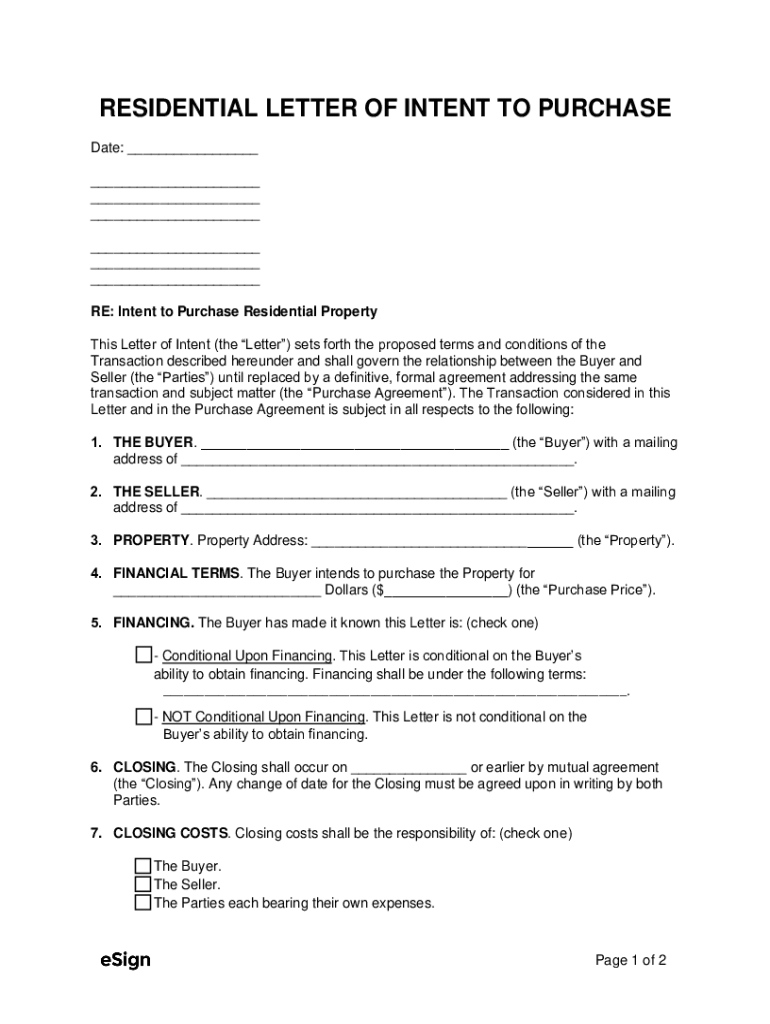
The Residential Letter of Intent to Purchase Template is a preliminary document that outlines the proposed terms and conditions for buying residential property. It serves as an informal agreement that precedes a formal purchase agreement. The template typically details critical elements, such as the identities of the buyer and seller, the property address, and the offer price. It includes essential terms like financing conditions, anticipated closing dates, and property inspection rights. While some provisions within the letter are binding, others depend on the future execution of a formal purchase agreement.
How to Use the Residential Letter of Intent to Purchase Template
To use the Residential Letter of Intent to Purchase Template effectively, first ensure that you understand its purpose and components. This document should clearly outline your intended terms for the property transaction. Key steps in utilizing the template include:
- Identifying all parties involved: Clearly specify the names of the buyer and seller.
- Detailing property information: Include the full address and any specific attributes of the property.
- Defining purchase price and terms: State the offered price and any conditions related to financing.
- Specifying dates: Determine the proposed closing and possession dates.
This document serves as an initial proposal, and adjustments can be made based on negotiations with the seller.
Key Elements of the Residential Letter of Intent to Purchase Template
The Residential Letter of Intent to Purchase Template includes several critical components:
- Identities of Parties: Clearly indicate the full names and contact details of both the buyer and seller.
- Property Description: Provide a detailed description of the residential property, including its address and any relevant characteristics.
- Purchase Price: Outline the offer amount and any related financial terms, such as earnest money.
- Financing Conditions: Specify if the purchase is contingent on acquiring financing, and include terms if applicable.
- Inspection Terms: Detail the rights to inspect the property and any contingencies based on inspection results.
- Closing Information: Indicate the proposed closing date and possession date.
- Legally Binding Clauses: Highlight which parts of the agreement are binding prior to signing the full purchase agreement.
Steps to Complete the Residential Letter of Intent to Purchase Template
Completing the Residential Letter of Intent requires careful attention to detail:
- Begin with Party Information: Clearly identify the buyer and seller.
- Include Property Details: Precisely describe the residential property.
- State Offer Price and Terms: Mention your proposed purchase price and any conditional terms related to financing.
- Outline Inspection Rights: Detail any inspections you wish to undertake before finalizing the purchase.
- Specify Key Dates: State proposed closing and possession dates.
- Review Binding Provisions: Ensure clarity on which parts are legally binding prior to the formal agreement.
- Finalize and Sign: Both parties should review and sign the document to acknowledge understanding and intent.
Legal Use of the Residential Letter of Intent to Purchase Template
The legal use of the Residential Letter of Intent to Purchase Template involves understanding which provisions are immediately binding and which terms rely on subsequent agreements. It's essential for both parties to know that while some clauses like confidentiality might be binding, others may only become enforceable upon signing a purchase agreement. Consulting with a legal advisor to clarify any uncertainties can prevent future disputes.
Important Terms Related to the Residential Letter of Intent to Purchase Template
Understanding key terms is crucial when using this template:
- Earnest Money: A deposit made by the buyer showing serious intent to purchase.
- Contingency: A condition that must be met for the transaction to proceed.
- Binding Agreement: Parts of the letter that are legally enforceable.
- Inspection Rights: The buyer's ability to inspect the property before committing to the purchase.
Who Typically Uses the Residential Letter of Intent to Purchase Template
The template is primarily used by individuals or entities interested in purchasing a residential property. This includes first-time homebuyers, real estate investors, or any prospective buyer wanting to lay preliminary terms before a formal agreement. Real estate agents and attorneys often assist buyers in drafting and understanding the letter to ensure all terms meet legal standards.


Examples of Using the Residential Letter of Intent to Purchase Template
Consider these scenarios:
- First-time Homebuyer: A young couple uses the template to propose terms for a starter home, ensuring they have the right to inspect for structural issues before a full commitment.
- Real Estate Investor: An investor employs the letter as a tool to outline specific financing terms and renovation plans pending formal agreement.
- Relocation for Work: A buyer transferring jobs uses the template to secure a residence, contingent on finalizing their relocation logistics.
In each case, the template acts as a foundational document setting the stage for negotiations and ultimate purchase agreements.




