







Definition & Meaning
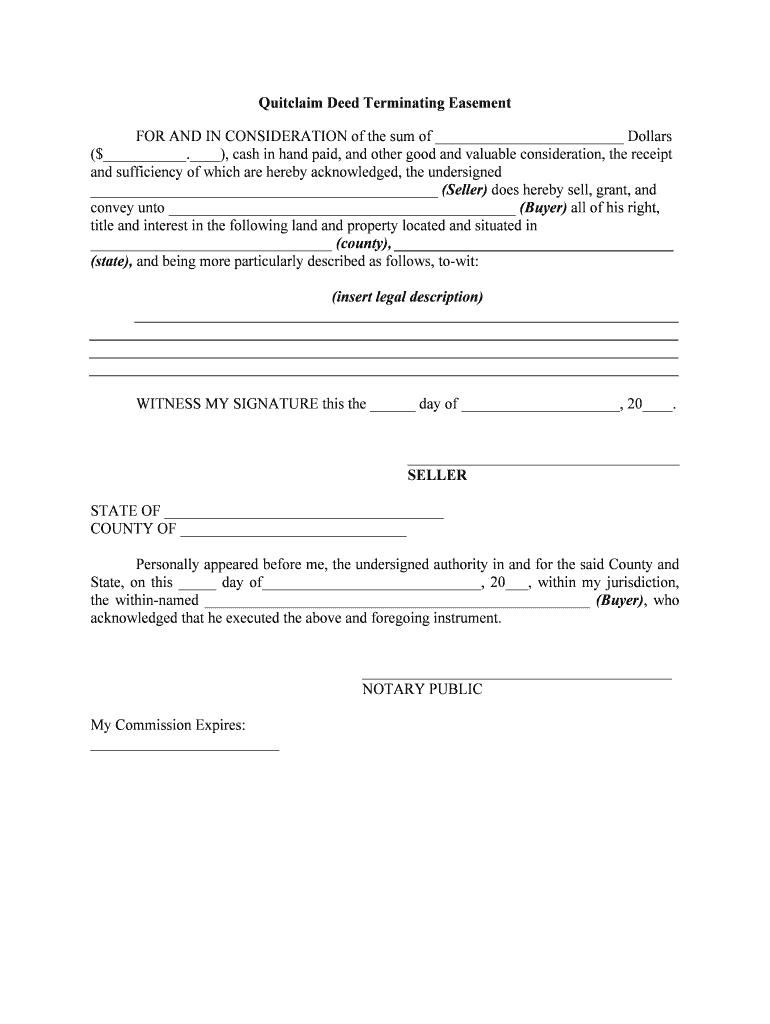
The "termination of easement form" is a legal document used to terminate or cancel an easement on a property. An easement grants the right to use a portion of land for a specific purpose without owning it, such as utility access or right-of-way. This form facilitates the legal procedure for extinguishing the rights associated with the easement, effectively restoring exclusive control over the property to the landowner. Such termination is typically recorded with legal entities to ensure the change is officially documented and recognized.
How to Use the Termination of Easement Form
Using the termination of easement form involves several critical steps to ensure the process is legally binding:
- Review the Easement Terms: Understand the conditions under which the easement was granted to determine if termination is possible.
- Complete the Form: Fill in all required sections, including the property legal description, current easement details, and the parties involved.
- Obtain Necessary Signatures: Both the grantor (usually the landowner) and the grantee (the party benefiting from the easement) must sign the form.
- Notarization: To validate the document legally, a notary public must witness the signing and affix a notary seal.
- Submit for Recording: File the completed and notarized form with the local county recorder or relevant authority to update public records.
Steps to Complete the Termination of Easement Form
Completing the termination of easement form requires attention to detail:
- Identify the Parties: Clearly state the names and addresses of both the easement grantor and grantee.
- Describe the Easement: Include a detailed description of the easement being terminated, referencing the original deed if applicable.
- Provide Property Information: List the legal description of the property affected by the easement.
- State the Consideration: If applicable, note any monetary compensation exchanged for terminating the easement.
- Signatures and Notarization: Ensure that all parties sign in the presence of a notary, who then notarizes the agreement.
Legal Use of the Termination of Easement Form
The legal use of the termination of easement form is grounded in property and real estate law. It ensures that the termination of easement rights is handled in compliance with local jurisdictional regulations, protecting all parties involved from potential legal disputes. Legally, the process must follow statutory requirements like obtaining necessary consents and ensuring notarization for the form’s validity. This legal framework reinforces the binding nature of the termination and safeguards against any future claims related to the easement.
Key Elements of the Termination of Easement Form
Key elements of the termination of easement form include:
- Identification of Parties: Names and contact details of both grantor and grantee.
- Legal Description of Property: Precise location details to avoid any ambiguity.
- Details of the Easement: Original creation date, purpose, and coverage area.
- Signatures: To legalize the document, signatures of both parties involved.
- Notarization Clause: Space for the notary’s acknowledgment and seal.
- Recording Information: Section for the recorder's use to enter when and where the document was filed.
Examples of Using the Termination of Easement Form
Consider a property owner who has an easement allowing a neighboring utility company access to install power lines. If the company no longer needs to use this access, the property owner and the utility company might mutually agree to use the termination of easement form to officially dissolve the easement. This agreement would help clear the property's title, potentially increasing its marketability and value.
State-Specific Rules for the Termination of Easement Form
While the general process remains consistent, state-specific laws can influence the termination of easement forms:
- Differences in Notarization Requirements: Some states require more rigorous notarization processes.
- Recording Fees: These vary by state and must be paid when submitting the form for official recording.
- Timelines for Filing: Each state sets its deadlines for filing documents to ensure timely updating of public records.
- Additional Verification Requirements: Certain states may require supplemental documentation or legal endorsements.
Required Documents
To facilitate the termination of an easement, specific documents are typically needed, including:
- Original Easement Agreement: Providing baseline conditions for the easement.
- Termination of Easement Form: Properly filled and signed.
- Proof of Ownership: Conveyance indicating the current owner of the property.
- Identification Proof: For parties involved, such as driver’s licenses.
- Notary Services Documentation: Verification of notarization.
This comprehensive approach ensures that all stakeholders have a clear understanding of the path to properly managing the termination of an easement, respecting the nuanced legal processes that must be carefully navigated for a successful outcome.


